
Table of Contents
Chances are you’re here because something in your body is squawking at you. Maybe it’s a persistent ache in your knee, brain fog that shows up every afternoon, or a blood test result that made your doctor frown. The anti-inflammatory diet gets talked about like a mysterious cure-all, but it’s really just a way of eating that gives your body fewer reasons to stay angry.
The good news? You don’t need to overhaul your entire relationship with food in one weekend. You need a sequence. That’s what this is: a step-by-step reset you can put into action this week, with real meals, real numbers, and zero guilt. If you want the full science behind systemic inflammation and how food influences it, give this overview a read. For now, let’s focus on the doing.
1. Do a 15-Minute Kitchen Audit
Grab a box and set a timer. Fifteen minutes is enough to make a visible dent in your pantry. You’re looking for the three biggest offenders: refined seed oils, added sugar, and refined grains that have been stripped of their fiber.
Here’s what to actually do:

- Read the ingredient labels on anything in a package. Toss or donate items with “hydrogenated” anywhere in the list.
- Move sugary cereals and granola to the top shelf where you can’t see them. Out of sight helps more than willpower.
- Pull out the white bread, white rice, and boxed pasta. Replace them with farro, barley, quinoa, or whole-grain sourdough if you have it.
Don’t throw everything away. If you have a half-bottle of olive oil, keep it. If you have a jar of tomato sauce, that’s fine. The goal isn’t a sterile kitchen — it’s making the right choice the easiest choice.
2. Build a Baseline Plate: The 50-25-25 Method
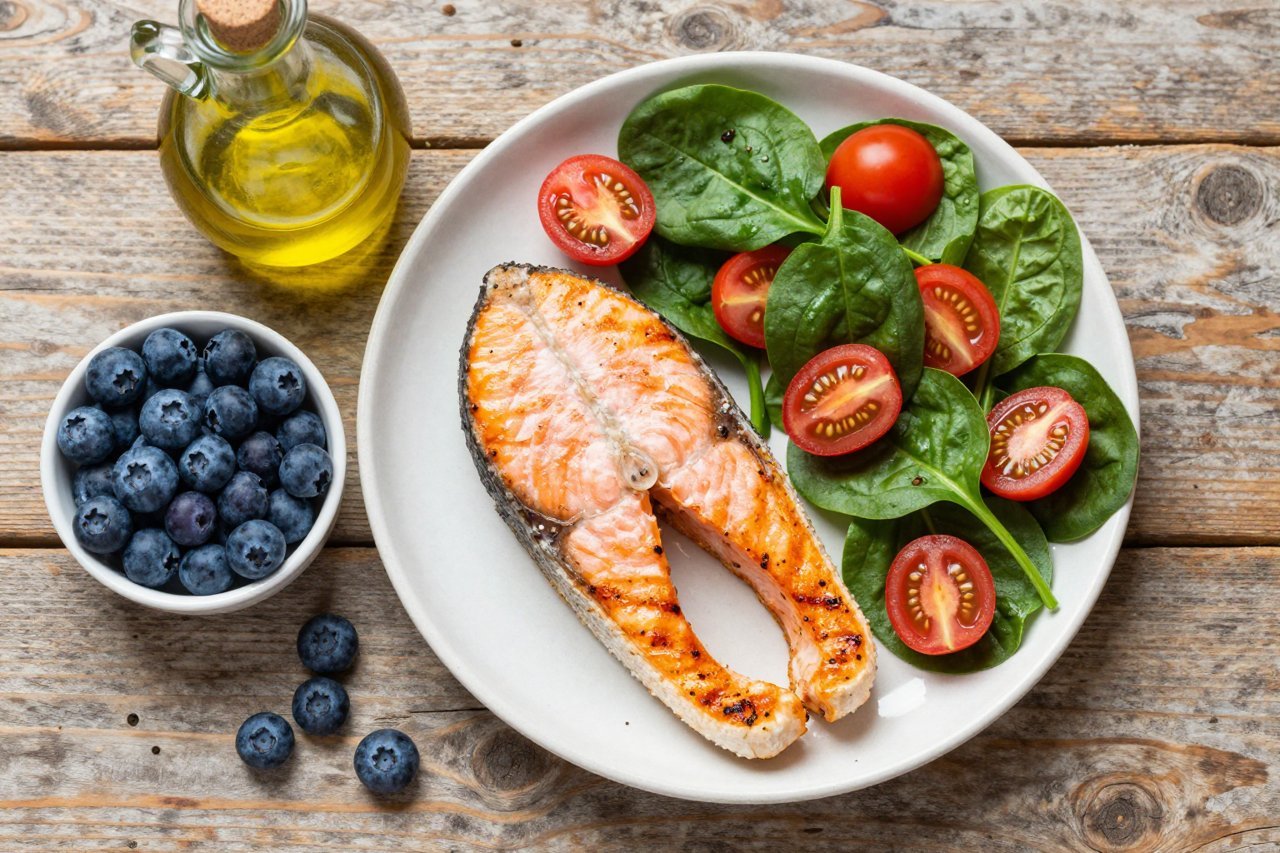
Every anti-inflammatory meal you eat for the next week follows the same visible formula: half the plate non-starchy vegetables, a quarter protein, and a quarter carbohydrate with fiber. This outline is borrowed from the Mediterranean diet, one of the most endlessly studied eating patterns for lowering markers like C-reactive protein. For a full weekly build, walk through this Mediterranean diet meal plan.
Here are the building blocks:
- Non-starchy veggies: spinach, broccoli, peppers, cauliflower, zucchini.
- Protein: salmon, sardines, chicken, eggs, legumes.
- Carbs: sweet potato, quinoa, farro, lentils, berries.
A concrete example: a lunch plate of grilled chicken thighs, a big heap of sautéed chard, and a scoop of farro tossed with lemon and olive oil. That’s it. No measuring cups needed.
3. Plan Your First Week: A Sample Day
Here’s what your first day might look like, down to the details.
A Sample Day
Breakfast: Steel-cut oats made with water and a splash of oat milk, topped with a handful of wild blueberries and a few walnuts. If you’re craving sweetness, add a dash of cinnamon, not honey.
Lunch: Leftover roasted chicken, a slaw of red cabbage and carrots with a lemon-olive oil vinaigrette, and a small bowl of quinoa.
Snack: A small handful of almonds and a clementine, or carrot sticks with hummus.
Dinner: Baked cod with a crust of minced garlic and parsley, served over sautéed kale and half a baked sweet potato.
This is not a punishment. It’s about 80% below your normal grocery bill, and it all cooks on one pan. The fiber keeps blood sugar on a slow rise instead of a spike. That pattern supports your insulin response. If blood sugar control is your main goal, reading up on foods for diabetes will give you more targeted choices to weave in.
The Batch-Cooking Trick
The trick to pulling this off is batching. On Sunday, roast a whole tray of chicken thighs, cook two cups of farro, and chop one head of cauliflower. That gives you three days of lunches, ready before the busiest part of your week even starts.
4. Make Swaps That Don’t Hurt
Any anti-inflammatory diet only works if you can keep it up for more than a week. That means swapping, not sacrificing. Here are five with the biggest payoff:
- Instead of butter on toast, drizzle olive oil and sprinkle za’atar or flaky salt.
- Instead of soda, drink sparkling water with a big squeeze of lime and a few mint leaves.
- Instead of creamy salad dressing, use a simple vinaigrette: one part red wine vinegar, three parts olive oil, a dab of Dijon.
- Instead of beef chuck in a stew, use lentils or roasted chickpeas. You’ll add fiber and cut saturated fat.
- Instead of white rice in a stir-fry, use riced cauliflower tossed in at the end.
These ideas are built on a broader library of anti-inflammatory foods you can explore in that guide. For now, just try one swap a day.
5. Outsmart the Dining-Out Trap
One restaurant meal can undo three days of solid choices if you’re not careful. Beware of the “healthy” salad that arrives drowning in sugary dressing. Here’s how to navigate a menu without being a weirdo about it:
- Order the sauce, dressing, and gravy on the side. This one request cuts your sodium and sugar intake dramatically.
- Choose the grilled protein over the fried one. Fish, chicken, and lean steak all work.
- Swap fries or pasta for a double order of sautéed vegetables or a side salad.
- If you’re craving dessert, split it. Same pleasure, half the portion.
If you have arthritis and are eating out to ease joint pain, this guide to foods for arthritis is a helpful companion, because it lists options that tend to be safe on most menus.
Your First 7 Days: A Simple Checklist
Instead of a summary, here’s a checklist to stick on the fridge. It covers the week ahead.
- Buy a bag of frozen fruit — blueberries, cherries, mango — for quick breakfasts.
- Set aside 90 minutes once this week to batch-roast vegetables and cook a pot of whole grains.
- Choose three dinners to make, and rotate them so you’re not staring into the fridge at 6pm.
- Keep a jar of homemade vinaigrette in the door of the fridge.
- Order one meal with the dressing on the side, and actually leave some on the plate.
That’s it. Do those five things and you’ve already accomplished 80% of what an anti-inflammatory diet asks of you. The remaining 20% is just repetition. Let that repeat.


