
Table of Contents
Your heart beats around 100,000 times a day, pushing blood through miles of vessels. That nonstop pump deserves more than the occasional olive oil. Diet is the single most powerful lever you can pull to protect it, and the right foods do more than just cut cholesterol—they actively calm inflammation, support blood pressure, and even stabilize your heart rhythm. Here are the 7 best foods for heart health, along with the science that makes each one earn its place.
The 7 Best Foods for Heart Health at a Glance
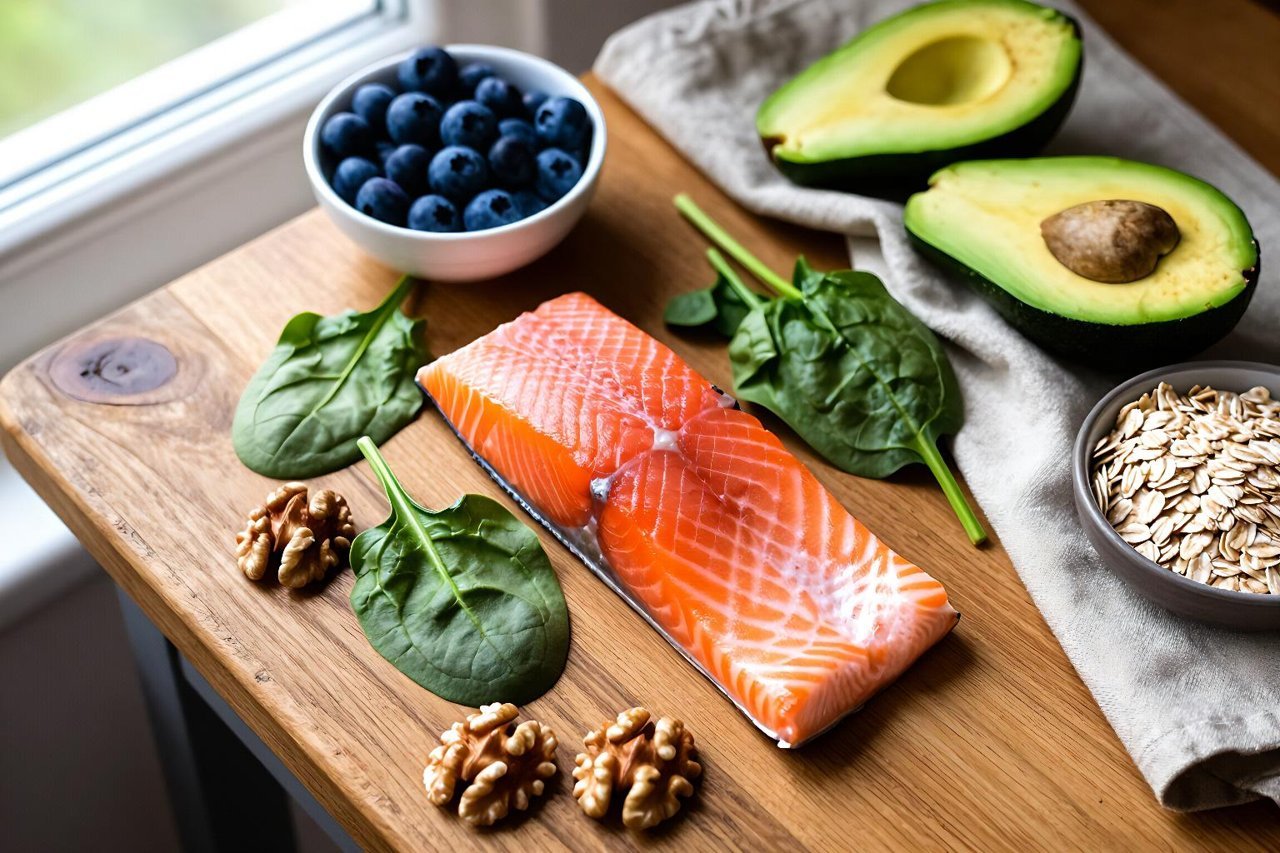
No single food can guarantee a healthy heart, but a pattern of eating that includes these seven does the heavy lifting:
- Oily fish: salmon, mackerel, sardines, anchovies
- Leafy greens: spinach, kale, Swiss chard
- Whole grains: oats, quinoa, barley, brown rice
- Berries: blueberries, strawberries, raspberries
- Nuts: walnuts, almonds, pistachios
- Avocados
- Beans and lentils
Each one has been studied again and again, and the effects are consistent. In the sections below, we’ll look at the evidence and how to actually fit them into a normal week.
1. Oily Fish: The Omega-3 Heavyweight
Salmon, mackerel, and sardines are packed with two long-chain omega-3 fatty acids, EPA and DHA. These fats lower triglycerides, reduce blood pressure, and make the blood less likely to form dangerous clots. A 170-gram serving of cooked salmon delivers about 2 grams of EPA and DHA, which is close to the amount the American Heart Association suggests eating at least twice a week.

One meta-analysis in the Journal of the American College of Cardiology found that each 20-gram per day increase in fish intake was linked to a 4% lower risk of dying from heart disease. Also, fish is a protein powerhouse—salmon offers around 25 grams per serving. If you’re curious about other lean protein options, you might like this list of the top 7 highest protein foods to round out your meals.
How to get more: Grill a salmon fillet with lemon and dill, add sardines to a pasta sauce, or blend a can of mackerel into a dip. Even canned fish counts.
2. Leafy Greens: A Blood Pressure Ally
Spinach, kale, and Swiss chard are rich in dietary nitrates, which your body converts into nitric oxide—a molecule that relaxes blood vessel walls. Relaxed vessels mean lower blood pressure. A 2016 study in the Journal of Nutrition found that people who ate the most leafy greens had a 15–20% lower risk of developing cardiovascular disease over a 12-year period.
These leaves are also loaded with vitamin K, which helps prevent calcium from depositing in your arteries. If you’re watching your weight, they’re an obvious ally—a cup of raw spinach has about 7 calories and a good chunk of filling fiber. That’s why leafy greens appear on our list of top 7 weight loss foods as well.
How to get more: Toss a handful of spinach into smoothies, layer kale into a stir-fry, or make Swiss chard the base of a warm lentil salad.
3. Whole Grains: The Cholesterol Sweepers
Swap refined bread and rice for whole grains, and your cholesterol profile will thank you. Oats, barley, and quinoa bring soluble fiber, which binds to cholesterol in the digestive tract and pulls it out of the body. In particular, beta-glucan, the soluble fiber in oats, has been shown to lower LDL cholesterol by about 5–7% when you eat 3 grams a day—that’s a bowl of oatmeal.
Whole grains also feed the good bacteria in your gut, which produce short-chain fatty acids that reduce inflammation systemically. A 2021 meta-analysis in Circulation concluded that each daily serving of whole grains was associated with a 9% lower risk of cardiovascular mortality.
How to get more: Start with overnight oats, use brown rice or farro in one meal per day, and choose whole-grain bread with at least 3 grams of fiber per slice.
4. Berries: Nature’s Antioxidant Candy
Berries are small enough to snack on daily, and they deliver outsized benefits. The deep blue and red colors come from anthocyanins, plant pigments that improve cholesterol particle function and make arteries more flexible. A 2019 study in the American Journal of Clinical Nutrition gave 2 cups of blueberries a day to overweight adults and found a significant drop in blood pressure and LDL oxidation—the process that leads to plaque build-up.
Unlike supplements, whole berries also provide fiber, vitamin C, and relatively little sugar. Strawberries, raspberries, and blackberries are all excellent choices.
How to get more: Keep a bag of frozen mixed berries in the freezer. Add them to yogurt, oatmeal, or even a sparkling water and mint mocktail for a heart-friendly treat.
5. Nuts: A Handful a Day
Almonds, walnuts, and pistachios are concentrated sources of monounsaturated and polyunsaturated fats, magnesium, and plant sterols. These nutrients work together to lower LDL cholesterol while preserving HDL. The landmark PREDIMED trial in Spain reported that participants who ate 30 grams of walnuts per week had a 30% lower risk of cardiovascular events compared with those who didn’t eat nuts.
Walnuts deserve a special shout-out, because they are one of the few plant foods that supply alpha-linolenic acid (ALA), a type of omega-3 linked to better heart rhythm stability. Just remember to stick to a small handful—about 28 grams—because nuts are calorie-dense.
How to get more: Sprinkle chopped walnuts onto your morning oatmeal, keep a tiny tin of almonds in your bag for a midday snack, or pulse pistachios into a crust for baked chicken.
6. Avocados: Creamy Potassium Power
Avocados are the poster child for heart-friendly fats. A medium avocado provides around 10 grams of monounsaturated fat, nearly 5 grams of fiber, and 975 milligrams of potassium—more than a banana. Potassium helps counteract the blood-pressure-raising effects of sodium, and the monounsaturated fat actively lowers LDL cholesterol when it replaces saturated fat.
One study in the Journal of the American Heart Association followed 55,000 people over 30 years and found that eating two or more servings of avocado per week was associated with a 21% lower risk of coronary heart disease. That’s a simple habit—half an avocado on toast, or sliced over a grain bowl.
How to get more: Mash half an avocado on whole-grain toast with a pinch of chili flakes, fold cubed avocado into salads, or blend it into a smoothie for extra creaminess without the dairy.
7. Beans and Lentils: The Fiber Fillers
Beans, lentils, chickpeas, and peas are some of the most heart-protective foods you can buy, and they’re often the cheapest. A cup of cooked lentils packs 15 grams of fiber and 18 grams of protein, plus folate and magnesium. Eating beans regularly has been shown to lower LDL cholesterol and blood pressure in multiple trials, partly because the high fiber slows glucose absorption and reduces inflammation.
They also let you swap out less healthy sources of protein. Use lentils in place of ground meat in a bolognese, or substitute chickpeas for chicken in a salad—your heart won’t miss the saturated fat. Processed meats like salami and bacon, on the other hand, are linked to both heart issues and colorectal cancer; in fact, many of the cancer-causing things you do every day involve what’s on the plate, not just what’s in the air.
How to get more: Add a handful of red lentils to soups, toss chickpeas with olive oil and roast until crispy, or make a simple three-bean salad for the week.
How to Build a Heart-Healthy Plate
Knowing which foods help is one thing; making them a routine is another. A simple template for lunch or dinner: fill half your plate with colorful vegetables, a quarter with whole grains, and a quarter with plant or fish protein. Add a small fat source like avocado or a spoonful of nuts. That pattern naturally crowds out processed foods and red meat.
You don’t need to go from zero to all seven overnight. Pick two foods on this list that you enjoy and eat them daily this week. Next week, add a third. Over time, these small, consistent shifts become the habits that keep your smallest organ—the heart that’s been beating since you were tiny—pumping strong into the decades ahead.


