
Table of Contents
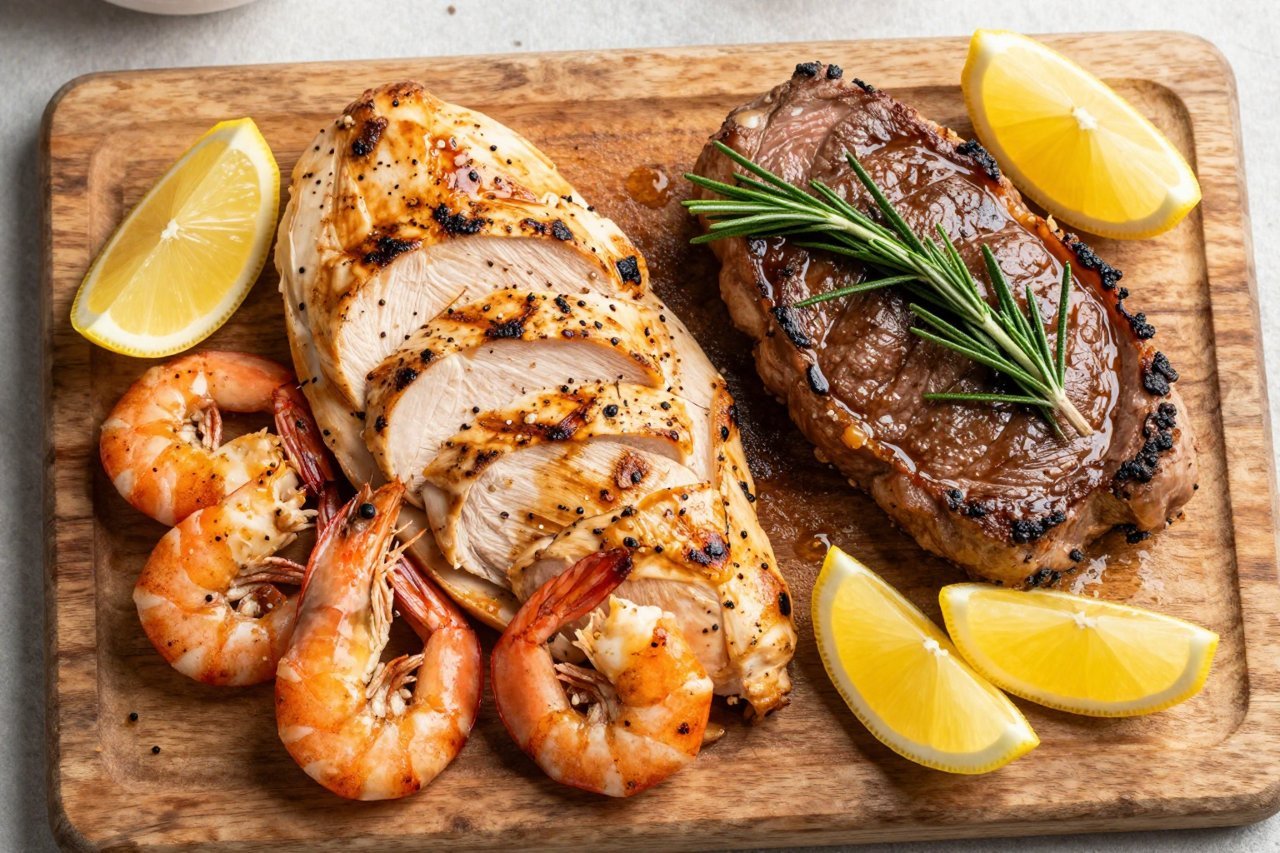
You could eat a whole plate of pasta and still feel hungry an hour later. Swap that for a piece of chicken breast, and you’ll likely be satisfied for the whole afternoon. The reason is protein. It takes longer to digest, helps you preserve muscle, and keeps you from reaching for snacks. If you want to get more of it without relying on shakes, these are the seven highest protein foods you can put on your fork.
This isn’t an exhaustive list. Our full guide to high-protein foods covers other tasty options, but these seven stand out for the sheer grams they deliver per serving.
How Much Protein Do You Actually Need?
The standard RDA is 0.8g per kilogram of body weight. So a 70kg person needs about 56g a day. If you’re training regularly or over 50, that number goes up to around 1.2-2.0g per kilogram. To put that in perspective, one serving from this list can cover a third to half of your daily needs.
Here’s a quick look at the top 7 highest protein foods, measured in grams per 100g cooked portion:

- Chicken breast: 31g per 100g
- Tuna: 30g per 100g
- Turkey breast: 29g per 100g
- Lean beef (sirloin): 26–30g per 100g
- Pork tenderloin: 26g per 100g
- Lamb: 25g per 100g
- Shrimp: 24g per 100g
Now here’s what each one brings to the table, plus how to cook it without it tasting like cardboard.
1. Chicken Breast
Cooked skinless chicken breast delivers roughly 31g of protein per 100g. That’s around 43g for a standard 140g serving, enough to cover a huge chunk of your daily requirements. The reason it features in almost every muscle-building diet is that it’s low in fat and carbs, with no hidden sugars.
The biggest mistake? Overcooking it. Instead, pound the breast to an even thickness, season it simply, and cook on medium heat for 5 to 6 minutes per side. Let it rest under foil for five minutes before slicing.
2. Tuna
Canned tuna in water often gets overlooked because it’s cheap, but the protein numbers are remarkable. A 100g drained portion gives you about 30g of protein. It also comes with a good dose of omega-3 fats if you choose the variety packed in olive oil.
If you’re concerned about mercury, choose light tuna over albacore and limit it to a few servings per week. A quick lunch idea: mix tuna with plain Greek yogurt, celery, and a spoonful of mustard. Forget the mayo.
3. Turkey Breast
Turkey breast is a close cousin to chicken and almost just as protein-dense. You’ll get about 29g of protein per 100g of roasted skinless turkey. It’s ideal for anyone who prefers a slightly more robust flavor.
Thinly sliced turkey breast is perfect for sandwiches and wraps. Roast a whole bone-in breast at 200°C, cover it with foil midway through, and let it rest before carving. You’ll have protein on hand for days.
4. Lean Beef (Sirloin)
Lean beef varies by cut, but sirloin typically contains between 26 and 30g of protein per 100g cooked. If you go for extra-lean grass-fed top round, that can jump to 36g, which places it at the top of the list. The key word is “lean”.
Choose cuts with minimal marbling and trim any visible fat. Sear a sirloin steak in a hot cast-iron pan for 3 minutes per side, then bake in the oven until it reaches your desired temperature. Add a pinch of salt and pepper.
5. Pork Tenderloin
Pork tenderloin is another lean cut that often gets dismissed. A 100g serving of roasted pork tenderloin gives you around 26g of protein. It’s also a great source of B vitamins, especially B6 and B12.
Because it’s so lean, it can dry out quickly. Brine it for 30 minutes in salt water, then cook it in a hot oven. Let it rest and slice it thinly. You can also use leftover pork in stir-fries or rice bowls.
6. Lamb (Leg or Loin)
Lamb doesn’t always make the top protein lists, but a lean cut like lamb loin or leg contains about 25g of protein per 100g cooked. It has more fat than chicken or fish, so portion control matters, but the protein density is still impressive.
Slow-roast a lamb leg with rosemary and garlic for a Sunday dinner that feeds a crowd. The leftovers work well in wraps, salads, or even a hearty stew.
7. Shrimp
Shrimp is the surprise entry. A 100g serving of cooked shrimp provides approximately 24g of protein, yet almost zero fat. It’s also low in calories, which makes it a great option if you’re cutting down.
Shrimp cooks in minutes. Toss it in a hot pan with olive oil, chili flakes, and lemon zest. Wait until it turns pink and curls slightly, then remove it immediately. Overcooked shrimp turns rubbery.
Pair Protein with Fiber
Eating a lot of meat without fiber isn’t a good idea. Your digestion needs both. To avoid feeling heavy, add a side of vegetables or whole grains. If you often feel bloated after high-protein meals, our guide to eating more fiber without the bloat explains exactly how to ramp up slowly.
For an easy side, try berries. They’re among the highest fiber fruits and they pair surprisingly well with either chicken or pork. Here’s the ultimate guide to the highest fiber fruit if you want to learn more.
What About Protein for Your Pets?
Your dog or cat also needs protein, and the same logic applies: quality ingredients lead to a healthier body. If you have a particularly picky dog, our proven tips for picky eaters will help you find something they’ll actually eat. And for indoor cats that struggle with weight control, our handpicked cat food choices are worth a look.


