
Table of Contents
There’s a scene that plays out in a lot of kitchens. Someone grills a chicken breast, eats it with rice, feels quietly virtuous, and then two hours later is back at the fridge, hungry and mildly annoyed.
Protein got eaten. The hunger came back anyway. The afternoon slump didn’t budge. The gym numbers stalled.
That’s rarely a protein problem. It’s usually one of a handful of predictable mistakes that trip up almost everyone who starts eating more protein-rich foods without adjusting anything else around them.
Mistake 1: Treating protein like a number to maximise
Protein is the one macronutrient with a real ceiling for muscle building. The research is fairly consistent here: muscle protein synthesis climbs steeply up to roughly 1.4 to 1.6 grams per kilogram of body weight per day, then flattens out. A 75 kg person lands somewhere around 105 to 120 g. Pushing that to 240 g doesn’t build twice the muscle. The extra mostly gets burned for energy, and it crowds out fibre, vegetables and healthy fats that your body also needs.

The cousin of this myth is the kidney scare. For people with healthy kidneys, higher protein intakes haven’t shown harm in controlled studies. If you already have kidney disease, that’s a different conversation entirely, and one to have with your doctor rather than a fitness forum.
Mistake 2: Front-loading nothing, back-loading everything
Coffee for breakfast. A salad at lunch. Then a huge steak at 7pm and a shake before bed.
The daily total might be an impressive 140 g, but muscle protein synthesis responds to per-meal hits, not just the daily sum. Distribution studies suggest around 0.4 g per kilogram per meal across three or four meals outperforms the same total crammed into one or two sittings. For a 75 kg person, that’s roughly 30 g per meal. In practice: 30 g four times beats 70 g twice.
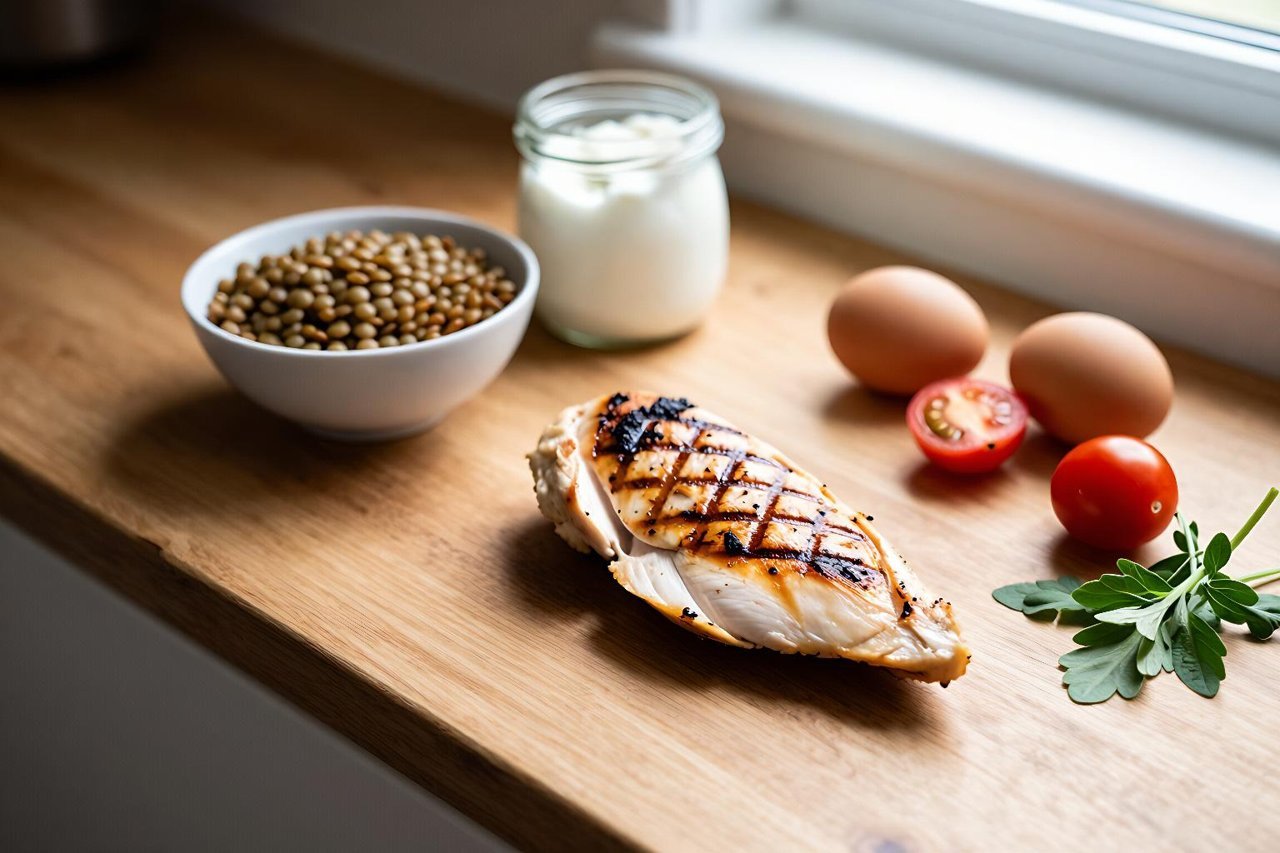
Breakfast is where most people fall short. Two eggs give you about 12 g. Add 200 g of Greek yogurt and you’re at 29 g without really trying. If you want a baseline to check your own numbers against, this smart eater’s guide to daily nutrition is a decent starting point.
Mistake 3: Believing the ‘high protein’ label
Supermarket packaging is marketing, not nutrition science. A bar shouting “20 g protein!” in bold letters can also carry 14 g of added sugar and enough sugar alcohols to leave you bloated on the drive home. A breakfast cereal with “10 g protein per serve” might be sitting on 18 g of sugar. Protein isn’t the only thing in the box.
What to check instead of the front of the pack
- Protein per 100 calories: 10 g or more is solid for a snack, 8 g+ for the base of a meal.
- Added sugar: under 5 g per serve is a reasonable line to draw.
- Fibre: if it’s under 3 g, you’re mostly eating a candy bar with a whey label.
- Sodium: deli meat, jerky and flavoured powders often carry 400 to 800 mg per serve.
If you want to compare formats directly rather than guess, there’s a useful face-off between whole foods, powders, bars and meal prep that weighs up cost, satiety and convenience.
Mistake 4: Assuming plant protein doesn’t count
Two errors here, and they run in opposite directions.
Error one: “plants don’t have protein.” A cup of cooked lentils has about 18 g. A block of firm tofu, 15 to 20 g. Tempeh, edamame, hemp seeds and soy milk all pull their weight. These are protein-rich foods in every meaningful sense.
Error two: assuming anything plant-based is automatically a protein source. Plenty of veggie patties are mostly rice flour and oil with 4 g of protein. Read the label.
On the old completeness worry: the idea that you must pair rice and beans in the same mouthful is outdated. Your body maintains a pool of amino acids, so eating a varied mix of plant proteins across the day covers the gaps. Soy, quinoa and hemp are complete on their own anyway. If you’d like to see how the classics stack up gram for gram, this side-by-side look at chicken, lentils and Greek yogurt puts them next to each other.
Mistake 5: Ignoring the company your protein keeps
200 g of ribeye and 200 g of skinless chicken breast both deliver protein. They don’t deliver the same saturated fat. Processed meats like bacon, salami and hot dogs carry a consistent association with colorectal cancer risk at higher intakes, which is why they sit in the same classification group as tobacco smoke (though not the same risk magnitude, a distinction people love to blur).
If heart health is part of why you’re eating better, the overall pattern matters more than the gram count on any single food. A comparison of Mediterranean, DASH and plant-based approaches is a good reality check on where your protein fits into the bigger picture.
Mistake 6: Living on shakes and bars
Powder is convenient, cheap per gram, and not remotely fake. The mistake is letting it replace meals instead of filling gaps around them.
Two shakes a day plus a normal dinner can leave you with maybe 30 g of protein from actual food. Food brings fibre, water, micronutrients and chewing, and chewing contributes to fullness in ways a drink doesn’t. Whole protein-rich foods also tend to fill you up more per calorie, which is why a chicken thigh and roasted vegetables keeps you satisfied far longer than the same calories blended with milk.
A fair rule: powder fills gaps, not meals. If you’re rebuilding your habits from scratch rather than patching them, a practical step-by-step plan for eating more protein-rich foods tends to stick better than a shelf of tubs.
The quiet signs it’s actually working
Forget the scale for a couple of weeks and watch these instead:
- You make it four or five hours between meals without raiding the cupboard.
- Portions stay steady without willpower, because you’re genuinely satisfied.
- Workout soreness fades faster and your lifts creep up rather than stall.
- The 3pm energy crash flattens out.
If none of that happens after three or four weeks of hitting 1.6 g per kilogram, spread across three or four meals, mostly from whole foods, the bottleneck probably isn’t protein. Look at total calories, sleep and training load before you buy another tub.
Start with breakfast. It’s the meal with the widest gap and the easiest fix: Greek yogurt, cottage cheese, three eggs, or a scoop of powder stirred into oats. Twenty-five to thirty grams, five minutes, no recipe required. Get that one meal right and you’ve solved close to half the problem before lunch even arrives.


