
Table of Contents
Most people who decide to eat more protein start in the same place: they buy a tub of powder. It’s an easy purchase, it feels like progress, and it’s usually not the thing that makes the difference. Before you spend anything, it helps to know what a high protein meal actually is, why your body cares about it, and how to spot one on a plate at a glance.
This is a from-scratch primer. No assumptions, no jargon, no meal plan you have to follow to the letter.
What Makes a Meal “High Protein”?
High protein isn’t a fixed label you’ll find on a menu. It’s about proportion. A meal earns the name when protein makes up a serious chunk of what’s on the plate, usually somewhere between 25 and 40 grams.
For comparison, a typical bowl of cereal with milk lands around 8 grams. A ham sandwich on white bread might scrape 15. A plate of pasta with tomato sauce gets you about 12 grams and a lot of carbohydrate. Those aren’t bad meals, they’re just not protein-forward.

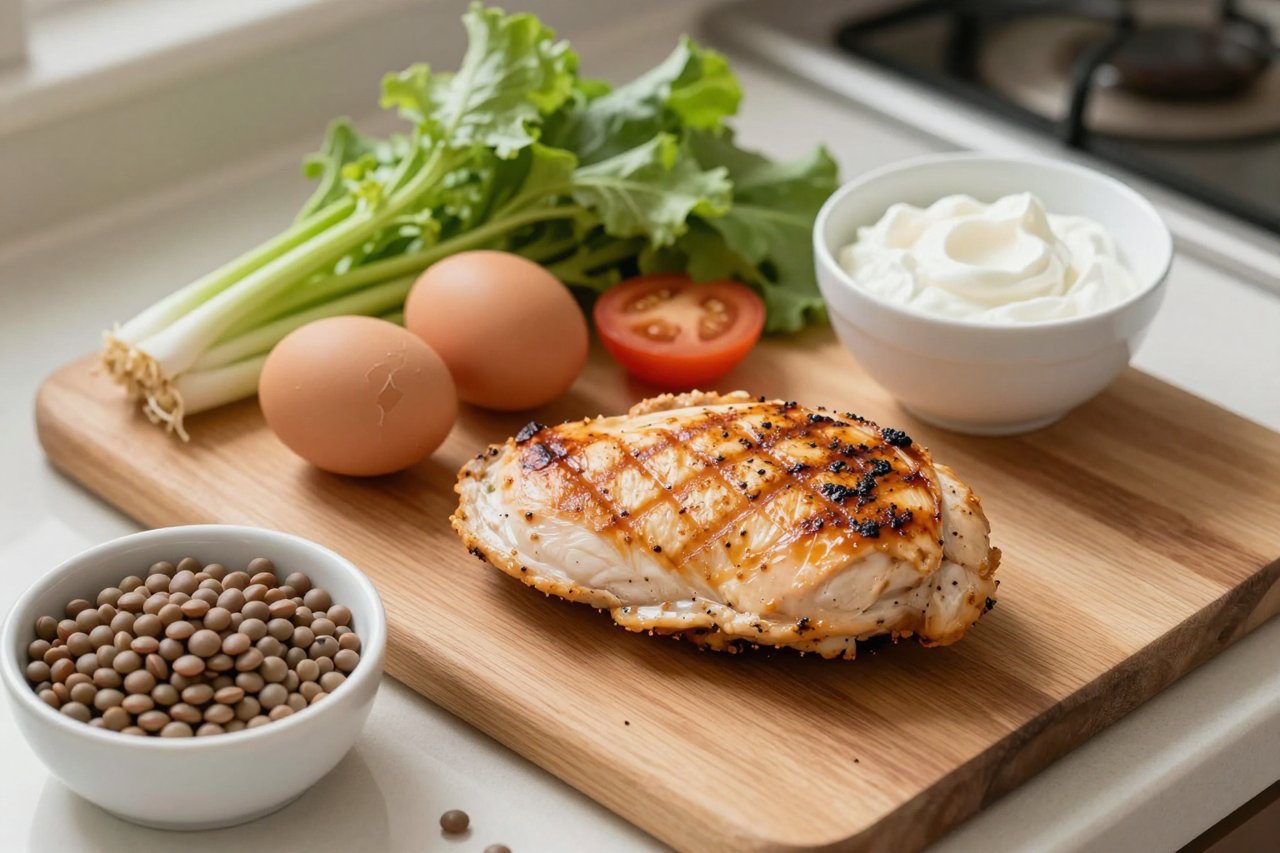
Concrete anchors help you eyeball it. A palm-sized chicken breast is roughly 30 grams. Two large eggs give you 12. A single-serve pot of Greek yogurt is about 17. Once you have a handful of these numbers in your head, you can look at any plate and estimate within 5 grams.
Why per-meal matters more than per-day
Your body doesn’t bank protein like a savings account. Muscle repair responds to each individual feeding, and there’s a threshold: below roughly 20 to 25 grams in one sitting, the signal to build muscle stays fairly quiet. Spread 120 grams across four meals and you trigger that response four times. Squeeze the same 120 grams into one enormous dinner and you waste most of the opportunity.
Research on protein distribution suggests aiming for around 0.4 grams per kilogram of body weight per meal. For a 70 kg person, that’s about 28 grams per sitting. Which is where the 30-gram benchmark comes from.
How Much Protein Do You Actually Need?
The official minimum for a sedentary adult is 0.8 grams per kilogram of body weight. That’s the amount that prevents deficiency, not the amount that helps you feel full, hold onto muscle while losing fat, or recover from training.
Practical ranges that most dietitians work with:
- Sedentary adult: 1.0 to 1.2 g/kg
- Regular exerciser: 1.4 to 1.7 g/kg
- Strength training or fat loss: 1.8 to 2.2 g/kg
- Over 60: 1.2 to 1.5 g/kg, higher than younger adults because muscle responds less efficiently
A 75 kg person training three times a week is looking at roughly 105 to 130 grams a day. Split across three meals, that’s 35 to 43 grams per plate. It sounds like a lot until you see it laid out on a table.
Be careful with online calculators. Many of them use activity labels that don’t match what you actually do, or they plug in goal weight when they should use lean mass. If your number looks wildly high or low, it’s worth knowing the common protein intake calculator mistakes that skew your daily target before you build your whole routine around it.
The Best Sources, Ranked by Convenience Rather Than Virtue
There’s no moral hierarchy here. Whey powder and a chicken thigh both deliver amino acids. What differs is cost, prep time, and how easy it is to eat them consistently. Approximate protein per typical serving:
- Chicken breast, 100 g cooked: 31 g
- Lean beef mince, 100 g: 26 g
- Salmon fillet, 100 g: 25 g
- Tinned tuna, one small tin: 25 g
- Firm tofu, 100 g: 15 to 18 g
- Cooked lentils, one cup: 18 g
- Greek yogurt, 170 g pot: 17 g
- Two large eggs: 12 g
- Cottage cheese, 100 g: 11 g
- Whey or plant protein scoop: 20 to 25 g
Plant eaters need a bit more planning. Most plant proteins are lower in leucine, the amino acid that flips the muscle-building switch, so you’ll often want larger portions or a deliberate mix of beans, grains, soy, and dairy alternatives across the day.
Building Your First High Protein Meal
Forget recipes for a moment. Nearly every high protein meal is three things stacked together.
1. The protein anchor
This is the non-negotiable. Decide it first, then build everything else around it. Chicken, mince, fish, eggs, tofu, Greek yogurt, prawns, tinned beans. Pick one and commit 30 grams or so.
2. The volume
Vegetables, salad, roasted veg, a grain. This is what stops the meal feeling like a sad pile of meat and keeps you full without pushing the calorie count through the roof.
3. The flavour layer
Sauce, spice blend, herbs, citrus, chilli oil, yoghurt dressing. This is the part beginners skip and then abandon the whole approach because eating plain grilled chicken four nights a week is miserable.
Once you think in these three parts, you stop needing recipes. If you want a head start, there’s a solid method for building high protein meals in 10 minutes without following a recipe that walks through the assembly order step by step.
Beginner Mistakes That Quietly Undo the Work
Most people don’t fail because they chose the wrong foods. They fail because of a handful of small structural errors.
All the protein lands at dinner. Breakfast is usually the weakest meal in the day. Fixing it, even just adding two eggs or a pot of Greek yogurt, is often the single highest-value change a beginner can make.
Snacks that are mostly carbohydrate. A cereal bar with 5 grams of protein in 200 calories isn’t a protein snack, it’s a biscuit with good marketing. There’s a longer breakdown of why protein snacks fail and how to fix each mistake if snacking is where your day falls apart.
Eyeballing portions for months. Weigh your usual protein sources for one week. Most people discover their “large” chicken breast is 22 grams, not 35.
Cutting out fat and carbs entirely. Protein alone makes for grim eating and poor adherence. Keep the rice, keep the olive oil, just get the protein sorted first.
What a Real Day Looks Like
Here’s a 75 kg person hitting around 130 grams without anything resembling a diet plan.
Breakfast: three scrambled eggs, two slices of sourdough, a pot of Greek yogurt with berries. About 35 g.
Lunch: leftover chicken thigh, couscous, roasted peppers, feta. About 35 g.
Afternoon: cottage cheese on crackers and an apple. About 15 g.
Dinner: salmon fillet, lentils, greens, lemon yoghurt. About 40 g.
Nothing exotic, nothing weighed to the gram, and it clears the target with room to spare. If you’d rather work from actual recipes, there are five satisfying high protein recipes that hit 40 grams a plate to pull from.
Fix One Meal Before You Fix the Whole Day
The temptation when you start is to overhaul everything at once, and that’s how most attempts collapse by Thursday. Pick a single meal, almost always breakfast, and rebuild it around 30 grams of protein. Hold that for two weeks until it’s automatic. Then move to lunch.
Along the way you’ll hit a fork in the road: whole foods, powder, bars, or batch cooking. Each has a genuine use, and none of them is universally right. A quick comparison of whole foods, protein powder, bars and meal prep options can save you from buying a cupboard full of things you’ll never finish.
Start with one plate. Get the protein anchor right, add vegetables, don’t skip the sauce. Repeat it enough times that you stop thinking about it, and you’ll be eating high protein meals by default long before you feel like you’ve been on a diet.


