
Table of Contents
The question is as old as humanity: Are we alone in the universe? For centuries, it lived in the realm of philosophy and science fiction. But today, it’s a serious scientific inquiry. We’ve found water on Mars, thousands of exoplanets in the habitable zone, and organic molecules on distant moons. The search for alien life has moved from if to where and how.
Redefining Life: What Are We Actually Looking For?
When we talk about alien life, we’re not just picturing little green men or Hollywood monsters. The search is broader—and stranger. Astrobiologists define life as a self-sustaining chemical system capable of Darwinian evolution. That includes everything from microbes to intelligent civilizations.
One of the biggest shifts in recent decades is the understanding that life can thrive in extreme conditions. On Earth, we’ve found organisms living in boiling hot springs, Antarctic ice, and deep-sea hydrothermal vents. These extremophiles have expanded our idea of where life could exist. If life can survive in a volcanic vent on Earth, why not in the methane lakes of Titan?
Mars: The Closest Candidate
Water and Methane: Clues from the Red Planet
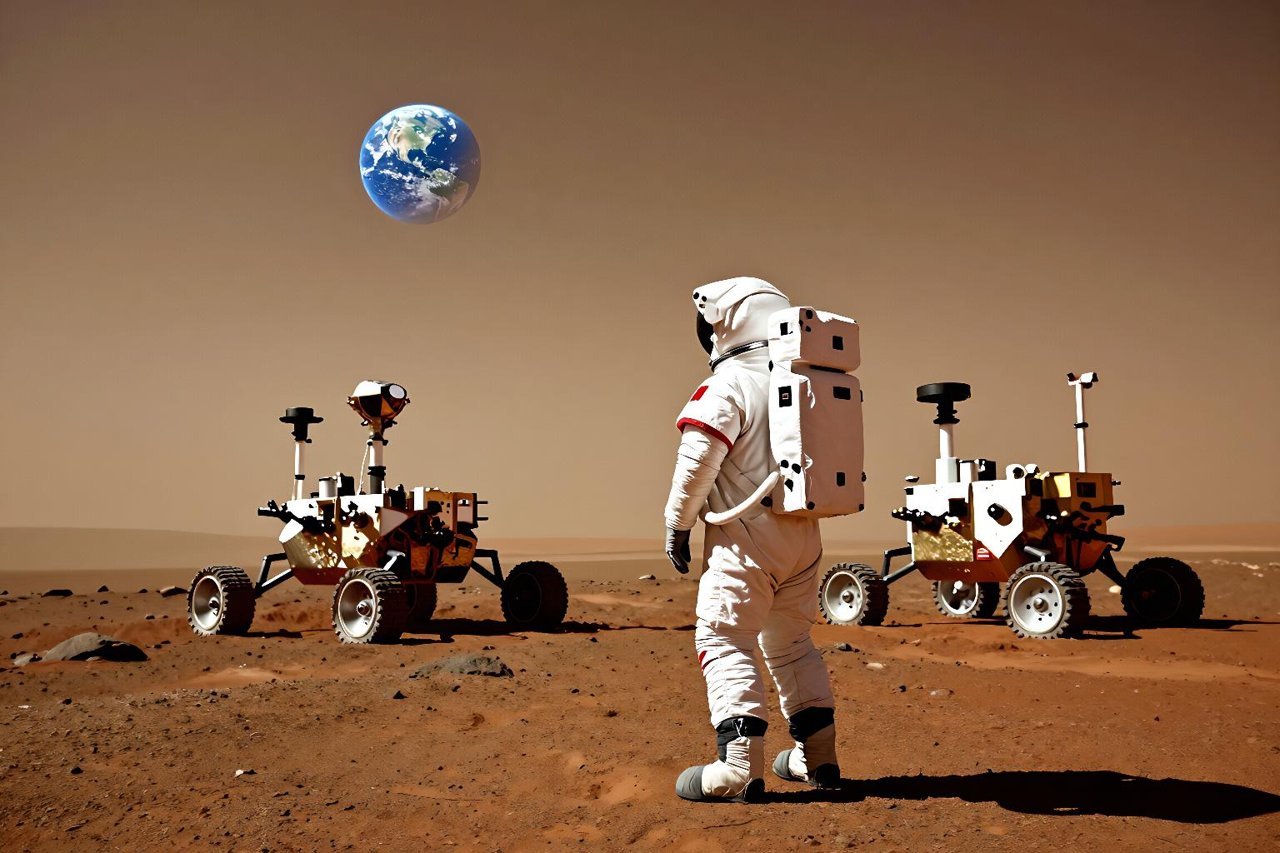
Mars has been the focus of alien life research for decades. We’ve sent rovers, landers, and orbiters to study its geology and atmosphere. The evidence is compelling: Mars once had liquid water, and it still has subsurface ice. In 2018, NASA’s Curiosity rover found complex organic molecules in ancient rocks. And then there’s the methane mystery—Mars releases methane seasonally, a gas that on Earth is often produced by microbes.

The ESA’s ExoMars rover, scheduled to launch in 2028, will drill up to two meters into the Martian surface to search for signs of past or present life. This is the most direct search yet.
What About the Martian Meteorites?
In 1996, scientists claimed that a meteorite from Mars, ALH84001, contained fossilized nanobacteria. The claim was controversial and largely dismissed, but it sparked a new wave of research. Today, we have better tools to analyze such samples. The question remains open.
Europa and Enceladus: Oceans Under Ice
Jupiter’s moon Europa and Saturn’s moon Enceladus are two of the most promising places for alien life in our solar system. Both have subsurface oceans of liquid water kept warm by tidal forces. The Cassini spacecraft flew through Enceladus’s icy plumes and found hydrogen, methane, and carbon dioxide—ingredients that could support microbial life.
NASA’s Europa Clipper mission, launching in 2024, will perform dozens of flybys of Europa, mapping its ice shell and searching for plumes. If we find organic compounds or even cells, it would be a game-changer.
Exoplanets: Billions of Worlds, Billions of Possibilities
The Kepler Space Telescope showed us that most stars have planets. A significant fraction of those are rocky and in the habitable zone—where temperatures allow liquid water. The James Webb Space Telescope is now analyzing the atmospheres of these exoplanets. In 2023, Webb detected carbon dioxide and methane on a planet called K2-18 b, which is about 8.6 times Earth’s mass. Those gases could be signs of biological activity.
The Biosignature Problem
Detecting a biosignature—a chemical indicator of life—is tricky. Oxygen is produced by photosynthesis, but it can also come from geological processes. Methane can be biological or volcanic. Scientists are working on models to distinguish life from non-life. The key is to find multiple, simultaneous gases that are out of equilibrium, like oxygen and methane together.
Could Alien Life Be Technologically Advanced?
The search for intelligent alien life is the domain of SETI (Search for Extraterrestrial Intelligence). For decades, SETI has been scanning the skies for artificial radio signals. So far, nothing convincing has been found. But the search space is huge—we’ve only listened to a tiny fraction of the stars.
In 2020, the Breakthrough Listen project released the largest-ever dataset of radio observations, making it public for anyone to analyze. Could an alien civilization be broadcasting in a frequency we haven’t tried? Or using technologies we can’t imagine, like laser pulses or gravitational waves?
The Fermi Paradox: Where Is Everybody?
Enrico Fermi famously asked: If the universe is so vast and old, where are all the aliens? This paradox drives much of the debate. Possible answers range from the Great Filter—some catastrophic event that civilizations tend to destroy themselves—to the idea that we’re simply not looking at the right time or place.
Another possibility is that alien life is common, but intelligent, technological life is rare. After all, it took Earth 4.5 billion years to produce a species that builds radio telescopes. That timescale might be the norm.
How Close Are We to Finding Alien Life?
It’s hard to predict, but many scientists believe we’ll find definitive evidence within the next 20 to 30 years. The combination of better telescopes, sample-return missions, and advanced AI for data analysis is accelerating the search. The first discovery might be microbial life in the plumes of Enceladus, or a weird atmospheric signature on a nearby exoplanet.
But there’s also a chance we’ve already found it and didn’t recognize it. Some researchers argue that the Viking landers on Mars in the 1970s might have killed Martian microbes with their own experiments. The controversy persists.
What Would Alien Life Mean for Humanity?
Finding any form of alien life would be one of the most profound discoveries in history. Even a simple microbe would show that life is not a one-time miracle—it’s a cosmic phenomenon. That would reshape philosophy, religion, and science. It would also give us a new perspective on our own planet and our place in the universe.
Some people worry about the risks. In fiction, aliens are often hostile. But in reality, the biggest threat might be contamination—bringing back a microbe that could harm Earth’s biosphere. That’s why sample-return missions are handled with extreme precautions.
For now, the search continues. Every time a rover finds a new organic molecule or a telescope detects a promising exoplanet, we get a little closer to answering that ancient question. Whether the answer comes in our lifetime or centuries from now, the journey itself is a testament to human curiosity.


