
Table of Contents
The James Webb Space Telescope (JWST) has already reshaped our understanding of the cosmos—and it’s only just begun. Launched on Christmas Day 2021, this $10 billion observatory is the most powerful space telescope ever built. Unlike its predecessor, Hubble, which sees mostly visible light, JWST specializes in infrared. This allows it to peer through dust clouds and look back in time to the very first galaxies.
Why Infrared Matters
Infrared light is key to unlocking the universe’s secrets. As light from distant galaxies travels across space, the universe’s expansion stretches it into longer, redder wavelengths—a phenomenon called redshift. By the time this light reaches us, it’s shifted into the infrared. JWST’s mirrors and instruments are optimized to detect these faint, ancient signals.
Additionally, infrared can penetrate the dense dust and gas that obscure star-forming regions and planetary systems. Hubble often struggled to see through these cosmic veils, but JWST cuts through them with ease. The result: stunning images of stellar nurseries, like the Pillars of Creation, that reveal never-before-seen details.
Key Design and Instruments
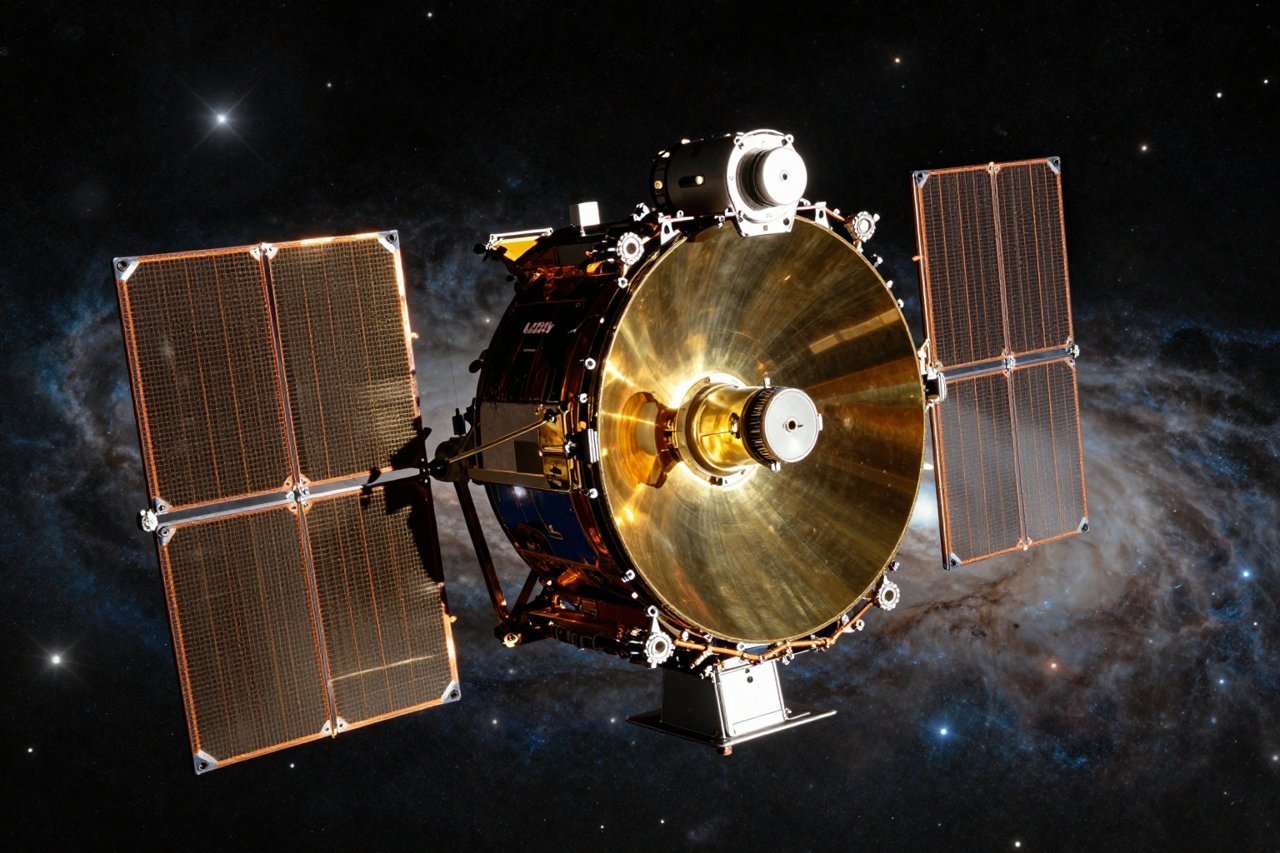
JWST’s primary mirror is a 6.5-meter (21.3-foot) segmented beryllium mirror coated in gold. It’s so large it had to be folded to fit inside its rocket. The five-layer sunshield, the size of a tennis court, keeps the telescope at a frigid -233°C, essential for detecting faint infrared heat without interference from the Sun.

The telescope carries four main instruments:
- NIRCam (Near-Infrared Camera): Captures images and spectra of the earliest galaxies and star formation.
- NIRSpec (Near-Infrared Spectrograph): Splits light into spectra to analyze chemical compositions of celestial objects.
- MIRI (Mid-Infrared Instrument): Sees longer wavelengths to study cooler objects like dust disks and exoplanets.
- NIRISS (Near-Infrared Imager and Slitless Spectrograph): Supports exoplanet characterization and deep-field imaging.
These instruments work in concert to deliver data that astronomers have waited decades for.
Discoveries So Far
Since its first images were released in July 2022, JWST has delivered a torrent of discoveries. Here are some of the most significant.
Galaxies at Cosmic Dawn
Within weeks, JWST identified galaxies that existed just 300–400 million years after the Big Bang. These galaxies are surprisingly bright and massive, challenging current models of galaxy formation. One candidate, GLASS-z13, may be the oldest known galaxy. The telescope’s deep-field images, like SMACS 0723, show thousands of galaxies in a patch of sky the size of a grain of sand held at arm’s length.
Exoplanet Atmospheres
JWST has revolutionized exoplanet science. It detected carbon dioxide in the atmosphere of WASP-39b, a hot gas giant 700 light-years away—a first. It also found water, methane, and other molecules. For the TRAPPIST-1 system, JWST is scrutinizing the atmospheres of Earth-sized planets in the habitable zone. Early results suggest some may lack thick hydrogen envelopes, potentially making them rocky like Earth.
Star Formation and Protoplanetary Disks
The telescope has captured unprecedented details of star birth. In the Rho Ophiuchi cloud complex, JWST revealed hundreds of young stars with glowing disks of material that may form planets. The images show jets of gas streaming from protostars, painting a dynamic picture of stellar nurseries.
How JWST Differs from Hubble
Hubble and JWST are complementary, not competitors. Hubble observes primarily in visible and ultraviolet light, while JWST focuses on infrared. Hubble orbits Earth; JWST sits at the Sun-Earth L2 Lagrange point, 1.5 million kilometers away. This location keeps the telescope stable and cold. JWST’s mirror is nearly three times wider than Hubble’s, giving it more light-gathering power. Together, they provide a multi-wavelength view of the universe.
Challenges and Surprises
Operating a telescope this complex comes with hurdles. In 2022, a micrometeoroid impact damaged one of JWST’s mirror segments, though engineers compensated by adjusting the segment’s position. The sunshield also experienced minor tears, but thermal performance remains nominal. Despite these issues, JWST’s performance has exceeded expectations.
One surprise: the early universe appears to contain more massive galaxies than predicted. This suggests that galaxy formation happened faster and more efficiently than computer simulations assumed. Astronomers are now debating whether the models need major revisions.
What’s Next for JWST
The telescope’s nominal mission is five years, but it carries enough fuel for at least ten. Upcoming observations include deep dives into the atmospheres of potentially habitable exoplanets, studies of supermassive black holes, and surveys of the first stars. JWST will also observe objects in our own solar system, from Jupiter’s moon Europa to the icy worlds of the Kuiper Belt.
Astronomers have already submitted thousands of proposals for the next cycle. The telescope is in high demand. Each observation is carefully scheduled to maximize science return. The coming years will see JWST probe the mysteries of dark energy, cosmic inflation, and the origins of life’s building blocks.
The James Webb Space Telescope is more than a successor to Hubble. It’s a time machine, a chemistry lab, and a window into the universe’s infancy. Every image it sends back rewrites textbooks. And the best is yet to come.


