
Table of Contents
Warts are common, benign skin growths caused by the human papillomavirus (HPV). While often harmless, they can be unsightly, uncomfortable, or even embarrassing. Fortunately, effective warts treatment options exist, ranging from simple at-home remedies to in-office medical procedures. This guide breaks down the most proven methods, helping you choose the right approach based on wart type, location, and your personal preferences.
Understanding Warts: What Causes Them and Who Gets Them
HPV enters the skin through tiny cuts or breaks, triggering rapid cell growth that forms a wart. The virus thrives in warm, moist environments—think locker rooms, public showers, or shared pool decks. Anyone can get warts, but children, teens, and people with weakened immune systems are particularly susceptible.
Warts can appear almost anywhere on the body, and their appearance varies by type. Common warts often develop on hands and fingers, while plantar warts grow on the soles of the feet, sometimes causing pain when walking. Flat warts are smaller and smoother, frequently showing up on the face, neck, or legs. Genital warts are a separate category requiring specialized care—more on that later.
At-Home Warts Treatment Options
Many warts resolve on their own within months or years, but most people prefer faster removal. Over-the-counter treatments offer a convenient first line of defense.

Salicylic Acid
Salicylic acid is the most widely used OTC treatment. Available in gels, pads, and liquids, it works by peeling away the infected skin layer by layer. You apply it daily after soaking the wart in warm water and gently filing the surface with a pumice stone or emery board. It can take weeks to months for a wart to disappear completely. Consistency is key—missed applications slow progress.
Cryotherapy Kits
Home freezing kits use a refrigerant (often dimethyl ether and propane) to freeze the wart, similar to what a doctor does. While convenient, these kits are less powerful than professional cryotherapy. They work best on small, raised warts on fingers or hands. Follow the instructions precisely to avoid damaging surrounding skin. Expect some stinging and blistering—that’s normal.
Duct Tape Occlusion
This old-school remedy involves covering the wart with silver duct tape for six days, then soaking and filing it. Some studies show it can be effective, possibly by stimulating the immune system or suffocating the virus. While cheap and painless, results vary. It’s worth trying for persistent warts, especially in children who fear needles or burning.
Medical Warts Treatment: When to See a Doctor
If OTC treatments fail after three months, or if the wart is painful, bleeding, or spreading, it’s time to consult a dermatologist. Medical treatments are faster and more reliable, especially for stubborn or large warts.
In-Office Cryotherapy
Liquid nitrogen is applied to the wart, freezing it at -320°F. The tissue dies and eventually falls off within one to three weeks. A single session often suffices for small warts, but larger ones may need repeat visits. Side effects include pain, blistering, and temporary skin darkening. This is the most common medical warts treatment for good reason—it’s quick, effective, and well-tolerated.
Cantharidin
Cantharidin, derived from blister beetles, is painted onto the wart. It creates a blister underneath, lifting the wart off the skin. The area must be covered for several hours, then the blister dries and the wart comes off in about a week. It’s painless during application but may sting later. This method works well for children because it doesn’t involve needles or cutting.
Electrosurgery and Curettage
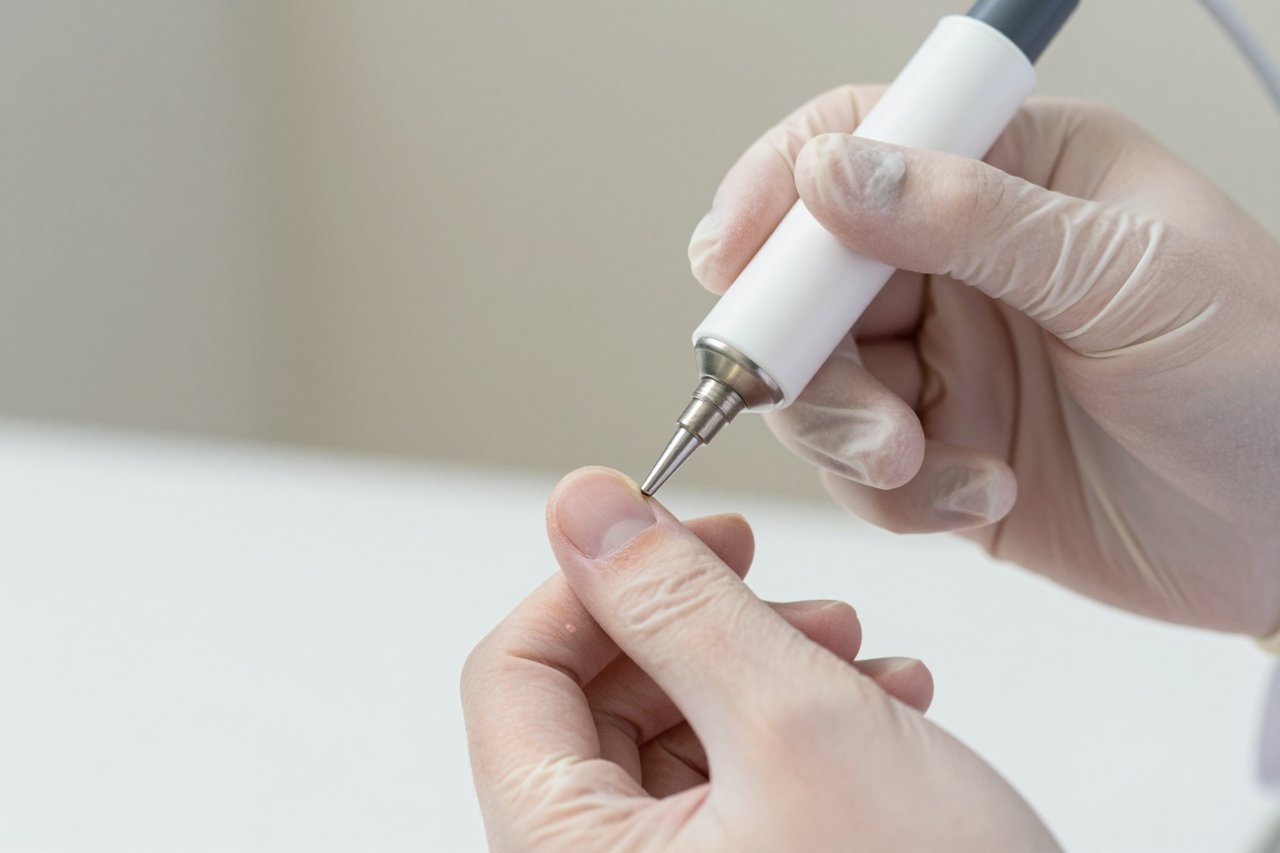
For large or stubborn warts, a doctor may numb the area, burn the wart with an electric needle, and scrape away the dead tissue with a sharp instrument called a curette. This procedure is highly effective but leaves a small scar. It’s often used for common warts on the hands or plantar warts that don’t respond to other treatments.
Laser Treatment
Pulsed-dye lasers target the tiny blood vessels feeding the wart, cutting off its blood supply. The wart then shrivels and disappears over two to three sessions. Laser treatment is expensive and typically reserved for warts that have failed all other therapies. It can be painful and may cause temporary bruising or scarring.
Immunotherapy
When warts cover a large area or keep coming back, dermatologists may use immunotherapy. A chemical like squaric acid is applied to the skin, causing a mild allergic reaction that triggers the immune system to attack the wart. Alternatively, an injection of Candida antigen into the wart can stimulate an immune response. This approach can clear multiple warts at once, even those not directly treated.
Treating Specific Wart Types
Not all warts respond to the same treatments. Here’s what works best for common varieties.
Plantar Warts
Because they grow inward due to pressure from walking, plantar warts are notoriously tough. A basal cell carcinoma is a different condition, but like plantar warts, it requires precise treatment. For plantar warts, salicylic acid and cryotherapy are first-line options, but stubborn cases often need laser treatment or electrosurgery. Paring down the wart with a scalpel before applying acid can improve penetration. Never try to cut out a plantar wart yourself—infection and scarring are real risks.
Flat Warts
These small, smooth warts often appear in clusters on the face, neck, or legs. Because they’re numerous, treatments that target many at once (like immunotherapy or topical retinoids) are ideal. Glycolic acid peels or tretinoin cream can gradually flatten them. Avoid harsh treatments like cryotherapy on the face, as they can cause discoloration.
Genital Warts
Genital warts require a completely different approach because they’re caused by sexually transmitted strains of HPV. Never attempt to treat them yourself. A doctor can prescribe topical creams (like imiquimod or podophyllotoxin) or remove them with cryotherapy or laser. For detailed information, see our article on genital warts symptoms, treatment and prevention. Also, genital warts are one of the top 12 sexually transmitted diseases (STDs) and their treatments. Early treatment reduces the risk of spreading the virus to partners.
Prevention: How to Avoid Getting Warts
Preventing warts is easier than treating them. The HPV vaccine, which covers many wart-causing strains, is recommended for preteens and young adults. Other smart habits include:
- Avoid walking barefoot in public locker rooms, pools, and showers.
- Don’t pick at warts—that spreads the virus to other body parts.
- Keep your hands clean and dry, especially after touching a wart.
- Don’t share towels, razors, or nail clippers with someone who has warts.
- Cover warts with a bandage if you swim or play contact sports.
Warts vs. Other Skin Growths
Not every bump on your skin is a wart. Basal cell carcinoma is a type of skin cancer that can resemble a wart, especially when it appears as a pearly or waxy bump that bleeds easily. If a growth doesn’t heal, changes size or color, or bleeds, see a dermatologist to rule out cancer. Similarly, stretch marks are a completely different skin issue, caused by rapid stretching of the skin rather than a virus. Knowing the difference ensures you get the right treatment.
What to Expect During Recovery
After any warts treatment, the area may be sore, red, or blistered for a few days. Keep it clean and covered if needed. Don’t pick at the scab or blister—let it heal naturally. It can take one to four weeks for the dead wart to fall off. If you experience signs of infection (increasing pain, pus, red streaks), contact your doctor.
Even after successful removal, warts can recur because HPV may remain in nearby skin cells. Repeating treatment or switching methods often clears them permanently. Strengthening your immune system through a healthy diet, adequate sleep, and stress management can also reduce the chance of recurrence.
Warts treatment doesn’t have to be a long, frustrating process. With the right approach—whether at-home or medical—you can clear these growths and get back to smooth, healthy skin. Start with the simplest option that fits your wart type, and don’t hesitate to seek professional help if progress stalls.


