
Table of Contents
Imagine stepping into a world where your refrigerator orders groceries before you run out, where doctors can edit your genes to cure diseases, and where autonomous vehicles eliminate traffic jams. This isn’t science fiction—it’s the near future. The next decade will bring future technology that fundamentally changes our daily lives, industries, and even what it means to be human. Here are the breakthroughs to watch.
Artificial Intelligence: From Tools to Teammates
AI has already infiltrated our lives in subtle ways—think Netflix recommendations or spam filters. But the coming wave of future technology will make AI an active collaborator. Artificial intelligence is already changing your life in ways you might not notice, but soon it will be impossible to ignore.
Generative AI Beyond Text and Images
Today’s generative AI can write essays and create art. Tomorrow’s will design entire buildings, compose symphonies, and invent new materials. Google’s AlphaFold has already predicted the structure of nearly all known proteins—a task that would have taken centuries manually. By 2030, AI could help us solve climate change by optimizing energy grids or discovering new carbon-capture compounds.
AI in Healthcare
AI-powered diagnostics are already outperforming radiologists in detecting certain cancers. Soon, wearable devices will monitor your biomarkers in real time, alerting you to early signs of disease. Imagine a smartwatch that can predict a heart attack hours before it happens. That’s the promise of future technology in medicine.

Quantum Computing: Solving the Unsolvable
While classical computers use bits (0 or 1), quantum computers use qubits that can exist in multiple states at once. This lets them tackle problems that would take today’s supercomputers millennia to solve. Companies like IBM, Google, and startups are racing to build the first fault-tolerant quantum machine.
What Quantum Will Actually Do
- Drug discovery: Simulate molecular interactions to design new medicines in days instead of years.
- Cryptography: Break current encryption—and create unbreakable quantum encryption.
- Climate modeling: Accurately predict weather patterns and develop better batteries for renewable energy.
We’re still in the early days, but by 2030, quantum computing could be accessible via the cloud, giving researchers worldwide unprecedented power.
Biotechnology: Rewriting the Code of Life
CRISPR gene editing has already cured sickle cell disease in clinical trials. The next frontier is editing multiple genes simultaneously to tackle complex conditions like heart disease or Alzheimer’s. Human evolution has always been slow, but biotech now lets us steer our own genetic future.
Lab-Grown Organs and Cellular Agriculture
Over 100,000 people are on organ transplant waiting lists in the U.S. alone. Scientists are now growing functional human organs—like kidneys and livers—from stem cells. Meanwhile, lab-grown meat is already on menus in Singapore and the U.S., reducing the environmental impact of farming. By 2030, your supermarket might stock chicken grown in a bioreactor, not a farm.
Space Technology: A Multi-Planetary Species
Space exploration is entering a new era, driven by private companies like SpaceX and Blue Origin. Life on Mars is no longer a dream; NASA and SpaceX aim to land humans there within the decade. But the real revolution is in space-based infrastructure.
Satellite Internet and Space Manufacturing
Starlink already beams internet to remote areas. Soon, thousands of satellites will provide global high-speed connectivity, bridging the digital divide. In microgravity, we can manufacture perfect fiber optics, advanced alloys, and even pharmaceuticals that are impossible to make on Earth. The first space factories could be operational by 2028.
Transportation: The End of Traffic?
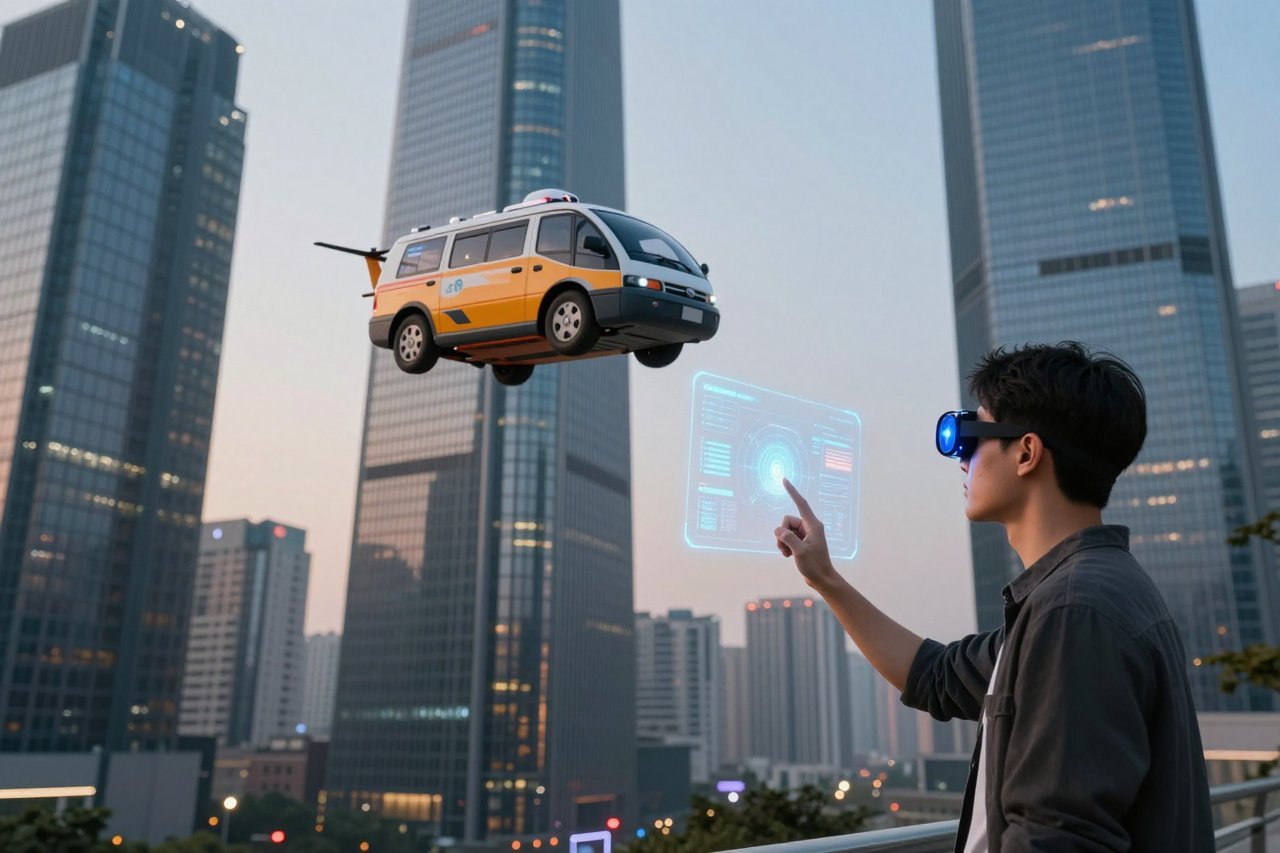
Autonomous vehicles are already shuttling passengers in Phoenix and San Francisco. But the bigger shift is electric vertical takeoff and landing (eVTOL) aircraft—flying taxis. Companies like Joby Aviation and Lilium have completed test flights, and commercial service could launch in select cities by 2026.
Hyperloop and High-Speed Rail
While Hyperloop has faced setbacks, magnetic levitation trains are speeding up. Japan’s Chuo Shinkansen will connect Tokyo and Osaka in 67 minutes (currently 2.5 hours) by 2027. China already operates maglev trains exceeding 600 km/h. The future of land travel is faster, cleaner, and more efficient.
Energy: Clean, Abundant, and Decentralized
Solar and wind are now cheaper than coal in most parts of the world. But the next breakthrough is nuclear fusion—the same process that powers the sun. In 2022, the National Ignition Facility achieved a net energy gain from fusion for the first time. If commercialized, fusion could provide limitless clean energy. Startups like Commonwealth Fusion Systems aim to have a working reactor by the early 2030s.
Solid-State Batteries
Current lithium-ion batteries are heavy and prone to overheating. Solid-state batteries promise twice the energy density, faster charging, and no fire risk. Toyota plans to release a solid-state battery EV by 2027, giving electric cars a 500-mile range and a 10-minute recharge time.
The Internet of Things: A Trillion Sensors
By 2030, there could be over 30 billion connected devices worldwide. Smart cities will use sensors to manage traffic, reduce energy use, and even predict crime. Your home will become a responsive environment: lights that adjust to your mood, thermostats that learn your schedule, and refrigerators that track expiration dates.
Privacy in a Connected World
With all this data comes risk. Future technology must balance convenience with security. Decentralized identity systems—powered by blockchain—could let you control who accesses your personal information. The debate over surveillance versus safety will only intensify.
Augmented and Virtual Reality: Blurring the Line
Apple’s Vision Pro and Meta’s Quest headsets are just the beginning. Within five years, lightweight AR glasses could replace your smartphone. Imagine walking down the street and seeing directions overlaid on the pavement, or trying on clothes virtually before buying. In the workplace, surgeons could practice complex procedures in VR, and architects could walk through buildings before they’re built.
Robotics: Machines That Learn Like Humans
Robots have long been confined to factory floors. But new AI models, like Google’s PaLM-E, allow robots to understand natural language and adapt to new situations. Boston Dynamics’ Atlas can now perform backflips, but the real leap is in general-purpose robots that can clean your house, cook meals, or assist the elderly. By 2030, you might share your home with a robot that’s more helper than appliance.
Ethics and the Human Element
All this future technology raises profound questions. Who benefits when AI replaces jobs? How do we ensure gene editing doesn’t create genetic inequality? What happens to our privacy when every device watches us? These aren’t just technical challenges—they’re societal ones. The solutions will require collaboration between engineers, policymakers, and citizens.
One thing is certain: the future is arriving faster than ever. From ocean discoveries that reveal new species and ancient secrets to new species discovered in 2025, our planet is still full of surprises. And with the tools of modern science—AI, biotech, space tech—we’re poised to unlock even more. The question isn’t whether these technologies will transform our world, but how we’ll choose to use them.


