
Table of Contents
Mars has captivated human imagination for centuries. But only in the last few decades have we turned that curiosity into action, sending a fleet of robotic explorers to study its surface, atmosphere, and potential for life. Today, Mars missions are more ambitious than ever, with multiple space agencies and private companies racing to unlock the planet’s secrets—and eventually, land humans there.
Why Mars? The Allure of the Red Planet
Mars isn’t just another planet. It’s the most Earth-like world in our solar system, with a day length almost identical to ours, polar ice caps, and evidence of ancient rivers and lakes. These similarities make it the prime candidate for finding signs of past microbial life and, one day, establishing a human settlement. The question of life on Mars drives much of the scientific agenda behind these missions.
Early Mars Missions: The Pioneers
Mariner and Viking: The First Glimpses
The 1960s and 1970s saw the first successful Mars missions. NASA’s Mariner 4 flew by in 1965, returning the first close-up images of a cratered, moon-like surface. Then came the Viking program in 1976, which placed two orbiters and two landers on the surface. Viking conducted the first experiments to search for life, returning inconclusive but tantalising results.
Post-Viking Lull and Revival
After Viking, Mars exploration stalled for nearly two decades. The 1990s brought a renaissance with Mars Pathfinder and its Sojourner rover, proving that mobile exploration was possible. Since then, we’ve never looked back.

The Modern Fleet: Orbiters, Landers, and Rovers
Today, a flotilla of spacecraft is studying Mars from orbit and on the ground. Here’s a snapshot of active missions:
- Mars Reconnaissance Orbiter (MRO): Since 2006, MRO has mapped the surface in high resolution, identifying landing sites and tracking seasonal changes.
- Mars Express (ESA): European orbiter that discovered subsurface water ice and monitored atmospheric phenomena.
- Curiosity Rover: Since 2012, it has been exploring Gale Crater, finding evidence of ancient habitable environments.
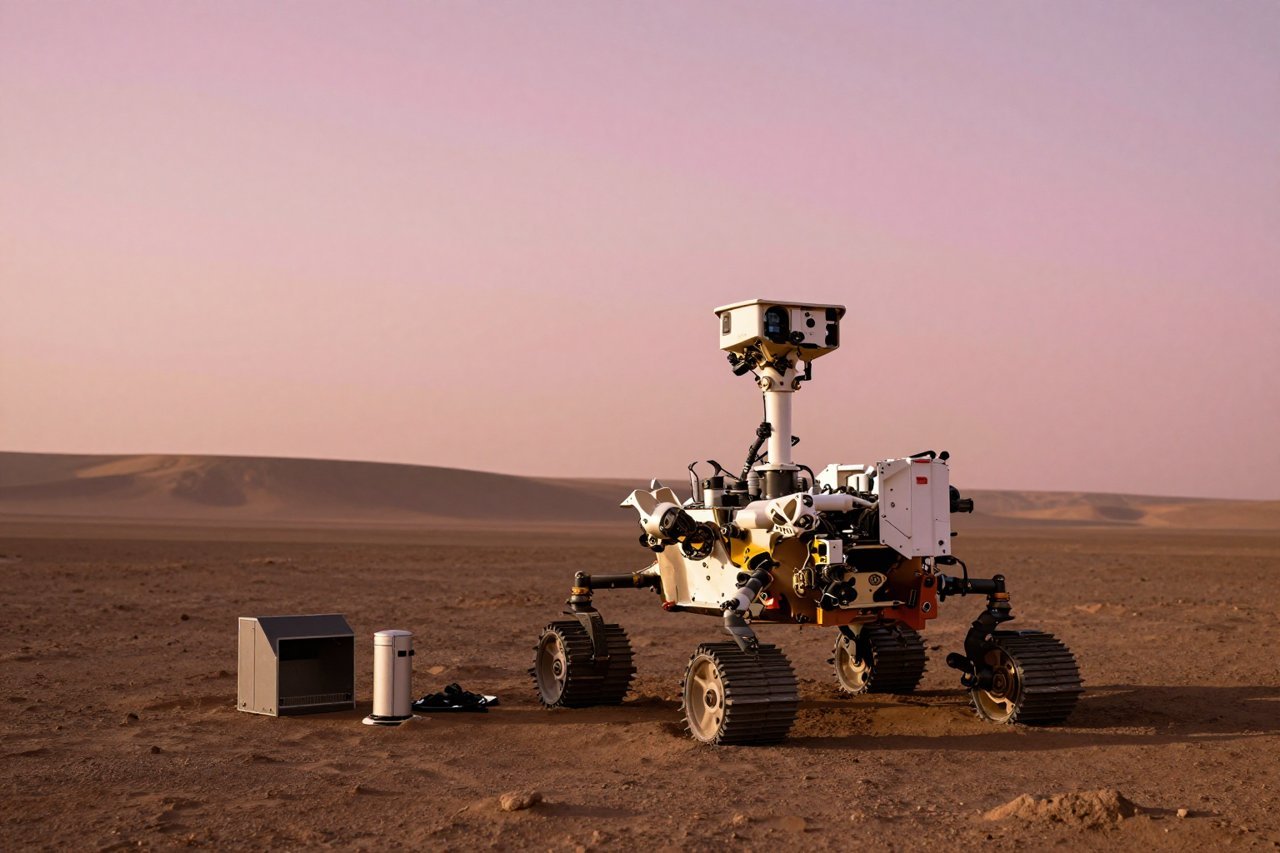
- Perseverance Rover: Arrived in 2021, collecting rock samples for future return and testing oxygen production with MOXIE.
- Ingenuity Helicopter: The first powered flight on another world, proving aerial exploration is viable.
- Zhurong Rover (China): Part of Tianwen-1, it explored Utopia Planitia from 2021 to 2022, studying geology and weather.
These missions have transformed our understanding. NASA discoveries from Mars include evidence of ancient hot springs, organic molecules, and seasonal methane variations—all hints that life might have once existed.
Mars 2020 and Beyond: The Sample Return Campaign
Perseverance: The Sample Collector
The Perseverance rover is arguably the most sophisticated Mars mission ever. It is drilling cores from rocks in Jezero Crater, an ancient lakebed, and sealing them in tubes. The goal? To bring these samples back to Earth in the 2030s via the Mars Sample Return (MSR) campaign—a joint NASA-ESA effort. This would be the first time we analyze pristine Martian material in terrestrial labs.
Challenges of MSR
Fetching the samples involves a lander, a rocket to launch them off Mars, and an orbiter to catch the container. No small feat. But if successful, it could answer whether Mars ever hosted life and help prepare for human missions.
Human Missions to Mars: The Next Horizon
Robots have paved the way, but the ultimate prize is boots on the ground. NASA’s Artemis program aims to establish a lunar outpost as a stepping stone. Then comes Mars, likely in the late 2030s or 2040s. SpaceX, with its Starship vehicle, plans even earlier—potentially the late 2020s—using a fully reusable system to carry cargo and crew.
The hurdles are enormous: radiation exposure, low gravity effects, life support, and psychological isolation. Space exploration is transforming our future by forcing us to solve these challenges, innovations that will benefit Earth too.
International and Private Players
Mars is no longer a two-nation race. China’s Tianwen series continues with a planned sample return by 2030. The United Arab Emirates’ Hope orbiter is studying the Martian atmosphere. India’s Mangalyaan orbiter proved low-cost success. Private companies like SpaceX and Relativity Space are developing heavy-lift rockets tailored for Mars. This global cooperation accelerates progress and spreads risk.
What’s Next? Upcoming Mars Missions
The next few years are packed. Here are some key missions:
- ESA’s Rosalind Franklin Rover: Originally part of ExoMars, delayed but now targeting launch in 2028. It will drill up to 2 meters deep, searching for organic compounds.
- NASA’s Mars Life Explorer: A proposed mission to search for active life in deep subsurface environments.
- Mars Helicopter Follow-ons: Larger rotorcraft or even a Mars airplane concept.
- Human Landing System Tests: Uncrewed Starship cargo landings could happen before 2030.
Each mission builds on the last. Astronomy news in 2025 will likely include more about Mars—whether from Perseverance’s sample drops or new orbital data.
The Big Question: Are We Alone?
Ultimately, Mars missions are about understanding our place in the universe. If we find even fossilized microbes, it would prove that life can arise beyond Earth. The search for microbial life on Mars directly feeds into the broader search for alien life across the solar system and beyond. Each rover wheel track, each drilled core, brings us closer to an answer.
Mars missions are not just about technology; they are about wonder. They remind us that we are explorers by nature, always looking outward, always pushing boundaries. The next decade will be thrilling—with sample returns, human-rated spacecraft tests, and perhaps the first evidence of another world’s biology. For anyone watching the night sky, Mars is more than a red dot. It’s a destination.


