
Table of Contents
Science is full of surprises. Behind the everyday world of gravity, light, and water lies a reality that is far stranger, more beautiful, and more awe-inspiring than most of us imagine. Whether you are a lifelong learner or just someone who loves a good fact to share at dinner, these science facts will change how you think about everything from the ground beneath your feet to the stars above.
Mind-Bending Facts About the Universe and Space
The cosmos is a vast, mostly empty place—but what little it contains defies common sense. Take neutron stars, for example. A single teaspoon of neutron star material would weigh about 10 million tons. That is roughly the weight of Mount Everest compressed into a spoon. These stellar corpses spin hundreds of times per second, emitting beams of radiation like cosmic lighthouses.
Space itself is not silent. In 2003, NASA’s Chandra X-ray Observatory recorded sound waves from a supermassive black hole in the Perseus galaxy cluster. The note is a B-flat, but 57 octaves below middle C—far too low for human ears to detect. That black hole has been humming that same note for billions of years.
If you think the solar system is big, consider this: light from the Sun takes about eight minutes to reach Earth, but it takes over four hours to reach Neptune. And the nearest star beyond the Sun, Proxima Centauri, is 4.24 light-years away. A light-year is about 5.88 trillion miles. To put that in perspective, if you could travel at the speed of a commercial jet (550 mph), it would take over five million years to get there.

For more cosmic wonders, check out 25 mind-boggling universe facts that will change how you see the cosmos and 15 solar system facts that will make you feel tiny.
The Weird World of Quantum Physics
Quantum mechanics is the rulebook for the very small, and it plays by its own logic. One of the most famous experiments in physics showed that a single particle can exist in two places at once until it is measured. This is called quantum superposition. It is not just a theory—it has been demonstrated with atoms and even molecules.
Then there is quantum entanglement. Two particles can become linked so that measuring one instantly influences the other, no matter how far apart they are. Albert Einstein called it “spooky action at a distance.” Today, scientists use entanglement to develop unbreakable encryption and powerful quantum computers.
Another weird fact: particles can tunnel through barriers that, according to classical physics, they should not be able to cross. This quantum tunneling is essential for nuclear fusion in stars—including our Sun. Without it, the Sun would not shine, and life on Earth would not exist.
Earth’s Hidden Forces: Volcanoes and Earthquakes
Our planet is alive with powerful geological forces. There are about 1,500 potentially active volcanoes on Earth, and roughly 50 erupt each year. The largest eruption in recorded history was Mount Tambora in 1815, which ejected so much ash that 1816 became known as “the year without a summer.” Crops failed across the Northern Hemisphere, and snow fell in New England in June.
Earthquakes are just as dramatic. The 1960 Valdivia earthquake in Chile was the most powerful ever recorded, at magnitude 9.5. It generated a tsunami that crossed the Pacific and killed people as far away as Hawaii and Japan. But most earthquakes are too small to feel—the US Geological Survey records about 20,000 earthquakes each year, but only 100 or so cause damage.
To learn more about these forces, read Volcanoes: Earth’s fiery architects of land and life and Earthquakes: What they are, why they happen, and how to stay safe.
Astounding Animal Facts
The animal kingdom is packed with surprises. Consider the tardigrade, also known as the water bear. This microscopic creature can survive extreme temperatures from near absolute zero to 300°F, radiation doses hundreds of times higher than what would kill a human, and even the vacuum of space. They have been revived after being frozen for 30 years.
Then there is the mantis shrimp, which has arguably the most complex vision in the animal kingdom. It can see polarized light and has 12 to 16 types of photoreceptor cells (humans have three). It also packs a punch: its club-like appendages can strike with the force of a bullet, fast enough to vaporize water and create cavitation bubbles that stun prey.
Birds also have hidden talents. The Arctic tern migrates farther than any other animal, traveling from the Arctic to the Antarctic and back each year—a round trip of about 44,000 miles. Over its lifetime, a single tern can fly the equivalent of three round trips to the Moon.
For more astonishing animal wonders, see mind-blowing animal facts that will change how you see the wild.
Amazing Facts About the Human Body
Your body is a biological marvel. For instance, your stomach produces a new lining every three to four days. If it did not, the hydrochloric acid used for digestion would digest your own stomach. That acid is strong enough to dissolve metal, but a thick layer of mucus protects you.
The human brain is the most complex object in the known universe. It contains about 86 billion neurons, each connected to thousands of others, forming a network that can process information faster than any supercomputer. Yet it runs on roughly 20 watts of power—about the same as a dim light bulb.
Your bones are stronger than steel, pound for pound. A cubic inch of bone can bear a load of 19,000 pounds, roughly the weight of five pickup trucks. And your skin is your largest organ, weighing about 8 pounds and covering an area of about 20 square feet. You shed about 30,000 to 40,000 dead skin cells every minute—that is about 9 pounds of skin per year.
Blood vessels are another wonder. If you laid out all the blood vessels in your body end to end, they would stretch about 60,000 miles—enough to circle the Earth more than twice. Your heart beats about 100,000 times per day, pumping 2,000 gallons of blood through that vast network.
Weird but True Science Facts You Won’t Believe
Some science facts sound so absurd that you might think they are made up. Here are a few that are entirely real:
- Honey never spoils. Archaeologists have found pots of honey in ancient Egyptian tombs that are over 3,000 years old and still perfectly edible.
- Bananas are slightly radioactive. They contain potassium-40, a radioactive isotope. You would need to eat about 10 million bananas at once to suffer radiation poisoning.
- There is a cloud of alcohol in space. The Sagittarius B2 cloud contains enough ethyl alcohol to make 400 trillion trillion pints of beer.
- A day on Venus is longer than its year. Venus takes 243 Earth days to rotate once on its axis but only 225 Earth days to orbit the Sun.
- Octopuses have three hearts. Two pump blood to the gills, and one pumps it to the rest of the body. When they swim, the heart that supplies the body stops beating, which is why they prefer to crawl.
For more of these unbelievable truths, check out 50 weird facts that sound fake but are actually true.
Why Science Facts Matter
Understanding science facts is not just about trivia. It helps us appreciate the world’s complexity and our place in it. Knowing that we are made of stardust—literally, because the atoms in our bodies were forged in ancient stars—connects us to the universe. Realizing that a tiny change in Earth’s orbit could plunge us into an ice age reminds us how fragile our climate is.
Science also empowers us to make better decisions. When you understand how vaccines work—by training your immune system without causing disease—you can separate fact from fear. When you grasp that the Earth’s magnetic field flips every few hundred thousand years, you know that compass directions are not eternal.
Moreover, science is full of wonder. Every discovery opens new questions. Why do neutrinos barely interact with matter? How do migrating birds navigate using Earth’s magnetic field? What lies inside a black hole? These mysteries drive research and keep the human spirit curious.
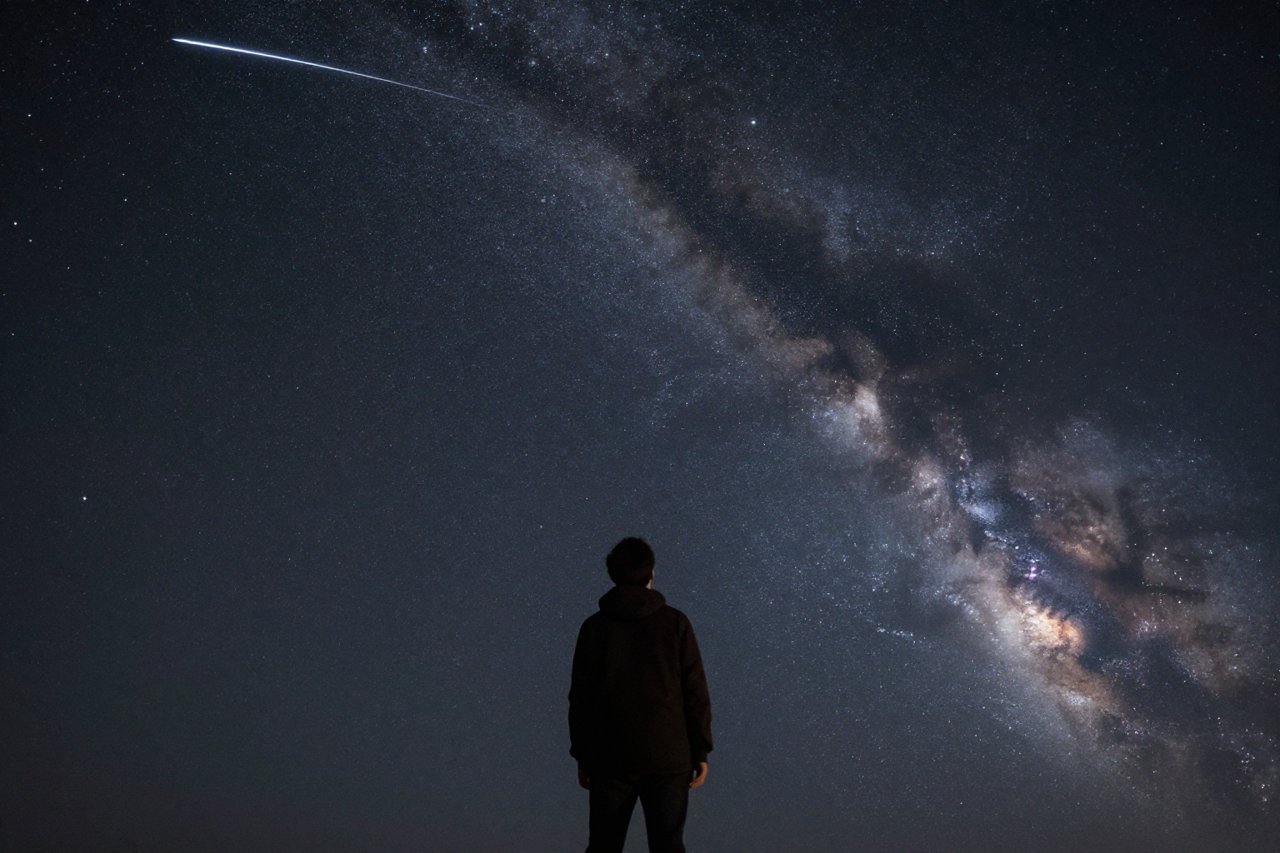
So the next time you look up at the night sky, remember: the light from those stars left them years ago. You are seeing the past. And the atoms in your body were once inside a star that exploded billions of years ago. That is the kind of science fact that changes everything.


