
Table of Contents
There’s something irresistible about a lost civilization. The idea that entire societies—with their cities, art, and knowledge—could simply vanish into the earth, swallowed by jungle, sand, or sea, captures the imagination like nothing else. We wonder: Who were they? How did they live? And more hauntingly, could the same happen to us?
What Makes a Civilization “Lost”?
A civilization is considered lost when its cities are abandoned, its language forgotten, and its records—if any—remain unread for centuries. Usually, we only stumble upon them by accident. Farmers digging a well, pilots spotting geometric shapes from the air, or explorers following rumors of ruins in the forest. Once rediscovered, these sites become windows into worlds we barely understand.
However, “lost” is a relative term. Some, like the Maya, were never truly gone—their descendants still live in Central America. But the classical Maya cities, with their towering pyramids and intricate calendars, were swallowed by the jungle after a mysterious collapse around 900 AD. Others, like the Indus Valley civilization, left behind sprawling cities with advanced plumbing, yet we still can’t decipher their script.
The Most Enigmatic Lost Civilizations
Atlantis: The Ultimate Phantom
Plato’s story of a powerful island nation that sank “in a single day and night of misfortune” has inspired countless theories. While most archaeologists dismiss Atlantis as allegory, the search for it has led to discoveries of real lost civilizations—like the Minoans on Santorini, whose cities were buried by a volcanic eruption around 1600 BC. The tale persists because it taps into a deep fear: that even the mightiest can be erased.

The Maya: Collapse and Resilience
Classic Maya civilization (250–900 AD) built stunning city-states across Mexico and Central America, with advanced mathematics, astronomy, and writing. Then, within a few generations, most of these cities were abandoned. Drought, deforestation, and political infighting likely combined to trigger the collapse. But the Maya didn’t disappear—millions of Maya people live today, speaking Mayan languages and preserving traditions. Their story is a cautionary tale about environmental mismanagement.
The Indus Valley: A Silent Mystery
Flourishing from 2600 to 1900 BC in what is now Pakistan and India, the Indus Valley civilization had cities like Mohenjo-Daro with grid streets, public baths, and complex drainage systems. Unlike Egypt or Mesopotamia, they left no grand temples or royal tombs—and a script that remains undeciphered. Why they declined is still debated; climate change altering monsoon patterns is a leading theory. Their quietness leaves us guessing.
Angkor: The Jungle-Shrouded Megacity
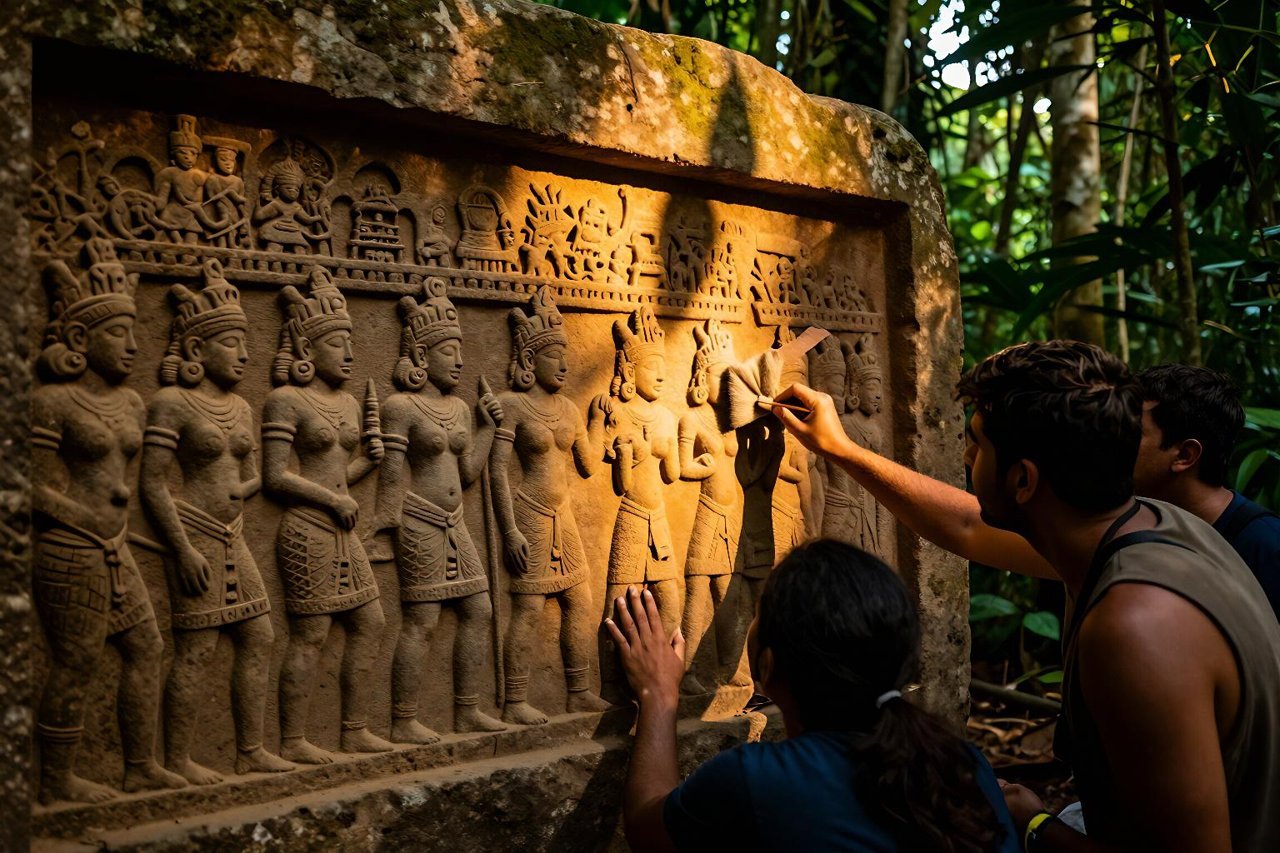
Angkor in Cambodia was the heart of the Khmer Empire from the 9th to 15th centuries. At its peak, it was the largest pre-industrial city in the world, with a population over one million. The temple of Angkor Wat is still a national symbol, but the city itself was abandoned after the Thai invasion and gradual environmental degradation. Massive water management systems fell into disrepair, and the jungle reclaimed the stone.
Göbekli Tepe: Rewriting History
Dating to around 9600 BC, Göbekli Tepe in Turkey is a complex of massive stone pillars arranged in circles, each weighing up to 20 tons. It was built by hunter-gatherers—before agriculture, before pottery, before writing. The site challenges our timeline of civilization. Why would nomadic people create such a monumental structure? Possibly a ritual center that brought tribes together. Its eventual burial was deliberate, preserving it for 11,000 years.
Common traits among these lost civilizations include a combination of environmental stress, resource depletion, and social upheaval. Here are key factors:
- Climate change – drought, flooding, or shifting weather patterns
- Resource overuse – deforestation, soil exhaustion, water mismanagement
- Political instability – internal conflict, weak leadership
- External pressure – invasions, trade disruptions
- Natural disasters – earthquakes, volcanic eruptions
Why Do Civilizations Collapse?
Collapse is rarely a single event. Usually, it’s a cascade. The Maya, for instance, experienced a series of severe droughts between 800 and 1000 AD. Combined with deforestation for farmland and firewood, the landscape became less able to retain moisture. Crop failures led to famine, which fueled warfare. Within a few generations, the political system fell apart.
Sound familiar? Modern climate change is a similar kind of cascade, but on a global scale. What scientists are learning from the deepest oceans about past climate shifts helps us understand how ecosystems can tip into instability. The same ocean currents that once collapsed ancient civilizations’ weather patterns are being monitored today for signs of change.
Rediscovery and Modern Science
Today’s archaeologists have powerful tools their predecessors couldn’t dream of. Lidar—light detection and ranging—scans forests from airplanes, revealing hidden structures beneath the canopy. In 2018, lidar uncovered tens of thousands of Mayan structures in Guatemala, including previously unknown cities. DNA analysis of human remains traces migration patterns. Satellite imagery finds irrigation canals buried for millennia.
But technology alone can’t solve all mysteries. The Indus script, found on seals and pottery, has resisted every attempt at decipherment. Without a Rosetta Stone, we may never know what those people wrote. Some ancient mysteries that still baffle scientists and historians today remind us that the past has its secrets.
What Lost Civilizations Teach Us About Our Own Future
Every lost civilization was, in its time, a success story. They innovated, grew, and dominated their regions. Then they crumbled. The lessons are not subtle: growth must be sustainable, resources must be managed, and societies must adapt to change. The Khmer Empire’s water system was a marvel, but when it failed, the entire city collapsed. The Indus Valley’s egalitarian cities thrived for centuries, but a change in monsoon patterns ended them.
Our civilization is more interconnected than any before. A collapse today would ripple worldwide. Yet we also have advantages: scientific knowledge, global communication, and the ability to learn from the past. Human evolution: the epic story of our origins shows that adaptation is our species’ greatest strength. The question is whether we will adapt in time, or if future archaeologists will one day see our skylines as another set of ruins buried in the earth.
Perhaps the most sobering thought is that many lost civilizations didn’t know they were lost until it was too late. The Maya continued building monuments even as their cities emptied. The people of Easter Island cut down the last tree, knowing it was the last, because their social structure demanded it. We look back at them and see the warning signs clearly. But are we seeing our own?


