
Table of Contents
We live in an age of information, where answers to most questions are just a tap away. Yet some of the most profound puzzles remain unsolved—mysteries etched in stone, buried beneath the earth, or hidden in ancient texts. These are not just curiosities; they are windows into the minds and capabilities of our ancestors. They challenge the linear story of human progress and remind us that the past holds secrets we have only begun to glimpse.
The Enduring Allure of the Unknown
Why do ancient mysteries captivate us? Perhaps it’s the thrill of a detective story spanning millennia. Or the humbling realization that people without modern technology achieved feats we would struggle to replicate today. These enigmas force us to question assumptions—about history, about human ingenuity, and about the very nature of civilization. Every new discovery often raises more questions than it answers, keeping the flame of curiosity alive.
Unexplained Structures and Technologies
Some of the most jaw-dropping ancient mysteries involve structures that seem to defy the technological limits of their time. How did ancient builders achieve such precision without lasers or computer-aided design?
The Great Pyramid’s Precision
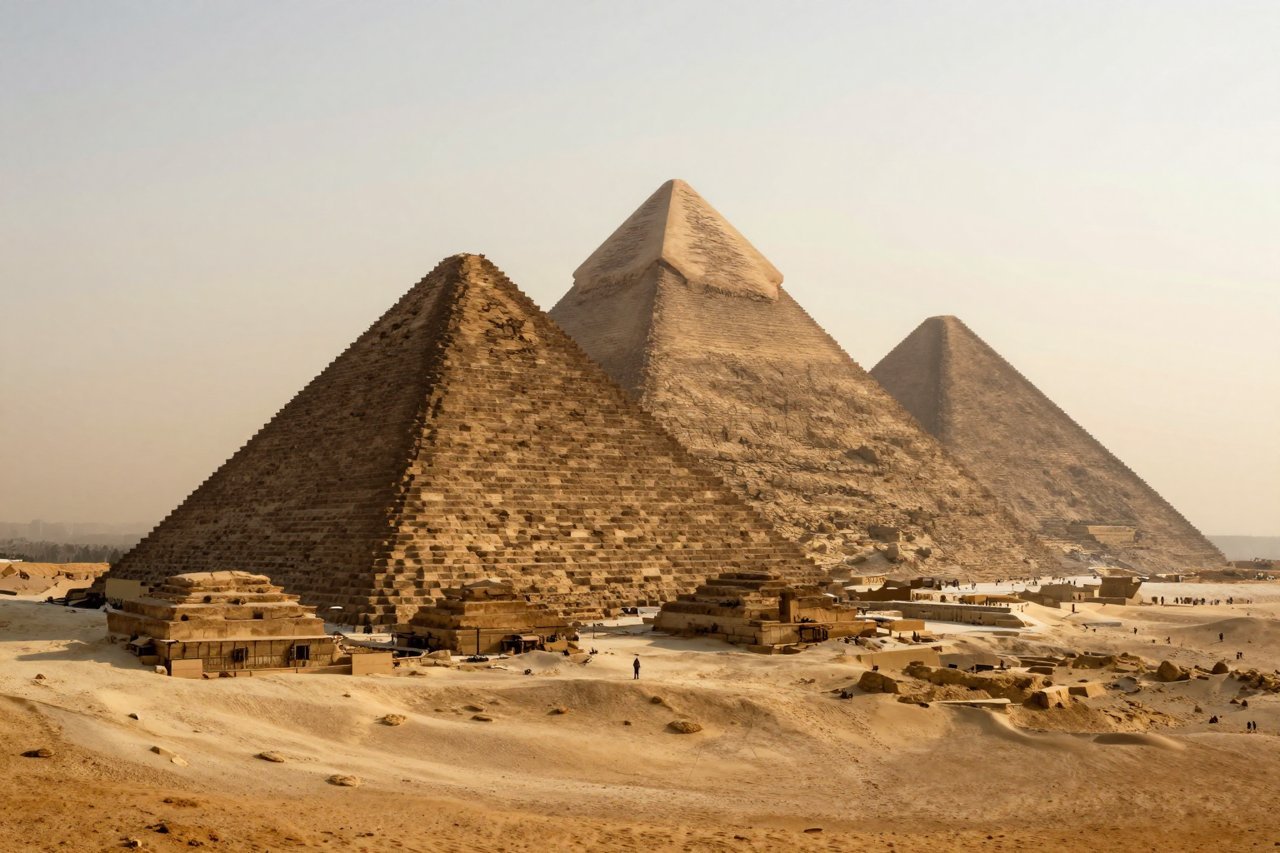
The Great Pyramid of Giza, built around 2560 BCE, consists of an estimated 2.3 million stone blocks, each weighing between 2.5 and 15 tons. The base is almost perfectly level—within 2.1 centimeters across the entire 13-acre footprint. The four sides align almost exactly with the cardinal points. More astonishing: the pyramid’s mass is distributed so evenly that the entire structure would fit within a sphere of the same volume with less than 1% error. While mainstream Egyptology attributes this to skilled labor and simple tools, the sheer accuracy remains a marvel. No one has fully explained how the builders achieved such consistency without modern measurement tools.

Göbekli Tepe’s Age
In southeastern Turkey, a series of stone circles decorated with elaborate animal carvings dates back to around 9600 BCE—more than 6,000 years before Stonehenge. The site, known as Göbekli Tepe, was deliberately buried and abandoned. Its construction required coordinated effort from hundreds of people, yet it predates settled agriculture, writing, and metal tools. This upends the traditional narrative that complex social organization only emerged after farming. What spurred hunter-gatherers to build such monumental structures? The purpose remains unknown.
Mysterious Artifacts and Relics
Beyond massive structures, small objects can carry enormous mystery. Some artifacts appear centuries or millennia ahead of their time.
The Antikythera Mechanism
Recovered from a shipwreck off the Greek island of Antikythera in 1901, this corroded bronze device is often called the world’s first computer. Dating to around 100 BCE, it contains a complex system of gears that calculated astronomical positions, eclipses, and even the timing of the Olympic Games. Nothing like it appears in the historical record for over a thousand years. How did ancient Greek craftsmen develop such precision gear technology—and why did that knowledge vanish?
The Piri Reis Map
Drawn in 1513 by Ottoman admiral Piri Reis, this map shows coastlines of Europe, Africa, and South America with surprising accuracy. But it also appears to depict the coastline of Antarctica—a continent not officially discovered until 1820. The map claims to be based on earlier sources, some possibly from antiquity. If the ice-free Antarctic coast is real, it implies pre-modern explorers charted the region before it was covered by ice, thousands of years ago. Cartographers and historians still debate its validity.
Lost Cities and Civilizations
Entire societies have vanished, leaving only fragments behind. Some we know from legend; others appear unexpectedly in the archaeological record.
Atlantis—Myth or Misplaced History?
Plato’s account of a powerful island civilization that sank in a single day and night has inspired endless speculation. While most scholars treat it as allegory, the story’s persistence hints at a kernel of truth. Could it be a distorted memory of the Minoan eruption on Thera (Santorini) around 1600 BCE? The eruption devastated the Minoan civilization and may have inspired the tale. Yet no definitive link has been proven. The search for Atlantis continues, fueled by new underwater archeology and satellite imagery.
The Indus Valley Script
One of the world’s earliest urban civilizations, the Indus Valley (c. 2600–1900 BCE) built cities like Mohenjo-Daro with advanced drainage and grid layouts. They left behind thousands of seals inscribed with a mysterious script. Despite decades of effort, scholars have not deciphered it. The script’s brevity—most inscriptions contain only four or five symbols—makes analysis difficult. Without a Rosetta Stone, we may never know what these people wrote, leaving a critical gap in understanding their culture and beliefs. The story of this civilization is part of the lost worlds that shaped humanity.
Cosmic Connections and Ancient Astronomy
Many ancient cultures tracked celestial movements with uncanny precision. Stonehenge aligns with solstices. The Maya calculated the Venus cycle to an error of only two hours over five centuries. The Dogon people of Mali describe the star Sirius B—invisible to the naked eye—in detail. How did ancient astronomers achieve such accuracy without telescopes? Some latest astronomy discoveries suggest that ancient skywatchers might have used simple but clever methods like aligned stone markers and horizon calendars. Yet the level of precision still astounds modern scientists.
What Modern Science Reveals (and Doesn’t)
Today, tools like ground-penetrating radar, lidar, and DNA analysis are rewriting history. We now know that the Great Pyramid’s stones were cut with copper saws and transported via waterways—but the exact technique for achieving millimeter-level precision remains elusive. The Antikythera Mechanism was analyzed with X-ray tomography, revealing its internal gears, but we still don’t know who built it or why the technology was lost. These mind-bending science facts show that the more we learn, the more we realize how much we don’t know.
Even space exploration contributes to ancient mysteries. The James Webb Space Telescope peering into the universe’s hidden past indirectly sheds light on our own origins—by revealing how stars and galaxies formed, it helps us understand the cosmic environment that shaped early life on Earth. Yet the specific questions of who built the pyramids or what the Indus script says remain stubbornly earthbound.
Perhaps the greatest ancient mystery is why these achievements were forgotten. The Bronze Age collapse, library burnings, and natural disasters erased entire knowledge systems. Each discovery we make today is a recovery, not a novelty. As we piece together these fragments, we are not just learning about the past—we are confronting the fragility of knowledge itself. The next breakthrough could come from a newly excavated site, a high-resolution scan of a corroded artifact, or a fresh pair of eyes on a familiar inscription. Until then, the ancient mysteries will keep us wondering, questioning, and exploring.


