
Table of Contents
Street food is the most honest meal you’ll ever have. No tablecloths, no tasting menus, no one explaining the plating. It’s just someone who has spent years perfecting one thing, handing you a hot, fragrant package that costs less than your coffee. For a beginner, it can also feel a little overwhelming. Where do you start? What do you order? Is it safe? The trick is to start with the classics. These seven street foods show up on nearly every “best of” list for a reason. They’re cheap, portable, packed with flavour, and they tell you something important about the place they come from. This guide walks you through each one from scratch, so you can eat with confidence the next time you see a cart or a stall.
What Makes a Street Food Great?
Before we get to the list, it helps to understand why certain snacks become global icons. It’s not just about taste. The best street food hits four basics:
- Price: street food should be affordable for everyone, not a luxury.
- Portability: no table, no cutlery, no stress. It should be easy to eat while walking.
- Punch: strong, immediate flavours that let you know you’re alive.
- Patience: you shouldn’t have to wait long for it to be made fresh.
If a dish hits all four, it has a shot at immortality. If you’re curious about how the seven below compare in cost, serving size, and how easy they are to eat on the move, this head-to-head comparison of flavour, price, and portability breaks it all down.
The 7 Best Street Foods in the World: A Beginner’s Tour
Here they are, in no particular order. Each one is a gateway to its country’s cuisine, and a perfect first step for someone new to street eating.

1. Tacos al Pastor (Mexico City)
Mexico City’s most famous street food is pork shoulder marinated in achiote and chilli, roasted on a vertical spit, then shaved into a small corn tortilla with pineapple, onion, and coriander. For a beginner, the pineapple is the surprise. It’s sweet and juicy against the smoky, spicy pork. You eat two or three at a time, standing at the stall, with lime and salsa already on top.
2. Banh Mi (Vietnam)
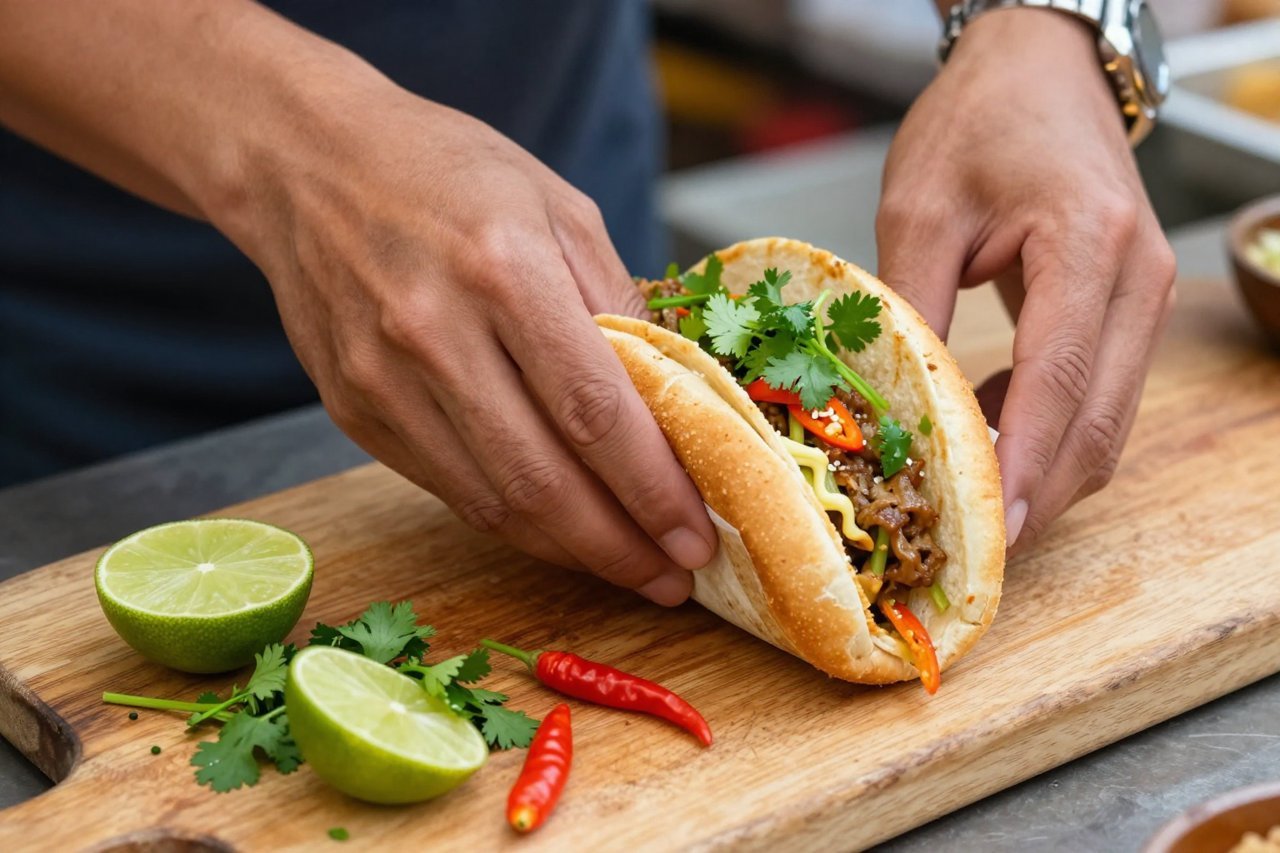
Banh mi is a French baguette with Vietnamese soul. It’s crispy on the outside, soft inside, and stuffed with grilled pork, chicken, or pâté, plus pickled carrot and daikon, cucumber, fresh coriander, and a smear of chilli mayo. The genius lies in the contrast: warm bread, cold pickles, savoury meat, and a sharp herby finish. It’s the perfect handheld lunch.
3. Pizza al Taglio (Rome, Italy)
Not all pizza is eaten with a knife and fork. In Rome, you order pizza al taglio by the slice, cut with scissors from a long rectangular pan. The base is light and airy, the toppings simple — classic margherita is tomato, mozzarella, basil. You pay by weight, and you eat it folded or flat, often while leaning against a wall. It’s street pizza without the ceremony.
4. Bao Buns (Taiwan / China)
A bao is a soft, cloud-like steamed bun that you can get plain or filled. The most famous street version is gua bao: a fluffy, folded bun stuffed with braised pork belly, pickled mustard greens, crushed peanuts, and a dusting of sugar. It’s sweet, savoury, and rich all at once. For a beginner, the texture is the wow factor. It’s like holding a warm, savoury pillow.
5. Pad Thai (Thailand)
Pad thai is Thailand’s best-known export, and on the streets of Bangkok it’s a quick-cooked stir-fry of rice noodles, egg, tofu or shrimp, bean sprouts, and crushed peanuts, all tossed in a sweet-sour-spicy sauce. The street version often comes wrapped in a thin egg net, and you add lime and dried chilli yourself. It’s a symphony of textures: slippery noodles, crunchy sprouts, nutty crunch.
6. Doner Kebab (Turkey / Germany)
The doner kebab is a tower of seasoned meat — usually lamb, chicken, or a mix — roasted on a vertical rotisserie, then sliced thin and tucked into a warm flatbread with salad and garlic sauce. The modern street kebab owes as much to Berlin as to Turkey, because it was in Germany that it became a late-night staple. It’s messy, generous, and endlessly satisfying.
7. Samosa (India / Pakistan)
The samosa is the world’s greatest handheld snack. A crispy, golden pastry triangle filled with spiced potatoes, peas, and sometimes minced meat, deep-fried and served with tamarind chutney or mint sauce. The key is the crunch that gives way to a moist, warmly spiced filling. You can find them in Mumbai, Karachi, London, and everywhere in between.
Ordering Like a Local: Three Simple Rules
You don’t need to be an expert. You just need to watch, ask, and follow the locals. If you’re nervous, look for stalls with a queue. That’s the simplest quality signal in the world. Then order what the person in front of you orders. And when you get your food, eat it right there. Stand at the counter, take a bite, and let the flavours hit you.
For a dish-by-dish breakdown of exactly how each of these seven should be eaten — including whether to fold, tear, or slurp — the step-by-step guide to eating them right walks you through every detail.
Mistakes Beginners Make (and How to Avoid Them)
The biggest mistake is being shy. Street food is meant to be eaten in public, with your hands, and preferably with juice running down your wrist. Another mistake is to order everything at once. Start with one thing, eat it, and go back for more. Also, don’t skip the condiments. The lime wedge, the pickled chillies, the crunchy garlic — they’re not decorations. They’re part of the recipe.
To see the full list of ways to ruin a perfectly good street food experience, check out the seven mistakes that ruin them — and how easy they are to avoid once you know they exist.
Why Street Food Is the Best Way to Learn a Cuisine
If you’ve only eaten a country’s food in restaurants, you’ve missed half the story. Street food is where recipes stay closest to their original form, because the people making it are often carrying on family traditions. It’s also where you’ll find ingredients and combinations that don’t make it onto tourist menus. A single evening eating your way through a market can teach you more about a culture than a week of sit-down meals.
For a broader introduction to the world’s great kitchens, this no-nonsense beginner’s guide to the top seven cuisines shows you how many of those cuisines started on the street. Once you understand the connection, you’ll never look at a food cart the same way again.


