
Table of Contents
Hair thinning and shedding are frustrating. You watch strands fall out in the shower, stare at the part widening in the mirror, and wonder if anything can truly reverse it. The market is flooded with serums, oils, and sprays, each promising a thicker head of hair within weeks. But the truth is, most of them fail.
The best hair growth serum isn’t the most expensive one or the one with the flashiest packaging. It’s the one with proven ingredients, active at the right concentrations, and a formula you’ll actually apply every single day. That last part matters more than you might think.
In this guide, I’ll walk you through what really works, the science behind it, and how to pick a product that fits your specific hair loss situation. You’ll also learn how to use it properly, what mistakes to avoid, and whether natural alternatives like rosemary oil stand a chance against the chemical heavyweights.
What Actually Makes a Hair Growth Serum Effective?
Your hair follicle is a living structure that needs oxygen, nutrients, and hormonal balance to stay productive. A good serum works by delivering active compounds directly to the scalp, where they can stimulate the follicle, improve blood flow, or block the hormones that shrink hair over time.

There are four main categories of proven ingredients you should look for:
- Minoxidil – the FDA-approved gold standard. It widens blood vessels and forces hairs into the growth phase.
- Peptides like copper tripeptide – help rebuild the hair follicle matrix and reduce inflammation.
- Rosemary oil – a natural alternative that’s been shown in clinical trials to be as effective as 2% minoxidil, without the initial shedding phase.
- Saw palmetto and caffeine – block DHT (the hormone linked to pattern baldness) and stimulate hair cell proliferation.
Some serums also include biotin, keratin, or hyaluronic acid, but these play a supporting role, not a starring one. If you see a serum with biotin listed first or only, its effect on a real scalp is probably minimal.
The Concentration Matters More Than the Brand
Minoxidil comes in 2% and 5% strengths. A 5% solution is roughly 45% more effective for men and women, but it also increases the chance of scalp irritation. Rosemary oil only works if it’s extracted properly and diluted appropriately – the study that compared it to minoxidil used a 1.5% concentration applied twice daily.
So when you’re reading labels, check the percentage of the active ingredient, not just whether it’s listed. A serum with 0.1% rosemary oil is essentially a nice-smelling water.
The Best Hair Growth Serums on the Market Right Now
Based on clinical evidence, formulation, and user feedback, these are the four standouts worth your money in 2025.
For Androgenetic Hair Loss: Minoxidil-Based Formulas
Rogaine (or Regaine outside the US) remains the most studied hair growth serum on the planet. The foam version is less messy than the liquid, and it dries quickly without greasy residue. Kirkland’s 5% minoxidil is a wallet-friendly generic that works just as well.
Expect a possible shedding phase during the first two to six weeks – that’s the old hairs clearing out to make room for newer, stronger ones. Don’t panic. It’s a sign the stuff is working.
For Sensitive Scalps: Rosemary Oil Serums
If your skin reacts to minoxidil or you simply prefer a plant-based option, rosemary oil serums are the best non-drug alternative. Brands like Mielle Organics and Briogeo combine rosemary with jojoba and almond oil, which make it suitable for daily scalp massage. A 2015 clinical trial showed rosemary oil outperformed a placebo and matched 2% minoxidil at the six-month mark. For a detailed breakdown of how it compares, read this guide on rosemary oil for hair.
For Mild Thinning Without a Confirmed Cause: Peptide Serums
The Ordinary’s Hair Density Serum and Vegamour’s GRO Hair Serum use exotic-sounding patented ingredients like Redensyl, Procapil, and baicapil. The science behind these is thinner, but early studies show they can increase hair density by around 10–15% over four months. They’re pricier than minoxidil, but they feel luxurious and often smell better, which means you’re more likely to use them consistently.
For Postpartum or Stress-Related Shedding: Caffeine and Amino Acid Serums
Telogen effluvium is traumatic – you lose large amounts of hair three months after a stressful event, childbirth, or rapid weight loss. In these cases, a serum that supports hair health without causing a shock to the follicle is key. Look for caffeine, arginine, and green tea extracts. These increase cellular energy but aren’t strong enough to trigger the rest phase. Brands like Alpecin Dual Effect offer this category at a fair price.
How to Choose the Right Serum for Your Hair Loss Type
First, figure out why your hair is falling out. Here’s a quick guide:
If you have a receding hairline, crown thinning, or a widening part, that’s usually androgenetic alopecia – the only treatment validated for this is minoxidil or anti-androgen therapy, so skip the fancy botanical serums.
If you had a baby, a major surgery, or a stressful break-up within the last three to six months and your hair is falling out evenly, that’s telogen effluvium. A gentle serum with caffeine and amino acids, paired with a good multivitamin, is your best bet.
If your hair is thinning along the edges or you have patchy bald spots, that could be alopecia areata or a thyroid issue – see a dermatologist before spending a cent on topicals.
And if you just came back from a long year of dramatic dieting, your hair might be deficient in iron, zinc, or vitamin D. In that case, no serum in the world will fix it until you sort out your nutrition. This is a core part of a broader self-care routine that extends beyond your hair – check out this realistic beauty guide for the full picture.
How to Use a Hair Growth Serum for Real Results
Buying the right serum is half the battle. The other half is using it in a way that makes the ingredients reach the follicle.
- Prep your scalp: Apply to a clean, dry scalp. Dirt and oil block absorption.
- Part your hair section by section: This is non-negotiable. You need the product on the skin, not on your hair shaft.
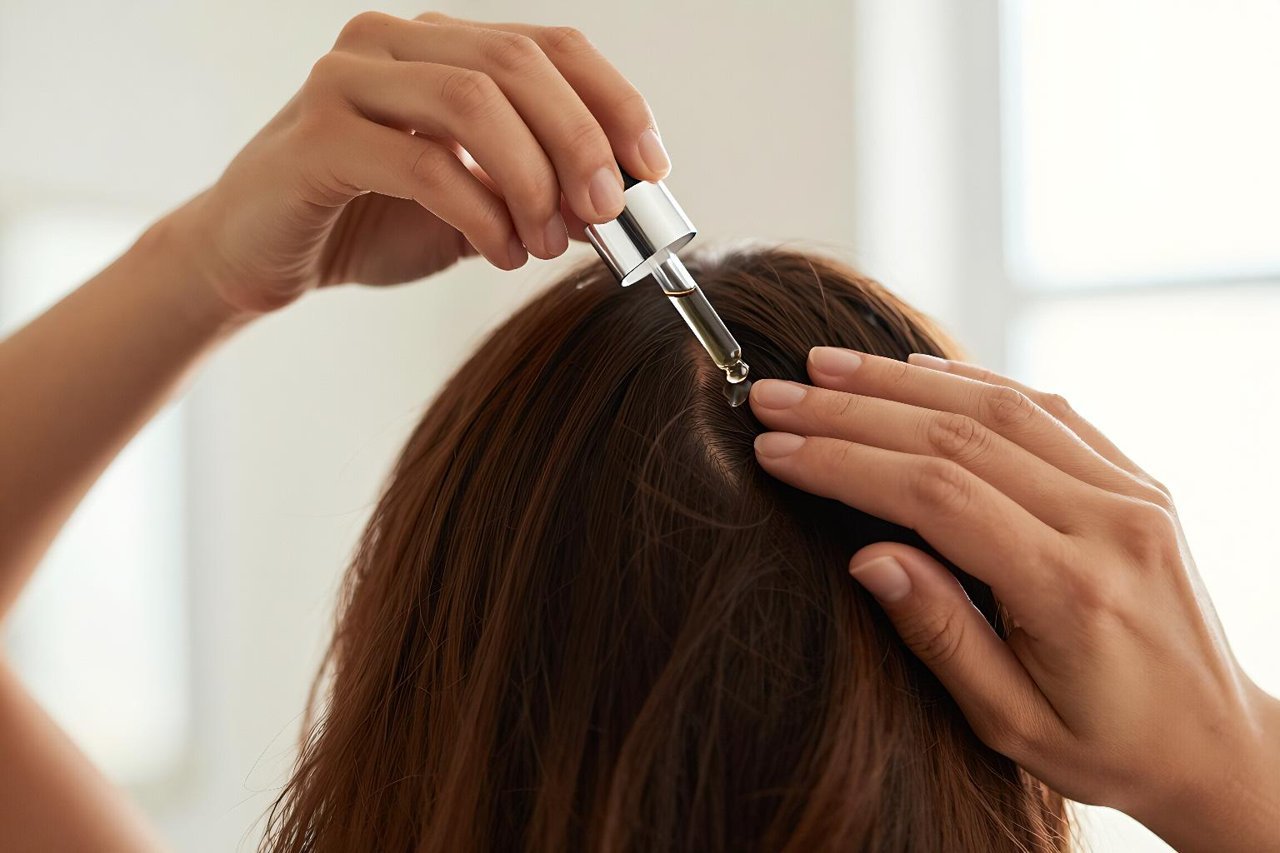
- Use the dropper to apply directly to the scalp, then massage in circular motions for at least two minutes. That massage increases blood flow – which itself promotes hair growth.
- Wash your hands immediately after application to avoid getting the product on your face (minoxidil can cause unwanted facial hair growth).
- Be patient. Most serums need 12 to 16 weeks of daily use before you notice a visible difference. The hair cycle doesn’t speed up just because you’re excited.
If you’re also using a heavy hair oil, apply the serum first, let it absorb for 15 minutes, then add oil as a sealant. This is especially important if you use hair oils as a weekly treatment.
Does Dermarolling Boost the Results?
Yes, and its effect is underrated. Microneedling with a 1.5 mm dermaroller once every two weeks enhances minoxidil absorption by up to 300%. It also activates wound-healing pathways that promote hair growth on their own. Just make sure your scalp is clean and the roller is sterilized – a dirty roller can cause a serious infection.
Natural Alternatives: Do They Work?
Natural doesn’t automatically mean gentle or effective. Undiluted essential oils can burn your scalp, and oils like castor oil may actually clog follicles if left in place overnight
That said, rosemary oil is the clear winner here. Its active compound, carnostic acid, prevents DHT from binding to hair follicle receptors – much like prescription drugs. Many people switch to rosemary serums because they’re FDA-approved as cosmetics, which means no shedding phase and no prescription needed.
But natural products require extra discipline. You can’t just dab a few drops here and there. You need to apply enough to coat the scalp and leave it for at least a few hours to be effective.
For a deep dive into the difference between rosemary-based serums and drugstore products, check out this thorough coconut oil hair guide – it covers how carrier oils interact with actives, and why you shouldn’t mix too many at once.
What to Avoid When Buying a Hair Growth Serum
The hair growth industry is full of overpriced snake oil. Here’s how to spot a dud before you hit checkout:
- Pictures of dramatic results with no timeline and no actual user data. These are purchased photos.
- Ingredients listed as a “proprietary blend” – you have no idea how much of the good stuff is actually in there.
- Alcohol as one of the first ingredients – it dries out the scalp and can worsen inflammation, which is the opposite of what you want.
- Essential oils that aren’t diluted – these can cause contact dermatitis.
- A serum that promises “100% natural” and nothing else – natural doesn’t mean tested.
Common Mistakes People Make with Hair Growth Serums
Even the best serum will fail if you fall into these traps. The first is skipping the patch test. You might be allergic or sensitive to a certain ingredient without knowing it. Apply a small drop behind your ear for two days in a row before using it on your entire scalp.
The second is quitting after four weeks. At that point, you’re actually in the middle of the shedding phase – which is your cue to double down, not stop. It takes at least three months to see any new growth.
The third is applying the serum to wet hair. Water creates a barrier that dilutes the active ingredient and prevents absorption. Always use dry sections.
The fourth is expecting results on completely bald areas. No topical serum will revive a follicle that’s already gone. That requires a hair transplant, plain and simple. But if you still have fine, wispy growth, you’re a strong candidate for serums.
Finally, don’t ignore the rest of your lifestyle. Chronic lack of sleep and high stress keep your hormone levels in the gutter, which fights the serum you’re spending money on. A serum isn’t a magic potion – it’s one part of a consistent routine that includes healthy eating, gentle hair handling, and patience.
If you’re ready to start, pick one serum, commit to six months, and take a photo every month. That’s the only way to know if it’s working for you. Stick with it, and you might just see a fuller reflection staring back.


