
Table of Contents
A few years ago, I spent £80 on a hair growth serum because the bottle promised visible results in two weeks. The bottle was pretty. The claims were bold. And six weeks later, I had the same hairline and a very empty bank account. My mistake wasn’t trusting serums. It was having no method. I picked a product at random, applied it whenever I remembered, and expected magic. This guide is the process I wish I’d had back then. Follow the steps below, and you’ll know exactly how to choose the best hair growth serum for your own scalp, apply it properly, and tell if it’s really working.
Step 1: Define the Problem Before You Pick a Product
Serums are not one-size-fits-all. If you treat your scalp for the wrong issue, even the most expensive formula won’t help.
Take two common scenarios. Lena has an oily scalp, sees thinner hair at her temples, and uses dry shampoo daily. Marcus has a dry, flaky scalp, and his hair feels brittle after years of bleach. Lena needs a lightweight serum with witch hazel or niacinamide to balance oil without suffocating hair follicles. Marcus needs something with hyaluronic acid, ceramides, or aloe to calm irritation first. Same goal, totally different formulas.
Before you read a single review, ask yourself three questions:

- Where exactly is the hair thinning? Is it your crown, your hairline, or everywhere?
- What does your scalp feel like an hour after washing? Pinched, oily, combo, or normal?
- Do you have any skin conditions like eczema, dandruff, or psoriasis?
If your scalp is chronically red or itchy, see a dermatologist before using any serum. If you already have a diagnosed condition, skip the generic options and get a medicated product designed for you. And if you’re not sure where to begin, the roundup of hair growth serums that actually work on this site walks through the ingredients behind each pick. Use it as a starting point, not a shopping list.
Step 2: Match the Active Ingredient to Your Stage of Hair Loss
Active ingredients are what make a serum work. If the first five ingredients are water, glycol, fragrance, panthenol, and ‘botanical blend’, you’re buying expensive lotion.
Here is the short version of what science says:
- Minoxidil: The most clinically proven compound. It’s not a natural serum ingredient; it’s a medication. Use it only if you are consistent and ready to keep using it long term.
- Rosemary leaf extract: Studies have shown rosemary oil can be comparable to minoxidil over six months, without the dread shed.
- Peptides: Signal your hair follicles to enter the growth phase. They’re great for maintenance and prevention.
- Red clover flower extract: A bit of research backs it for early hair thinning, especially in women.
- Caffeine: Stimulates follicles and is easy to find in serums.
If you are at the very beginning of hair loss, a non-irritating serum with rosemary and peptides is a reasonable trial. For the details on dosing, frequency, and realistic expectations, read the rosemary oil for hair guide before you commit.
What to avoid in the ingredient list
Short ingredients lists are usually better. Avoid serums with denatured alcohol as the second or third ingredient. It may dry out your scalp and worsen shedding. Avoid essential oils like citrus or menthol if your skin is sensitive. And be careful with ‘proprietary blend’ labels, because the brand won’t tell you how much of each ingredient you’re actually getting.
A concrete example: A serum lists ‘Rosmarinus officinalis leaf extract’ at the bottom of the ingredient list, while another places it in the top five. The second serum will deliver more active compound per drop. Learn to read the label, not the marketing.
Step 3: Test One Serum at a Time for at Least 12 Weeks
Hair growth is slow. The average hair grows about 1.25 inches per month, and shedding cycles last three to four months. If a product promises visible growth in two weeks, it’s lying.
This is the most important step: choose one serum and stick with it for 12 weeks before making any judgment. Set a start date on your calendar. Write down your current hair density, any visible bald patches, and how many hairs you normally see in the shower drain. Yes, it feels weird. But you need a baseline.
If you switch to a new serum every three weeks, you won’t know which product is helping and which is causing the flaky scalp. Dedication is the only way to get clean data.
Step 4: Apply the Serum Correctly to Your Scalp, Not Your Hair
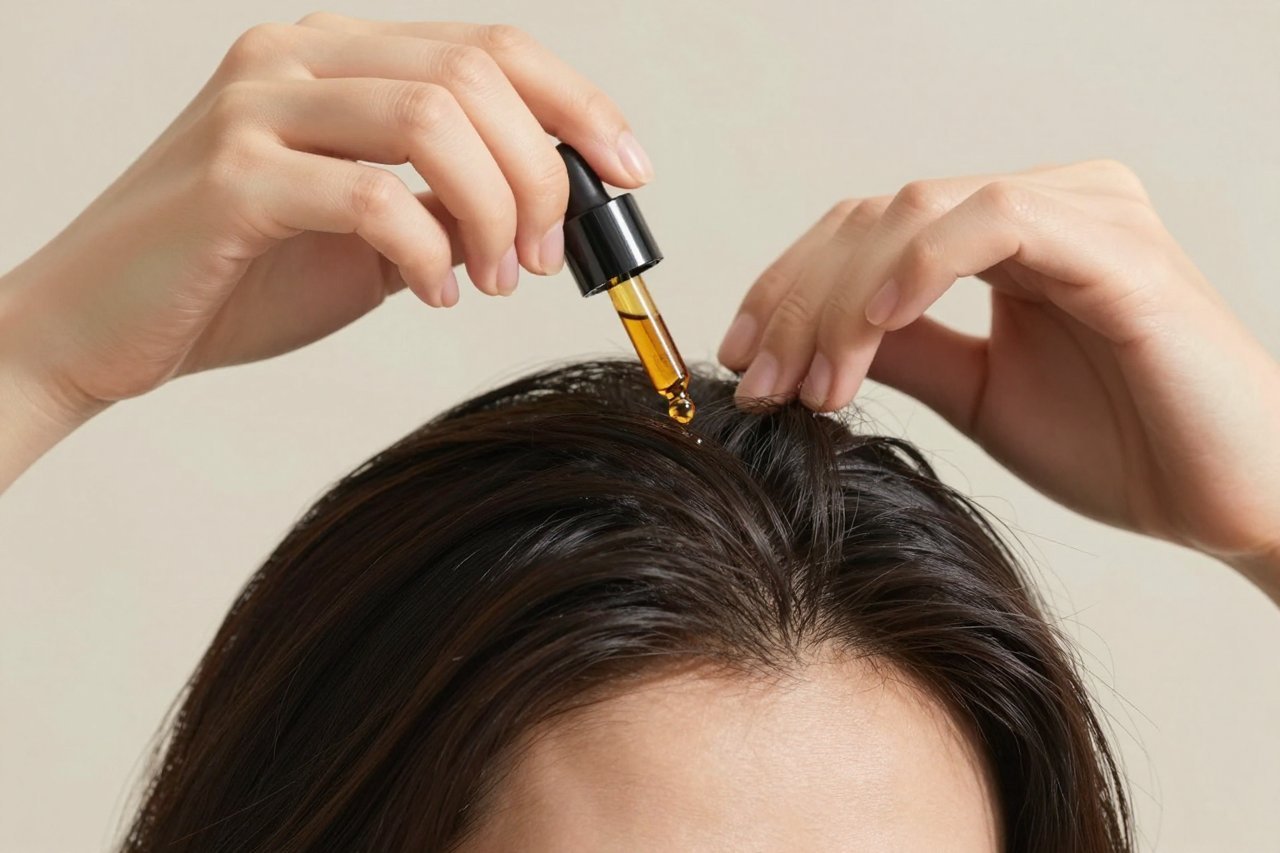
Most people get this backwards. They spray serum on their hair lengths or rub it all over the top of their head. Serums are meant for the scalp, where the follicles are. The hair outside your head is dead; it can’t absorb growth compounds.
Here is the method that works for me:
- Wash your hair and towel dry it. A clean scalp absorbs better.
- Part your hair into four sections: two in front, two in back. Use clips if needed.
- Dip the applicator or dropper directly onto the exposed scalp, not into the hair.
- Gently massage with your fingertips for two minutes. You’re not doing deep tissue work; you’re helping blood flow.
- Let it sit for at least 30 minutes before styling or applying products.
If you use a coconut oil hair mask on other days, don’t apply it to the same area right before a serum. The oil can block absorption. Give your scalp a window of a few hours between treatments. You can find a full step-by-step routine for coconut oil in this step-by-step coconut oil hair routine.
Step 5: Track Progress With Photos and Counts, Not Mirror Hopes
A mirror is a terrible measuring tool because our memory plays tricks. I thought my hair was getting worse every single day. Then I looked at a photo from eight weeks earlier and realised it was improving, slowly.
Take one photo from the top of your head and one from each side, in the same lighting, every two weeks. Use a tripod or ask someone else to take them. Keep them in a folder that you forget exists, then review them after twelve weeks.
Track these numbers as well:
- Hairs in your brush after a normal brushing session.
- Hairs in the shower drain after a wash.
- How often your scalp tingles or feels irritated from the serum.
If the numbers stay the same after twelve weeks, that’s okay. It may mean you’ve stopped the progression of hair loss. Sometimes that’s a win.
Step 6: Layer the Serum Into a Realistic Overall Routine
Serums don’t work in isolation. They work with your sleep, your protein intake, and how gentle you are with your hair. If you’re using a serum while also tight-pulling your hair into buns, bleaching your roots every month, and not eating enough iron, you’re paying for a solution to the wrong problem.
A sustainable routine looks like this:
- Wash your scalp two to three times a week with a mild shampoo.
- Apply your serum on a clean, dry scalp after washing.
- Do a weekly deep-conditioning mask if your lengths feel dry.
- Minimise heat styling and always use heat protection.
- Get your iron levels tested if you are female and experiencing heavy periods. Low ferritin is a common cause of shedding.
Your entire beauty routine matters more than any single bottle. This realistic beauty and hair guide explains how small, consistent habits beat expensive shortcuts. And if you decide to experiment with coconut oil as a pre-wash treatment, read the breakdown of what coconut oil actually does for hair before you leave it in too long. It’s not a serum, but it supports the same goal: a healthy scalp environment.
Picking the best hair growth serum is not about lucky guesses. It’s about knowing your scalp, picking an ingredient with data behind it, using the product the way it was designed, and giving the process enough time. Do that, and you’ll have an answer in three months. If it doesn’t work, you’ll know exactly why.


