
Table of Contents
Two people can sit in the same dermatology waiting room with what looks like the same red, bumpy rash and leave with completely different prescriptions. One has acne. The other has rosacea. Telling them apart is one of the most common puzzles in skin care, and guessing wrong is not a harmless mistake. Several of the most popular acne treatments will make rosacea noticeably worse, and the gentlest rosacea creams will do nothing for a blocked pore.
Why the two get confused so often
Both conditions favour the face. Both produce redness, small bumps and pustules. Both flare with heat, stress and sun, and both tend to show up more visibly on fair skin. Add in the internet habit of calling any spot after age 25 “adult acne” and you have a recipe for years of treating the wrong thing.
There is also a sizeable overlap: some people have both at once. Acne and rosacea are separate conditions, but nothing stops them from sharing a chin.
What acne actually is
Acne is a disorder of the pilosebaceous unit, the hair follicle plus its attached oil gland. Four things happen together: the glands produce extra sebum, dead skin cells stick together instead of shedding, Cutibacterium acnes bacteria multiply, and the immune system responds with inflammation.

Roughly 85% of people between 12 and 24 deal with it at some point. Adult acne is real too, and in women it often clusters along the jawline and chin in the week before a period.
The giveaway sign: comedones
Acne produces blackheads and whiteheads, collectively called comedones. These are blocked pores you can see, and they are the closest thing to a fingerprint the condition has. Rosacea does not make comedones. Ever. If you can spot open or closed plugs across your nose and cheeks, acne is far and away the more likely answer.
- Blackheads, whiteheads and enlarged pores
- Red papules and pus-filled pustules
- Deep, painful nodules or cysts in moderate to severe cases
- Pitting or raised scars after healing
- Lesions on the chest, back and shoulders, not just the face
- Shiny, oily skin, especially through the T-zone
What rosacea actually is
Rosacea is a chronic inflammatory condition that usually appears between the ages of 30 and 50, with the average onset around 35. It affects roughly 5% of adults worldwide. Women are diagnosed more often, though men tend to develop the more severe forms.
It centres on the middle of the face: cheeks, nose, chin and mid-forehead, typically sparing the outer edges and the area right around the mouth. The skin is often sensitive in a way acne skin usually is not, stinging or burning within seconds of applying a new serum.
The four patterns dermatologists look for
- Erythematotelangiectatic: flushing and persistent redness, often with visible thread veins
- Papulopustular: red bumps and pustules on a background of redness, with no blackheads
- Phymatous: thickened, bumpy skin, most often on the nose
- Ocular: dry, gritty, watery or burning eyes, present in about half of all cases
The differences that actually matter
Many people assume any spot on the face in an adult is acne. Four features separate the two quickly:
- Comedones. Present in acne, absent in rosacea. This is the single most useful clue.
- Sensation. Rosacea skin stings, burns and flushes. Acne skin is usually just tender where a lesion is forming.
- Distribution. Rosacea stays on the central face. Acne happily spreads to the jaw, hairline, back and chest.
- Reaction to products. Acne skin often tolerates benzoyl peroxide and salicylic acid. Rosacea skin frequently does not.
What makes each one flare
Acne is driven mostly from the inside: androgen levels, the menstrual cycle, PCOS, and sometimes high-glycemic diets. Outside factors like heavy comedogenic creams and picking make it worse.
Rosacea is driven mostly from the outside. A hot shower, a glass of red wine, a bowl of chilli, a sunny afternoon on a patio or a stressful Monday can all bring on a flush within minutes. Temperature swings are a common trigger that people rarely connect to their skin. Fragrance, menthol, alcohol-based toners and aggressive exfoliating acids are frequent culprits too.
One practical test: if a spicy meal or a hot drink makes your face burn and go red for half an hour afterwards, that points hard towards rosacea rather than acne.
Why the wrong label costs you
Using acne products on rosacea skin often backfires. Benzoyl peroxide at 5% to 10%, salicylic acid washes, retinoids started too fast and physical scrubs can leave rosacea skin raw, redder and more reactive than before. The redness then gets read as “not responding to treatment” and the products get stronger, which makes things worse again.
Topical steroid creams are a particular trap. They calm redness for a week or two, then the skin rebounds with a steroid-induced rosacea that is harder to treat than the original problem. Steroids have no place in routine rosacea care.
In the other direction, a gentle rosacea routine will not clear comedonal acne. Blackheads need a retinoid or an exfoliating acid, and stubborn inflammatory acne may need oral treatment. Months can pass before anyone realises the target was wrong.
When it is worth seeing a dermatologist
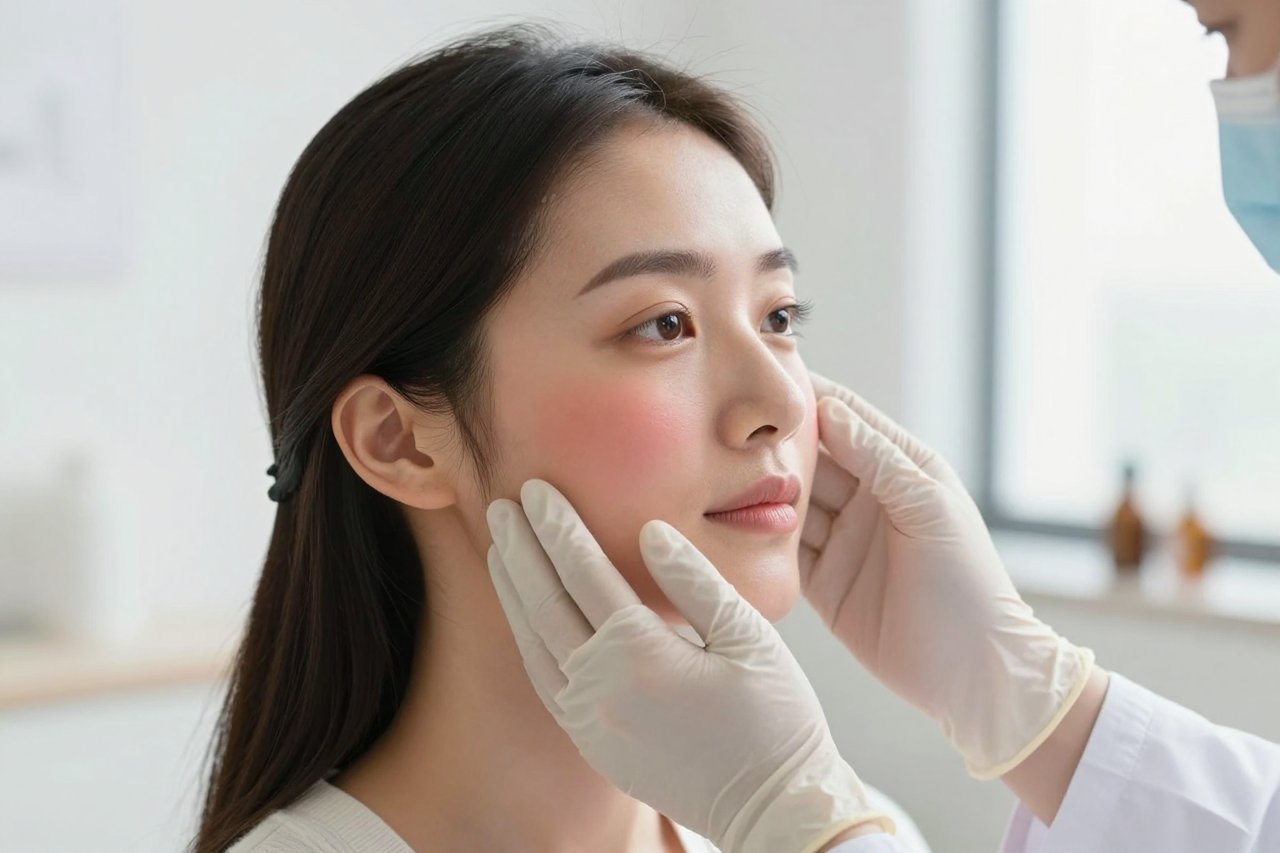
Book an appointment if any of these apply: you have deep nodules, you are scarring, your eyes feel gritty or bloodshot alongside facial redness, the redness never fully fades between flares, or six to eight weeks of over-the-counter treatment has changed nothing. A dermatologist can usually distinguish the two in a single visit, and often at a glance.
What treatment looks like for each
Acne care aims to unblock pores, reduce oil and calm inflammation. A typical plan includes a topical retinoid such as adapalene or tretinoin, benzoyl peroxide, and sometimes a short course of oral antibiotics. Hormonal options like spironolactone or a combined oral contraceptive help persistent adult acne in women. Severe nodular acne may warrant isotretinoin.
Rosacea care starts with protection and trigger control. Daily broad-spectrum SPF 30 or higher is non-negotiable, since UV exposure is the most common flare trigger. A plain, fragrance-free cleanser and moisturiser form the base. On top of that, dermatologists use azelaic acid, metronidazole or topical ivermectin for bumps, brimonidine or oxymetazoline for temporary redness control, and low-dose oral doxycycline for its anti-inflammatory effect. Visible thread veins respond best to vascular laser or intense pulsed light rather than creams. Ocular rosacea needs eyelid hygiene and lubricating drops, sometimes alongside oral treatment.
Both conditions are manageable, and most people see real improvement within eight to twelve weeks of the right plan. The variable that matters most is getting the name right first.


