
Table of Contents
Ask a well-meaning friend whether you can keep a hedgehog as a pet in the United States and they’ll likely say yes. Ask your county clerk and you might get handed a long list of restricted species. Ask a landlord and you could get a fine just for mentioning the word ‘spider.’ The yes answer is never as simple as it sounds.
Because no part of the phrase ‘top 7 exotic pets allowed in the US’ tells you about your hometown, this primer starts lower down, with definitions and ground rules. It is meant for someone who has never owned anything more unusual than a cat, and who wants to know, before a single enclosure is bought, what barriers actually exist.
What Exactly Is an Exotic Pet?
There is no single legal definition. In practical terms, an exotic pet is a non-domesticated species kept in a home environment. Dogs have been shaped by thousands of years of breeding to live with people. Bearded dragons, sugar gliders, and tarantulas have not.
This category includes reptiles, amphibians, birds, small mammals that are not cats or dogs, and even invertebrates. A ferret is often classified as exotic by animal control even though it is technically a domestic form of the European polecat. That shows how unpredictable the term can be.

So when you read that a particular animal is ‘allowed in the US,’ you are reading about federal permission, not local permission. Those are two different things.
The Legal Rule That Confuses Every New Owner
The United States does not have one national law that tells you which exotic pets are legal. Instead, you have a patchwork of federal, state, county, and city rules layered on top of each other.
Federal agencies like the U.S. Fish and Wildlife Service regulate endangered species and animals brought from overseas. The Lacey Act bans certain species that are considered injurious. But individual states retain the power to ban, permit, or ignore almost everything else. That is why the same animal can be perfectly ordinary in Texas, require a permit in Massachusetts, and be banned outright in California.
Beginners lose money to this misunderstanding all the time. If you want a fuller picture, read the legal pitfalls and owner mistakes to avoid before you choose a species.
Seven Exotic Pets Allowed in the US That Beginners Actually Consider
The species below are among the most common in American homes and are allowed under federal law in most contexts. That does not make them legal in your state, county, or apartment. Think of this as a starting list, not a permission slip.
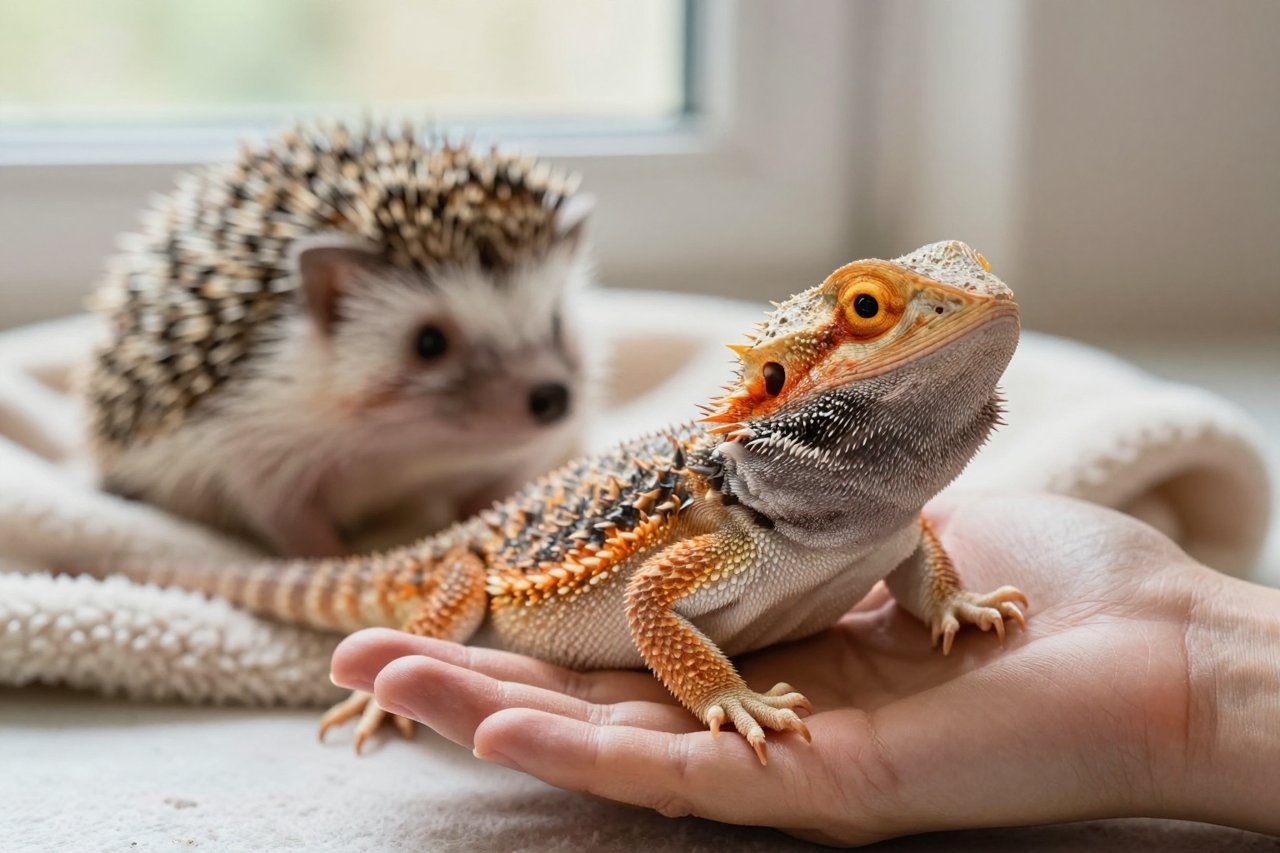
1. Bearded Dragon
Bearded dragons are often called the starter reptile because they tolerate being handled without treating every finger as a threat. Captive breeding has been happening for decades. A juvenile can cost between $40 and $80, though the full enclosure, heat lamp, and food setup typically crosses $300 before the lizard even arrives. Bearded dragons are legal in nearly every state, but Hawaii has famously strict animal import rules, and some counties require a permit.
2. Leopard Gecko
If you have never owned a reptile, a leopard gecko is the most forgiving teacher. A 20-gallon tank, an under-tank heater, and mealworms are enough to start. It is also one of the few exotic pets that rarely needs vet visits. Most common leopard geckos are captive bred, and they are not subject to the same federal restrictions as rarer gecko species. But you still need to confirm that your city’s animal ordinance does not lump geckos into a broad ‘no exotic reptiles’ list, which happens in a few housing co-ops and municipalities.
3. African Pygmy Hedgehog
Don’t confuse the smaller African pygmy hedgehog with wild North American species. This pet hedgehog is widely legal at the federal level. Yet it is also one of the most restricted animals on this list because several states block it entirely, including California, Georgia, Hawaii, and Pennsylvania. New York City also bans hedgehogs. In other states you may need a permit or a health certificate. Hedgehogs are nocturnal, so anyone buying one as a lap pet for the afternoon will be disappointed.
4. Sugar Glider
Sugar gliders are marsupials, not rodents. They glide using flaps of skin stretched between their arms and tail. They need a tall cage, a diet that includes fresh fruit and protein, and at least one other glider for company. They are social animals and should not live alone. Regulations for sugar gliders vary more than for any species in this list. California treats them as a restricted species, making them illegal to import or possess there. A handful of cities in other states have similar local bans.
5. Ferret
Strictly speaking, a ferret is a domesticated European polecat, but animal control laws often categorize it as exotic because it is neither dog nor cat. Ferrets are legal in most states, but California and Hawaii prohibit them outright. Some cities require proof of rabies vaccination since ferrets are a rabies-vector species. Ferrets are not low-maintenance pets. They are active, nippy, and need daily out-of-cage play. Over its lifetime, a ferret can cost more in vet care than most beginner reptiles.
6. Ball Python
The ball python is the most popular pet snake in the United States. Most adults stay under five feet, and captive-bred lines are famously docile. This species is not federally listed as harmful, and most state wildlife agencies do not restrict it. That has made it a default snake for beginners. Still, Florida requires permits for some python species, and local rules can differ. Search the name of your state’s Department of Natural Resources before shopping for one.
7. Tarantula
Tarantulas are exotic in the truest sense, yet they are among the most regulation-friendly pets in America. Most beginner tarantulas, like the Chilean rose hair, are captive bred. Their defensive bite is not dangerous to most adult humans, and local livestock ordinances rarely contemplate invertebrates. You can usually keep a tarantula without a permit. But if you rent, tell your landlord. Routine pest control visits can kill your spider if the treatment is not adjusted for pets.
A Practical First-Week Checklist for Research
Before you spend money on an animal, put in the same research time you would spend choosing a new car. Begin with this checklist.
- Write down both the common name and the scientific name of the animal you want.
- Visit your state wildlife agency website and search the species name.
- Contact your city or county animal control office with a direct question: do you allow this animal in rental housing?
- Ask your landlord or HOA for written permission, even if the pet never leaves your unit.
- Find a veterinarian who treats exotic species before you bring anything home.
- Calculate the full setup cost, including cage, lighting, food, and emergency vet fund.
If you want to see how the setup costs and daily care compare across these species, this cost and care comparison gives you a practical overview. For a more complete process that covers the buying stage, follow the step-by-step blueprint for first-time owners.
Lists like this one help you form a shortlist, but search results are not ownership permission. A short word like ‘legal’ changes every time the zip code changes. That is why the next useful step is even simpler: google the animal’s name, the word ‘ordinance,’ and your county name. Do that before you look at terrariums and this primer has done its job.


