
Table of Contents
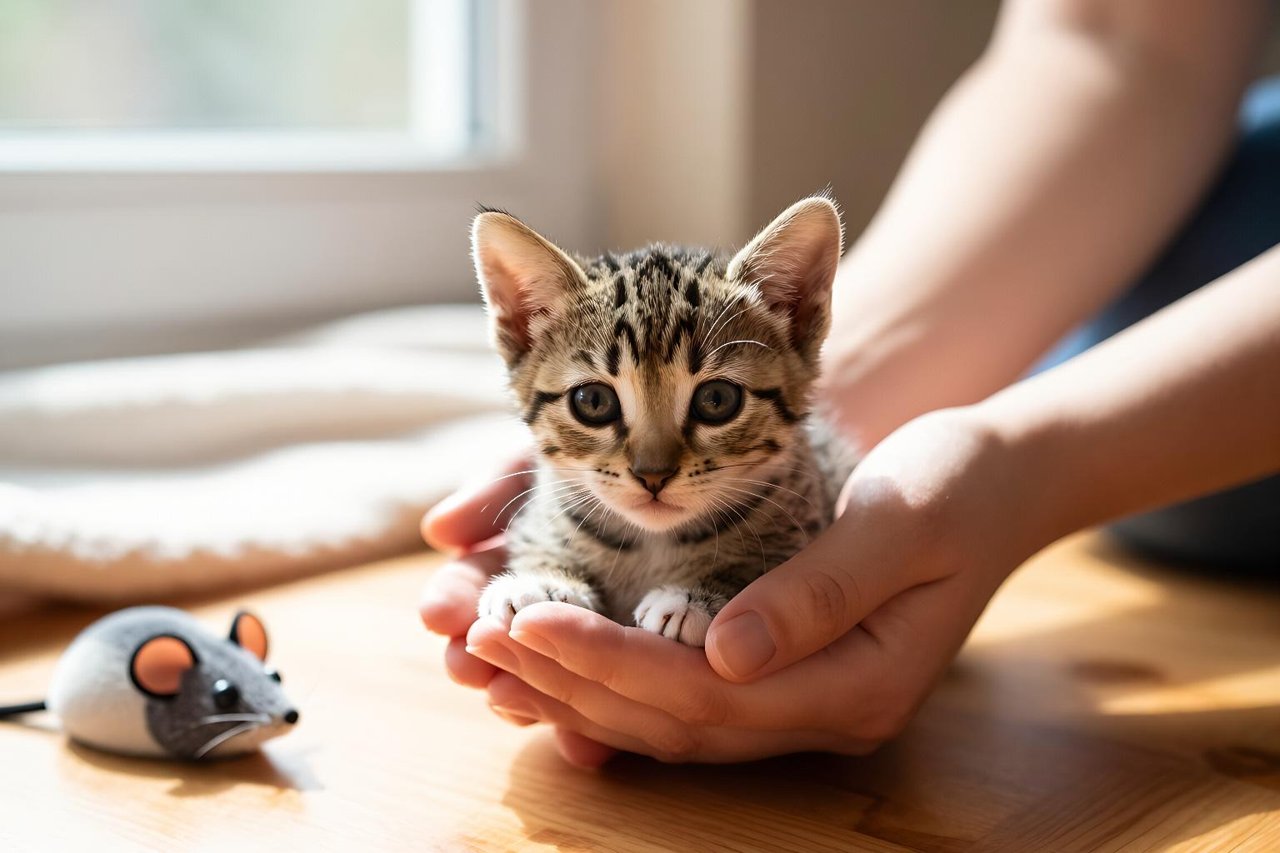
A kitten that fits in one hand will be a full-grown cat in about twelve months. That’s fast. In that window you’ll shape how confident, sociable and easy to live with they turn out to be, mostly through small, boring, repeated actions rather than anything dramatic. Here’s what actually matters, in the order you’ll need it.
Set Up the Basics Before You Bring Them Home
You don’t need a cat-shaped bed shaped like a macaron. You need six things, and everything else can wait until you know what your kitten likes.
- Two shallow bowls (ceramic or stainless steel), one for food and one for water, rinsed twice a day
- A litter tray roughly 1.5 times the length of your kitten, plus unscented clumping litter
- A sturdy cardboard box with a folded blanket in it for sleeping
- A scratching post tall enough that the kitten can stretch fully upward
- A carrier with a solid, flat base
- A soft brush or a rubber grooming mitt
Skip the fancy beds for now. Most kittens will ignore a £40 bed and sleep in the box it came in, on your clean laundry, or in the bathroom sink.
Feeding: Four Small Meals, Not One Big Bowl
A four-week-old kitten and a six-month-old kitten have almost nothing in common nutritionally. Young kittens have tiny stomachs and enormous energy demands, so a bowl of food left out all day rarely works. Under four months, aim for four meals a day. From four to six months, three. After six months, two is fine.

As a rough guide, an eight-week-old kitten eats somewhere between 1/4 and 1/3 of a cup of dry food daily, or a 3oz can of wet food split across meals. Warm wet food slightly to bring out the smell, which is what gets a hesitant kitten eating. Fresh water in a separate bowl, changed daily.
Kitten food isn’t adult food with a higher price tag. It’s formulated with more calories, more protein and more of the calcium and phosphorus a growing skeleton needs, which is why it matters that you pick a kitten food with a named meat source and an AAFCO or FEDIAF statement on the label rather than guessing in the supermarket aisle.
Never feed these
Onions, garlic, chocolate, grapes and raisins, xylitol (in sugar-free gum), raw fish in large amounts, and cow’s milk. Most kittens are lactose intolerant and milk will give them diarrhoea. Water is the drink.
Litter Tray Rules Nobody Mentions
The rule of thumb is one tray per cat, plus one. Even with a single kitten, two trays in different spots prevents most accidents before they start. Scoop twice a day, do a full litter change weekly, and wash the tray with unscented soap. Scented litter and deodorising powders put a lot of kittens off entirely.
Placement matters more than the tray itself. Put it away from food and water, out of the path of foot traffic, and not next to a noisy washing machine. Once it’s in a good spot, leave it there. Moving a tray to a new room is a common trigger for a kitten who was previously perfectly clean.
Play, Sleep and the Biting Phase
Kittens sleep between 16 and 20 hours a day, often in short bursts, and then wake up with a startling amount of energy. Two proper play sessions, morning and evening, do more for behaviour than almost anything else you can do. Ten to fifteen minutes with a wand toy, then a meal, mirrors the natural hunt-eat-groom-sleep cycle and usually buys you a quiet kitten afterwards.
Those needle teeth
Biting hands is the single most common complaint from new owners. The fix is consistency, not punishment. Never use your fingers as toys, not even once. When teeth touch skin, make a short high-pitched noise and stop all interaction for 20 to 30 seconds. Then offer a soft toy to bite instead. Every person in the house has to follow the same rule, or the kitten learns that hands are sometimes fair game.
Two kittens are often easier than one
A single kitten with nobody to wrestle will use you as a chew toy and can become clingy or nippy. If you’re away at work for eight hours a day, siblings or a pair of similar-aged kittens entertain and correct each other in ways no human can replicate.
The First Vet Visit and Vaccine Timeline
Book an appointment within the first 72 hours of bringing your kitten home, even if they seem healthy. The vet will check for fleas, ear mites, worms and signs of cat flu, and confirm the kitten’s age and weight.
Most kittens follow something close to this schedule:
- 8 weeks: first FVRCP vaccine and a deworming dose
- 12 weeks: second FVRCP, plus rabies where required by law
- 16 weeks: final FVRCP booster, microchip if not already done
- 4 to 6 months: spay or neuter
Flea and worm treatments are dosed by weight, so never use a product made for adult cats on a 1kg kitten without checking. Kittens with rough starts sometimes need extra patience, and they surprise you: a tiny kitten born with badly deformed legs learned to walk properly after a rescue team stepped in. Most of the hard work in those cases is routine care delivered consistently.
Handling and Grooming Without a Fight
Short, frequent handling beats long sessions. Two or three times a day, for 30 seconds at a time, touch paws, ears, the mouth and the belly while the kitten is relaxed and slightly sleepy. That’s how you build a cat that tolerates nail trims and vet exams later. Pair handling with a treat.
Brush a shorthair two or three times a week and a longhair daily. Start with a soft brush and a two-minute limit. If you’re already thinking about how much fur will end up on your sofa as an adult, it’s worth noting that some breeds shed far less than others, though grooming a kitten is still a habit worth building regardless of coat type.
Kitten-Proofing: The Things That Actually Cause Trouble
You don’t need to empty your house. You need to move the handful of objects that cause most kitten injuries.
- Hair ties, elastic bands, string and tinsel: linear objects cause intestinal blockages and surgery
- Blind and curtain cords: tie them up out of reach
- Lilies, poinsettia, tulips and daffodils: lilies in particular are severely toxic to cats
- Open windows without screens, especially anything above ground level
- The washing machine and tumble dryer: check before closing the door, every time
- Small toys with plastic eyes or bells that can be chewed loose
Cats like height. If you’re in a smaller flat, a tall cat tree by a window gives more usable territory than an extra square metre of floor, and some breeds genuinely cope better with small flats and thin walls than others if you’re already thinking about a second cat down the line.
Expanding Their World, One Room at a Time
Don’t give a new kitten the run of the house on day one. Start in a single quiet room with the litter tray, food, water and a hiding spot. Keep them there for three to five days, spending time sitting on the floor so they come to you. Then open the door and let them explore at their own pace.
Add one new room every few days. Kittens given space gradually are less likely to bolt under furniture and stay there, and far less likely to toilet in corners they’ve never been shown. Keep the litter tray where it is for at least a month after they’ve explored everywhere.
The first week is the most demanding: interrupted sleep, worry about whether they’re eating enough, a floor covered in toys. By week three most kittens have settled into a rhythm of eat, play, sleep, repeat, and the routine you built in those early days quietly carries you through the next decade.


