
Table of Contents
Your heart beats roughly 100,000 times a day and never takes a day off. What keeps it going is a steady flow of blood through arteries that stay flexible and clear. The food you eat, repeated over months and years, is one of the biggest levers you have over how well those arteries age.
That is the idea behind foods for heart health. Not a single miracle ingredient, but a pattern of eating that keeps LDL cholesterol down, blood pressure steady, and chronic inflammation quiet. If you have never given any of this a thought, here is where to start.
Three Things Food Actually Does to Your Heart
Almost every piece of heart-healthy eating advice comes back to three mechanisms. Learn them and the rest gets much easier to remember.
It changes your cholesterol. Saturated and trans fats push LDL (the “bad” kind) up. Unsaturated fats and soluble fiber push it down. LDL is the substance that builds up inside artery walls and slowly narrows them.

It changes your blood pressure. Sodium pulls it up. Potassium, found in beans, potatoes, bananas and leafy greens, helps pull it back down.
It changes inflammation. Diets heavy in refined carbohydrates and processed meat keep the immune system switched on at a low hum, which wears blood vessels down over decades.
Fiber Is the Most Underrated Thing on Your Plate
Adults are advised to get somewhere between 25 and 38 grams of fiber a day. Most people land near 15. That gap matters, because the soluble kind of fiber binds cholesterol in your gut so less of it gets absorbed.
You do not need a supplement. A cup of cooked black beans carries about 15 grams of fiber. A bowl of oatmeal gives you 4. A pear adds 5 more, most of it in the skin. Barley, lentils, chickpeas, apples and psyllium husk are all strong sources.
Fat Is Not the Enemy. The Type Is.
Unsaturated fats — olive oil, avocado, nuts, seeds, oily fish — lower LDL when they replace saturated fat in your diet. Saturated fats, the kind in butter, fatty red meat and coconut oil, raise it. Industrial trans fats do the most damage of all, so it is worth scanning ingredient lists for the phrase “partially hydrogenated.”
Omega-3 fats deserve their own line. Two servings of fatty fish a week is the standard recommendation, and it comes with a measurable drop in heart disease risk. Salmon, sardines, mackerel and herring are the usual picks. If fish is not happening, walnuts, ground flaxseed and chia seeds supply a plant version called ALA.
The Foods That Do Most of the Work
If you were building a shopping list from nothing, these are the items that earn their place.
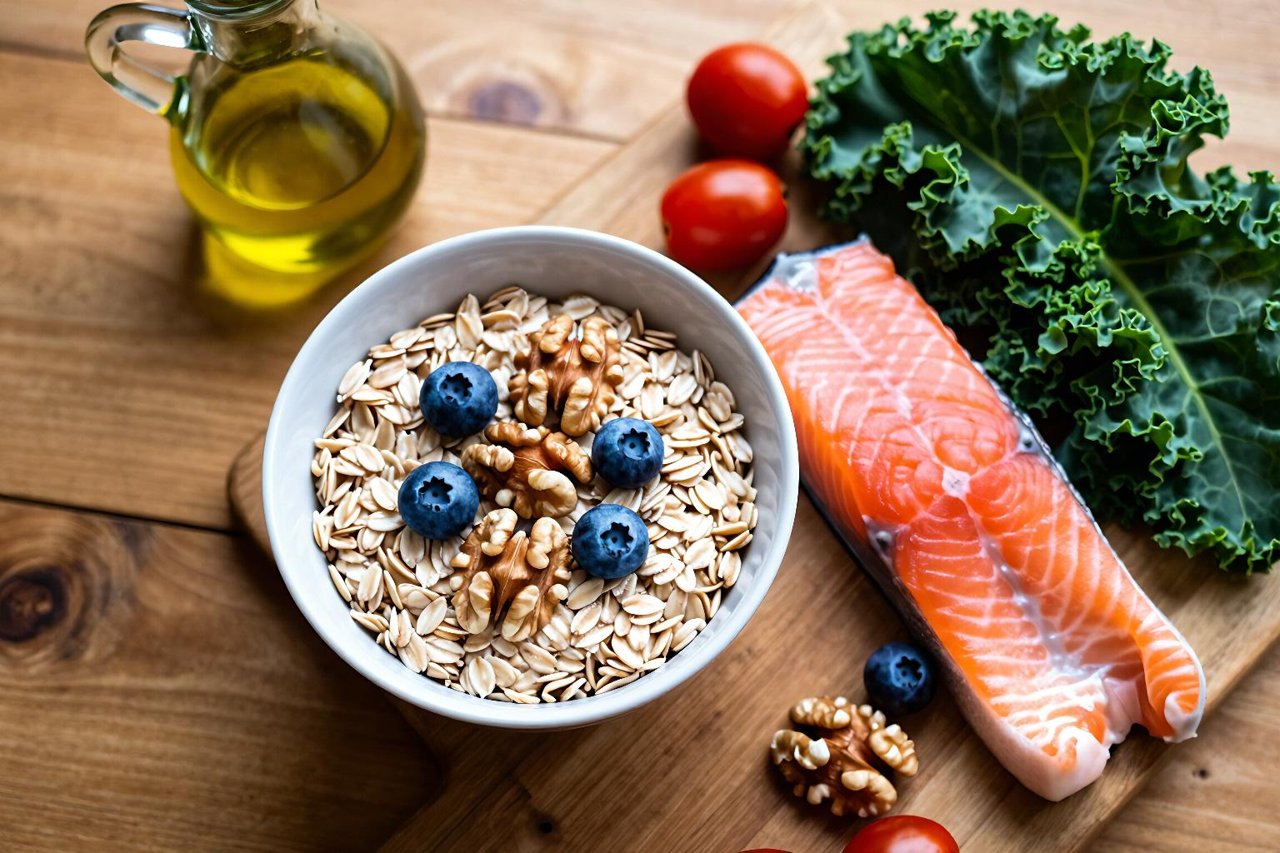
- Oats and barley. Both are loaded with beta-glucan, a soluble fiber with solid evidence behind its cholesterol-lowering effect.
- Beans, lentils and chickpeas. Cheap, shelf-stable, and packed with fiber, potassium and plant protein.
- Fatty fish. Two servings a week, fresh or canned. A tin of sardines costs less than a coffee.
- Nuts and seeds. A small handful a day is linked to lower rates of heart disease. Walnuts and almonds are the most studied.
- Leafy greens and cruciferous vegetables. Spinach, kale, broccoli, cabbage. The nitrates in these help blood vessels relax.
- Berries. Blueberries, strawberries and raspberries carry anthocyanins, plant compounds tied to better artery function.
- Olive oil. The backbone of Mediterranean-style eating and the easiest swap from butter.
- Tomatoes. Cooked ones in particular deliver lycopene, linked to lower stroke risk.
- Whole grains. Brown rice, quinoa, farro, whole wheat bread. Swapping them in for refined versions lowers LDL slightly but reliably.
Treat that as a framework rather than a rulebook. A deeper practical guide to heart healthy foods covers portions, prep and how to fit them into real meals.
What to Dial Down, Gently
Cutting foods out entirely tends to backfire, but three categories are worth reducing on purpose. Processed meats such as bacon, salami and hot dogs are strongly linked to heart disease. Sugary drinks are probably the fastest route to the blood sugar spikes that damage vessels. Sodium hides in bread, sauces and canned soup far more than it does in your salt shaker.
Here is the part people miss: a good diet with a few stubborn bad habits attached can lose much of its benefit. Everyday routines around how you cook, or what you drink alongside a healthy meal, can quietly cancel out the good stuff, which is why they are worth fixing before you overhaul anything else.
How to Build a Plate Without Counting Anything
Portion rules beat calorie apps for most people. Fill half the plate with vegetables or fruit. Give a quarter to protein: fish, beans, chicken, tofu, eggs. The last quarter goes to whole grains or a starchy vegetable.
Protein should be roughly the size of your palm. Added fats, like oil or dressing, about the size of your thumb. That is the whole system. No weighing, no tracking. If habits are the part you struggle with, this step-by-step plan for eating better without relying on willpower covers how to make new routines actually stick.
Do You Need a Named Diet?
Mediterranean, DASH and plant-based eating get compared constantly, and they do differ. DASH puts specific limits on sodium and saturated fat, while Mediterranean patterns lean harder into olive oil and fish. The overlap, though, is enormous: vegetables, fruit, whole grains, beans, nuts, and a big reduction in red and processed meat.
Pick whichever fits your kitchen and your budget. A side-by-side look at how Mediterranean, DASH and plant-based diets compare helps if you are deciding between them.
What Belongs in the Cart
Heart-healthy eating gets easier when your kitchen is stocked for it. Frozen vegetables are just as nutritious as fresh and will not rot in the drawer. Canned beans cost a fraction of dried and work perfectly well if you rinse them, which washes off roughly 40 percent of the sodium. Store-brand rolled oats are identical to the premium ones.
For a version you can take to the store this week, this real-world grocery list for heart health breaks it down item by item.
Your First Three Swaps
Do not rebuild your diet on a Monday. Change three things and leave everything else alone.
Swap breakfast cereal for oats. Plenty of cereals marketed as healthy carry 10 grams of sugar or more per serving. Rolled oats with fruit and a spoon of peanut butter take four minutes and cost less.
Swap the chip bag for nuts. An ounce of almonds or walnuts handles the afternoon slump and adds fiber, magnesium and unsaturated fat instead of refined starch and salt.
Swap one meat dinner for fish or beans. Two fish meals a week is the target, but one is a genuine improvement over zero, and a tin of sardines on toast counts.
Run those three for a month before adding anything else. The heart responds to patterns that hold up over years, not to one perfect week.


