
Table of Contents
“Eat more salmon.” “Add walnuts.” “Cook with olive oil.” You have heard all of it, and you have probably acted on a fair chunk of it. Then the blood test comes back with an LDL of 138 and a doctor who raises an eyebrow.
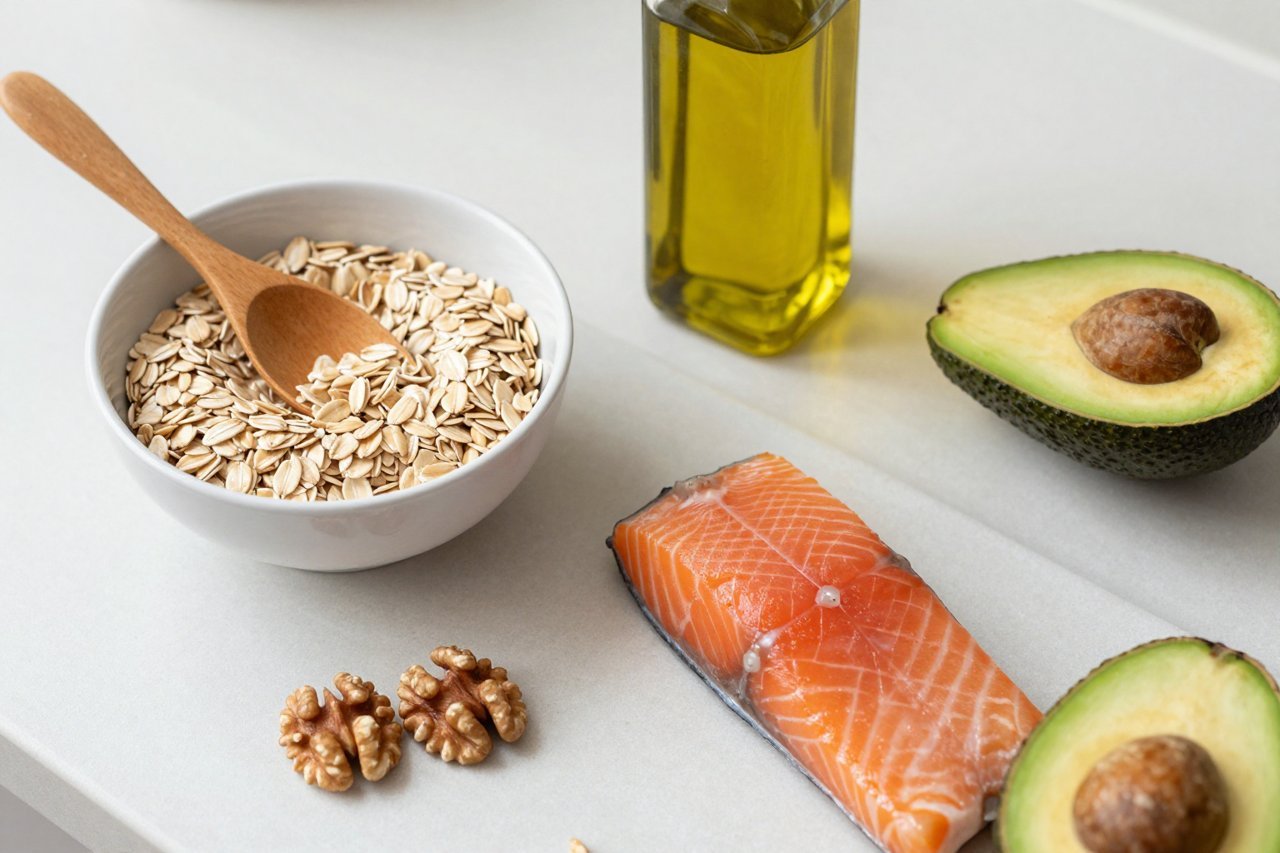
Good foods for heart health are rarely the problem. The problem is the dozen small decisions wrapped around them, the ones that quietly cancel out the salmon, the oats and the extra virgin olive oil you are so proud of. Here are the mistakes I see most often, and what to do about each one.
Mistake 1: Assuming one healthy food cancels out everything else
A bowl of oats is a genuinely good start to the day. Now watch what usually lands on top of it: two spoons of brown sugar, a drizzle of honey, a handful of raisins and a sliced banana. That is easily 40 grams of sugar before 8am, and the beta-glucan in the oats can only do so much heavy lifting.
Oats were never the mistake. The delivery system was. The same thing happens with a turmeric latte built on full-fat coconut milk, a “protein” muffin carrying 28g of sugar, or a salad drowned in a dressing that is mostly honey and oil. The label says healthy; the ingredient list tells a different story. If you want the pattern spelled out properly, the mistakes that cancel out the foods that actually work are worth reading alongside this.

Mistake 2: Replacing fat with sugar
The low-fat era taught a whole generation that fat was the enemy. Food manufacturers responded by stripping out fat and adding sugar, starch and salt to keep things edible. Snackwells cookies were marketed as heart-friendly. They were fat-free and packed with refined flour and sugar, and people ate the whole box.
Current evidence points the other way. Swapping saturated fat for refined carbohydrate does not lower cardiovascular risk. It tends to raise triglycerides and lower HDL. Swapping saturated fat for unsaturated fat, on the other hand, does lower risk. Olive oil, nuts, seeds, avocado and oily fish are the direct replacements. That is the core of how the Mediterranean, DASH and plant-based approaches actually stack up against each other.
What that looks like on a plate
- Instead of a fat-free fruit yoghurt with 20g of sugar, plain Greek yoghurt with berries and a spoon of walnuts.
- Instead of margarine on white toast, mashed avocado on wholegrain.
- Instead of a low-fat granola bar, a small handful of almonds.
- Instead of fat-free dressing, olive oil and vinegar, poured rather than glugged.
Mistake 3: Believing the coconut oil story
Coconut oil is roughly 82% saturated fat. Butter is about 63%. The idea that it behaves differently in the body mostly comes from marketing, not from outcomes. A widely cited advisory from the American Heart Association reviewed the evidence and concluded that coconut oil raises LDL cholesterol much the same way other saturated fats do.
Use it for flavour if you like it. Just do not treat it as your everyday cooking fat. Olive oil, rapeseed oil and avocado oil all do the job with a fraction of the saturated fat, and they bring polyphenols along for the ride.
Mistake 4: Eating the right fats in the wrong amounts
Heart-healthy fats are still calorie-dense. Olive oil runs about 119 calories per tablespoon. A quarter cup of almonds, roughly 23 nuts, is about 200 calories, and it is genuinely easy to eat three times that while standing at the kitchen counter. Nuts and olive oil are not the enemy, but a 400-calorie surplus every day adds up to a lot of weight over a year, and weight gain works against everything else you are doing.
The fix is boring and effective. Measure for one week. Use a spoon for oil, a small bowl for nuts, and keep the bag in the cupboard instead of on the desk.
Mistake 5: Missing the sodium hiding in “healthy” food
Bread is the single biggest source of sodium in many Western diets, and it does not taste salty. Two slices of sandwich bread, deli turkey and a slice of cheese can hit 1,200mg before you count the pickles. Canned beans carry 300 to 400mg per half cup, though rinsing them for 30 seconds drops that by roughly 40%.
Guidance sits around 2,300mg a day, and closer to 1,500mg if your blood pressure runs high. Most people clear 3,400mg without trying. If you have ever built a shopping list around heart health and watched your numbers barely move, the real-world grocery list approach is a better starting point than another supplement.
Mistake 6: Trying to supplement your way past the fibre gap
Most adults eat around 15 grams of fibre a day. The target is 25 to 38. A scoop of psyllium husk does lower LDL by roughly 5 to 10%, which is real, but powder does not bring the potassium, polyphenols or slow-release fullness that beans, oats, barley and berries do.
Variety matters more than volume. Aim for a rotating cast rather than the same three vegetables every week: lentils one night, black beans the next, barley in a soup, frozen berries on porridge, chia stirred into yoghurt. Plant diversity feeds the gut bacteria that produce compounds linked to better arterial function, and that is a benefit no capsule replicates.
Mistake 7: Drinking things your heart did not ask for
An 8oz glass of orange juice carries about 21g of sugar and none of the fibre of the fruit it came from. A large smoothie from a chain can reach 60g. Liquid sugar hits the liver fast, and it is one of the strongest drivers of high triglycerides.
Red wine gets a free pass because of resveratrol. The catch is dose: you would need to drink hundreds of glasses a day to reach the amount used in lab studies, and alcohol raises blood pressure and triglycerides in the meantime. Whole grapes give you the polyphenols without the ethanol. The same liquid-calorie trap shows up in the mistakes that push blood sugar the wrong way, and it hits the heart and the pancreas at the same time.
Mistake 8: The all-or-nothing spiral
You eat carefully for nine days. Then a birthday weekend happens and you write off the whole month. This is the most expensive mistake on the list, because cardiovascular risk responds to averages, not to streak length.
Someone who eats well 80% of the time for two years will beat someone who eats perfectly for three weeks and quits, every single time. If willpower is the part that keeps failing, a plan built around eating better without relying on willpower is worth more than any list of superfoods.
Fix the mistake that is costing you the most
Instead of overhauling everything at once, find your biggest leak and plug that one first. Three weeks is long enough to see whether it is working.
- Blood pressure running high? Start with sodium. Cooking from scratch two more nights a week beats any supplement on the shelf.
- LDL stubbornly elevated? Saturated fat down, soluble fibre up. Oats, barley, beans and psyllium, in that order of priority.
- Triglycerides creeping? Cut liquid sugar and alcohol before you change anything else on the plate.
- Everything borderline? Do the boring thing: more plants, less processed food, half the portion of oil and nuts you are currently using.
One more thing worth knowing. If you are on a statin or blood pressure medication, dietary change stacks with it rather than replacing it, so keep taking it and tell your doctor what you are changing. Nothing here is a reason to stop a prescription.
Pick the one item above that matches your last blood test, run it for three weeks, and re-check. That beats the alternative, which is reading another list of heart-healthy foods and doing none of it.


