
Table of Contents
Ginger has one of the stronger evidence piles in the spice rack. A gram or so of dried powder can settle a queasy stomach faster than most people expect, and the gingerol behind that back-of-the-throat burn shows up in real trials on menstrual cramps, knee osteoarthritis and post-operative nausea. So why do so many people drink ginger tea for a year and feel nothing?
Almost every time, the problem isn’t the ginger. It’s the handling. The gaps between “ginger is good for you” and “ginger is doing something for you” are small, unglamorous and completely fixable.
Mistake 1: Measuring ginger in “pieces” instead of grams
Scroll any wellness forum and you’ll be told to use “a thumb-sized piece” or “a few slices.” That’s not a dose, it’s a gesture. Two thumbs can differ by a factor of three.
The research doses are boringly specific. For nausea, most trials land around 1–1.5 g of dried ginger powder per dose. A reasonable daily ceiling for general use is 2–4 g of dried ginger, which works out to roughly 10–20 g of fresh root, since fresh ginger is about 80% water. One level teaspoon of ground ginger is close to 2 g, so a half teaspoon twice a day is an easy way to stay on target without a scale.

Push past 4 g a day and the extra is more likely to give you heartburn, burping and loose stools than any additional benefit.
Mistake 2: Boiling the ginger until it stops tasting like ginger
Gingerol, the main pungent compound, degrades into shogaol as it heats. Shogaol isn’t useless, but the bright, lifting aromatics that make fresh ginger worth buying are volatile oils, and they leave the pot with the steam.
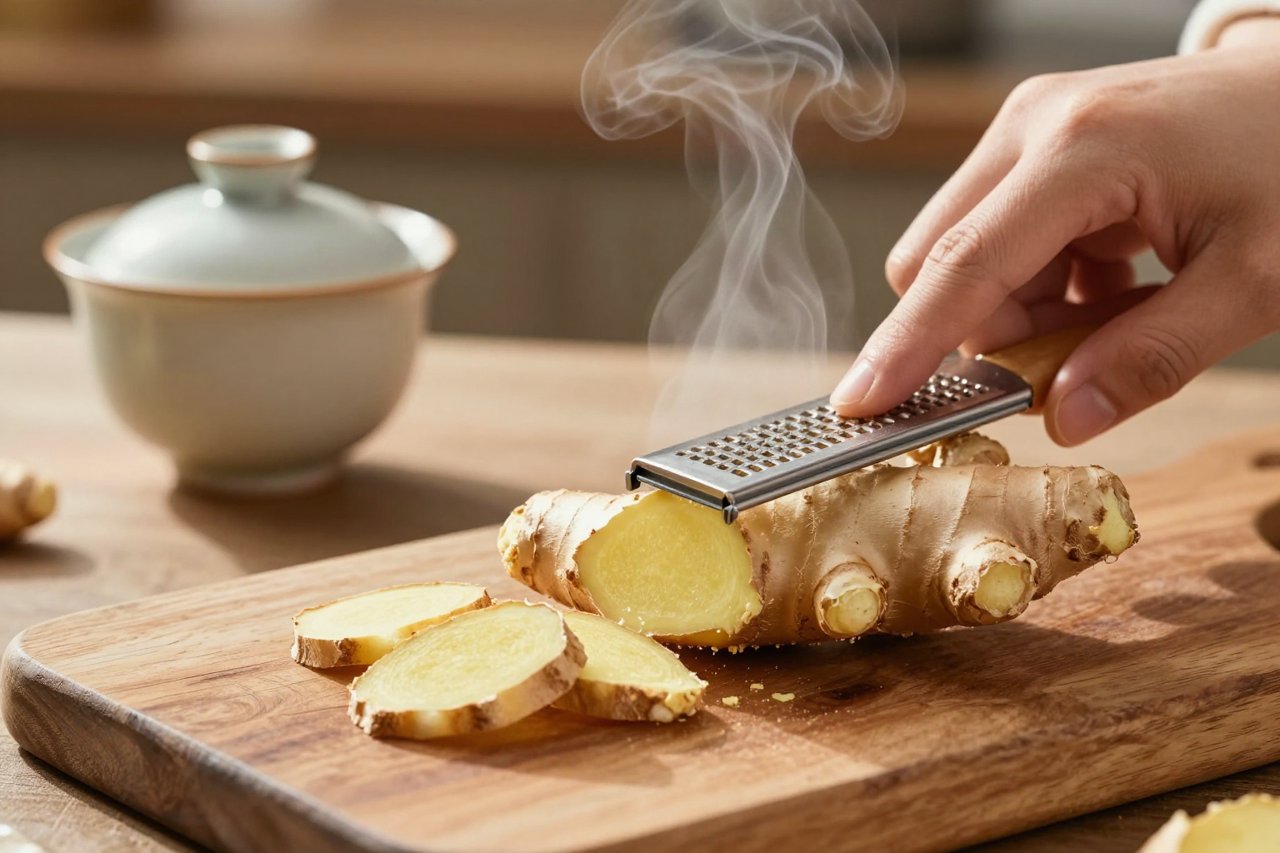
Thick coins dropped into a rolling boil for half an hour produce bitter, faintly gingery water with a fraction of the punch. Grate the root instead, bring water just off the boil, add the ginger, clamp a lid on and steep for 5–10 minutes. The lid matters more than people think. If you want the fuller, warmer profile of shogaol, simmer gently for 15 minutes with the lid on, but don’t let it churn.
One prep habit that pays off
Stop peeling every knob. The skin is thin, holds flavour and adds fibre; a firm scrub under running water is enough for tea, broth and stir-fries. If the skin is genuinely thick or gritty, scrape it with the edge of a spoon rather than a peeler and you’ll lose a fraction of the root.
The myth that ginger drinks are basically free
Ginger ale is a soft drink with a ginger-adjacent flavour. Most commercial cans contain no measurable ginger at all, and a 12 oz serving carries 30–40 g of sugar. If your nausea plan is a warm ginger ale, you’re mostly drinking sugar water. Ginger beer is only slightly better. Candied ginger is often over 70% sugar by weight, which makes it a fine treat and a poor daily supplement.
Ginger tea made from actual root costs pennies and delivers the compounds you were chasing.
Mistake 3: Buying powder older than your phone
Ground ginger loses its aromatic oils within months, not years. A six-month-old jar from the back of the cupboard still thickens a curry, but the medicinal punch has faded badly.
Do the smell test before you trust a jar. A fresh pinch of ground ginger should make your nose prickle. If you have to squint to detect anything, replace it. Fresh root has its own tells: heavy for its size, tight shiny skin, and it snaps rather than bends. Wrinkled skin, soft spots or a green sprout mean it’s spent. Whole roots keep three weeks in the fridge and freeze well; grate them straight from frozen with no thawing.
Mistake 4: Assuming every form delivers the same thing
A capsule is not a shortcut. Ginger supplements vary wildly in gingerol content, and some are simply ground powder in a shell with no standardisation at all. Look for a stated percentage of gingerols, usually around 5%, or skip capsules entirely. If you want to compare cost, convenience and actual potency across the options, there’s a solid breakdown in fresh ginger vs powder vs capsules and which form gives you the benefits.
Mistake 5: Expecting every benefit on the same timeline
This is where most people quit too early or judge too generously. The effects of ginger move at completely different speeds:
- Nausea: 30–60 minutes, often sooner. This is the fast one.
- Menstrual cramps: trials typically dose 1 g daily across the first three days of bleeding, starting at the first sign of pain.
- Joint pain and stiffness: 2–3 weeks of daily use before anything is noticeable, if it happens at all.
- General digestive comfort: days, not hours, and highly individual.
If you’ve taken a genuine 1 g dose daily for two weeks and nothing has changed, ginger probably isn’t the lever for your particular problem. That’s useful information, not a failure.
Mistake 6: Ignoring who should go easy
Ginger does have a mild antiplatelet effect, and that matters for some people. Worth flagging to a doctor before you commit to regular doses if any of these apply:
- You take warfarin or another blood thinner
- You have surgery scheduled in the next two weeks (stop 1–2 weeks before)
- You have a bleeding disorder or low platelet count
- You have gallstones, since ginger stimulates bile flow
- You’re pregnant and considering amounts well above culinary use
- You already get reflux or gastritis, where even 2 g can sting
For most healthy adults, ginger in food and tea is unremarkable. The caution list is about concentrated daily doses, not the slice in your stir-fry.
Mistake 7: Stacking ginger with four other remedies at once
Ginger gets bundled into everything: turmeric lattes, apple cider vinegar tonics, immunity blends with nine ingredients. Start all of them on the same Monday and you learn precisely nothing about which one helped. The adjacent remedies have their own quiet failure modes, from turmeric mistakes that cancel out its benefits to apple cider vinegar habits that quietly cancel its effects. Change one variable at a time, give it two weeks, then decide.
How to run a clean two-week test on yourself
If you only do one thing differently after reading this, make it a proper self-trial instead of a vague habit. Pick the single symptom you actually want to shift, whether that’s post-lunch bloating, period cramps or morning stiffness.
- Choose one form and stick to it for the full two weeks. Fresh root steeped in a lidded cup, or a level teaspoon of ground ginger split into two doses.
- Take it at the same time each day, ideally with or just after food if your stomach is sensitive.
- Note severity on a simple 1–10 scale once a day. Memory is a terrible record keeper.
- Change nothing else in your diet or supplement routine during the window.
- At the end, stop for a week and see what comes back.
That last step is the one almost nobody does, and it’s where the real answer lives. If you want the whole thing laid out in sequence, including how to build up to a dose without upsetting your gut, this practical step-by-step ginger guide covers the mechanics. And if you want to know what the trials actually found before you invest two weeks, the science-backed look at ginger’s effects is the place to start.
Ginger rewards a little precision. Fresh root, a measured dose, gentle heat and a fortnight of honesty about whether anything changed. That’s the entire trick, and it costs less than the supplement aisle.


