
Table of Contents
By the time most dogs turn three, they already have some degree of periodontal disease. That’s not a scare tactic, it’s the number vets quote most often, and it explains why dental cleanings are one of the most common procedures in small animal practice. The fix isn’t complicated either. A soft brush, a tube of pet-safe paste, and about ninety seconds a day will do more for your dog’s mouth than every chew, spray, and water additive on the shelf combined.
The catch is that dogs don’t arrive knowing what a toothbrush is. Most of the work is teaching them to tolerate one, and that takes a few weeks of short, boring, treat-heavy sessions. Here’s how to do it properly.
Why brushing beats everything else you can buy
Plaque is a soft bacterial film that starts forming within hours of a meal. Left alone, it mineralises into tartar within roughly 24 to 72 hours, and once tartar is there, no brush, chew, or gadget will remove it. Only a scale and polish under anaesthetic will. Brushing works because it happens before that hardening point, physically disrupting the film while it’s still soft.
That matters beyond fresh breath. Chronic gum inflammation sends bacteria into the bloodstream, and vets increasingly link it to heart, kidney, and liver strain. A full dental under anaesthetic typically runs several hundred pounds or dollars, and many dogs need one every few years. Good home care is also one of the quiet, unglamorous habits shared by the dog breeds that regularly live past 15.

What you actually need in the bathroom
You don’t need much, but the wrong items will make the job harder or unsafe.
- A soft-bristled dog toothbrush. A small angled head reaches the back molars far better than a straight one. A finger brush is a good stepping stone for nervous dogs and tiny mouths.
- Enzymatic dog toothpaste. Poultry or malt flavour, because your dog has to think it’s a treat. These pastes don’t need rinsing.
- Plain gauze or a soft microfibre cloth. Useful for the first week and for dogs who reject bristles entirely.
- Something to kneel on. Tiled bathroom floors are unforgiving after five minutes.
Never use human toothpaste. Fluoride upsets canine stomachs, and many human brands contain xylitol, which is genuinely toxic to dogs even in small amounts. Keep the tube somewhere the dog can’t reach, because pet toothpaste tastes good enough to be eaten whole. If you’re building a basic supplies cupboard anyway, this list of must-have tools for every dog owner covers the rest of the essentials.
The eight-week ramp-up that actually works
You can rush this, and your dog will let you brush for about four days before deciding the toothbrush is a thing to be avoided at all costs. Go slowly instead. Each stage below might take three days or a week, depending on the dog.
Stage one: make the paste the reward
Put a pea-sized blob on your finger and let your dog lick it off. Do that once a day for a few days. No brush in sight. The goal is simple association: bathroom floor equals something delicious.
Stage two: touch the mouth
With paste on your finger, lift the lip gently and rub a little paste on the front teeth and gums. Two seconds is plenty. Reward, release, done. If your dog pulls away, you moved too fast.
Stage three: bring in the finger brush
Swap your finger for a rubber finger brush and work along the outer surfaces of the canine teeth and the incisors at the front. Keep it under ten seconds and always end while your dog is still relaxed.
Stage four: the real brush, a few teeth at a time
Introduce the bristled brush with paste and clean two or three teeth, then stop. Add a tooth or two each session. Most dogs accept a full mouth within two to three weeks of this. If yours plateaus, stay at the comfortable stage for another week rather than pushing through.
The technique, step by step
Once your dog is reasonably cooperative, this is the routine that does the most good in the least time:
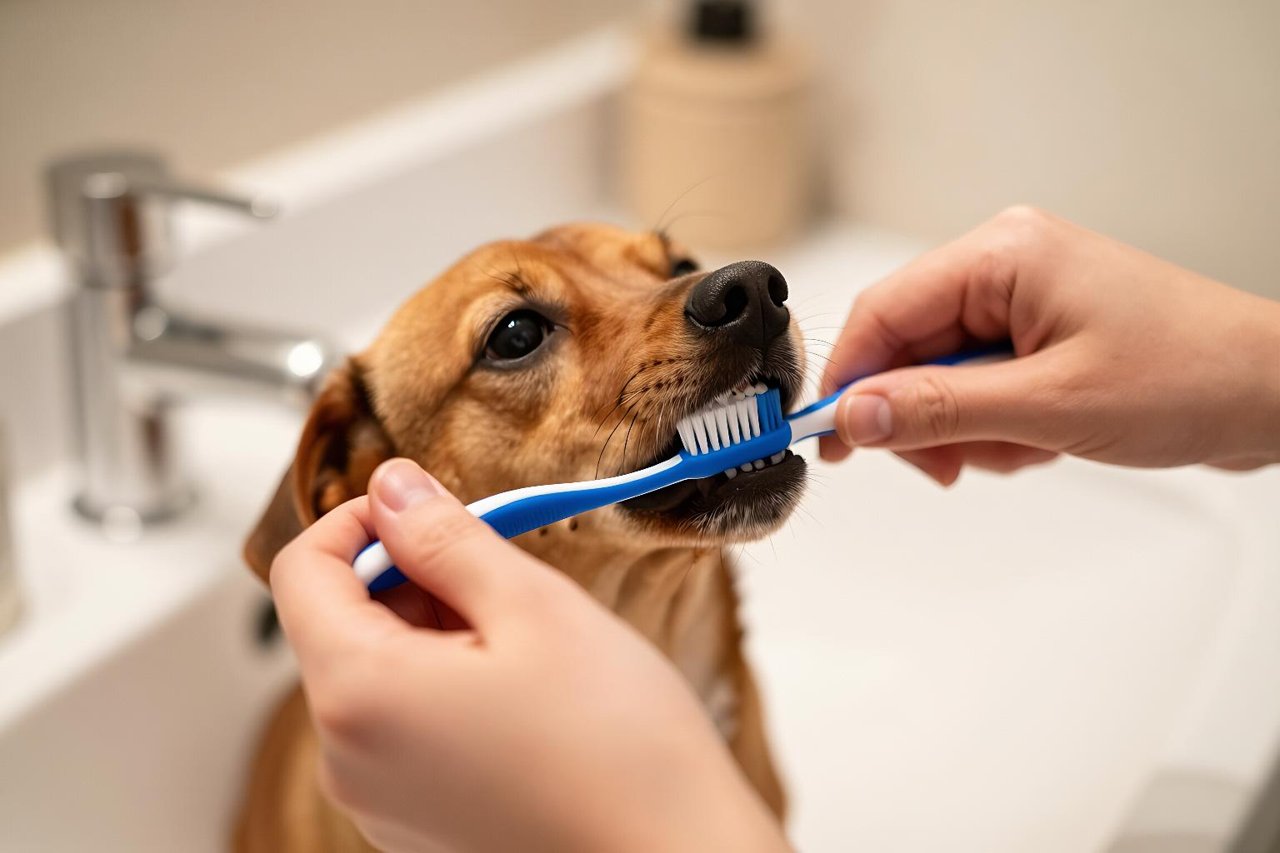
- Position yourself behind or beside your dog, not looming over their face. Kneel on the floor with their head resting against your chest. Small dogs can sit in your lap facing away from you.
- Lift the lip with one finger and slide the brush in along the cheek. Don’t pry the jaw open. You need to reach the outer surfaces, not the inside of the mouth.
- Angle the bristles 45 degrees into the gumline and use small circles. The gumline is where plaque does the most damage, and where most brushing gets skipped.
- Work in quadrants. Ten to fifteen seconds per quadrant, sixty to ninety seconds total. Upper right, upper left, lower right, lower left.
- Finish with a treat and put the brush away immediately. The session should end on a high note every single time.
Wait half an hour after meals before brushing. A full stomach plus fingers in the mouth is a recipe for a messy carpet.
The spots people miss
The upper fourth premolar, the big slab-like tooth halfway along the top jaw, collects tartar faster than anywhere else in the mouth. So do the upper canines and the very back molars. Those are also the hardest teeth to reach, which is exactly why they’re the ones your vet points at during a check-up.
If your dog will only tolerate twenty seconds, split it across days: right side today, left side tomorrow. Half a mouth brushed consistently beats a full mouth brushed twice and then abandoned.
When your dog won’t cooperate
Some dogs need a different entry point. Smear pet toothpaste on a lick mat and let them work at it while you brush a couple of teeth. Muzzle training, built up slowly with a basket muzzle and high-value treats, gives nervous dogs a calmer experience and keeps your hands intact. If your dog mouths or nips during handling, this practical plan for stopping a dog from biting is worth working through before you attempt anything near their face.
The handling skills overlap heavily with grooming. If your dog is already good about having their paws touched and their ears checked, they’ll learn tooth brushing faster. Our guide to grooming a dog at home without a wrestling match uses the same gradual, reward-based approach, and it’s a sensible place to start if your dog is generally hand-shy.
How often is often enough
Daily is the gold standard, and it’s what keeps tartar from forming at all. Three times a week is a realistic minimum for meaningful plaque control. Once a week is better than nothing but won’t stop the problem, and a burst of enthusiasm every few months won’t either. Consistency matters far more than duration, so a brisk forty-second brush every evening beats a meticulous three-minute one on Sundays.
What chews and additives can and can’t do
Dental chews with the Veterinary Oral Health Council seal do reduce plaque, and they’re useful on the days you miss. Water additives help a little. Dental diets with larger kibble create a scrubbing effect. None of them replace a brush, because none of them get under the gumline.
Be cautious with bones, antlers, and hard nylon toys. They cause slab fractures of the carnassial teeth, and those are expensive to fix. A general rule from veterinary dentists: if you can’t dent it with a fingernail, it’s too hard for your dog’s teeth.
Puppies, seniors, and small mouths
Start puppies at eight to twelve weeks with a finger brush and paste. They accept it easily at that age and the habit sticks for life. Small breeds such as Yorkshire terriers, Chihuahuas, and dachshunds have crowded teeth in a small jaw, which traps plaque, so they need brushing more often than a retriever, not less. For seniors, check for loose teeth and receding gums before you brush, and go gently around any tooth that looks wobbly.
When to stop brushing and call the vet
Brushing isn’t a treatment for existing disease. Book an appointment if you notice brown tartar along the gumline, gums that bleed every session, persistent foul breath despite regular brushing, a dog who chews on one side or drops food, pawing at the mouth, or any loose tooth. Sudden terrible breath in a dog with clean-looking teeth can also point to kidney or diabetic issues, so mention it rather than ignoring it.
One last habit worth building: lift your dog’s lip once a week and actually look. You’ll spot a cracked tooth or a red gum pocket far earlier than you would if you only checked during the annual visit, and early catches are the difference between a simple polish and a string of extractions.


