
Table of Contents
A beagle rolls in something dead in the park and the car ride home is a hostage situation. A doodle smells faintly of wet towel by Tuesday. And somewhere online, someone is insisting you should never bathe your dog at all because “their coat self-cleans.” Both extremes are unhelpful. The truth sits in the middle, and it depends far more on your individual dog than on a tidy rule you can pin to the calendar.
For most healthy dogs with a normal coat, a bath every four to eight weeks works well. Once a month is a reasonable default. But that number swings hard in either direction once you factor in coat type, how much time your dog spends in mud or water, and whether their skin has a history of flaring up.
Why Overbathing Is a Bigger Risk Than Underbathing
Dog skin has a pH around 6.5 to 7.5, compared with roughly 5.5 in humans. That difference matters. A dog’s skin and coat rely on a layer of sebum — natural oils that keep the skin supple and give the coat its water resistance. Shampoo, even gentle dog shampoo, lifts those oils off.
Bathe a dog weekly with a standard shampoo and you start a predictable chain reaction. The skin dries out and flakes, the dog itches, the scratching damages the skin barrier, and bacteria or yeast move into the broken patches. Then you’re at the vet with a dog on antibiotics for what started as a hygiene habit.

There’s a second problem people miss: ears. Water trapped in the ear canal after a bath is one of the most common triggers for otitis externa, especially in floppy-eared breeds like cockers and basset hounds. If your dog shakes their head or scratches at an ear a day or two after a bath, that’s your cue.
How Coat Type Changes the Schedule
Double coats (Huskies, German Shepherds, Golden Retrievers)
These dogs carry a dense undercoat that traps dirt, dander and dead hair. Bathing every six to eight weeks is plenty, and honestly, brushing matters more than washing. A husky brushed three times a week sheds less in your house than one bathed weekly and brushed monthly. Never shave a double coat to “reduce” bath frequency — it damages the insulation and can permanently alter regrowth.
Short, smooth coats (Beagles, Boxers, Labradors)
These coats are low maintenance. Every eight to twelve weeks is realistic for a dog that mostly sleeps indoors. In between, a damp microfibre cloth over the body does most of the work. Watch for that distinctive “Frito” smell on the paws and back — that’s yeast and a sign it’s time.
Curly and long coats (Poodles, Doodles, Shih Tzus)
This is where the schedule tightens. Curly coats hold moisture against the skin and mat easily, and a matted coat traps dirt in a way a brush can’t fix after the fact. Every three to four weeks is the sweet spot, and many of these dogs see a groomer on a fixed cycle anyway.
Hairless and thin-coated breeds (Chinese Crested, Xoloitzcuintli, Greyhounds)
Hairless dogs need more frequent bathing — roughly weekly — because there’s no coat to absorb oils and the skin collects grime directly. Thin-coated sighthounds sit somewhere in between; a wipe-down every week and a full bath every four to six weeks keeps them comfortable.
Signs Your Dog Is Due for a Bath
Rather than counting days, learn to read the dog in front of you. Any of these means get the shampoo out:
- You can smell them from a metre away, or the smell lingers on your hands after petting
- The coat feels greasy or tacky at the base of the neck and along the back
- Visible dirt, sand or mud worked down to the skin rather than sitting on top
- Dandruff flakes on dark bedding or furniture
- They’ve swum in a pond, rolled in fox mess, or had a run-in with something unidentifiable
- Greasy patches or a sour smell around skin folds and the tail base
- They’re scratching more than usual with no fleas visible
Lifestyle Beats the Calendar
A dog that hikes off-lead three times a week and sleeps on your duvet lives a different life from a senior who does two short pavement walks a day. A rinse of the legs and belly after a muddy walk is often all that’s needed — it keeps the coat decent without stripping the whole body.
Allergy season complicates things. Dogs with environmental allergies often benefit from a weekly bath with a gentle or medicated shampoo, because the bath physically washes pollen off the skin. That’s not overbathing; it’s treatment, and it should be discussed with your vet rather than guessed at.
Puppies, Seniors and Dogs With Skin Conditions
Puppies shouldn’t be bathed more than every four to six weeks, and only with a mild puppy-safe shampoo. Their skin barrier is still developing. More important at that age is getting them used to the tub — a puppy who has one calm, warm, treat-heavy bath at twelve weeks is a dog who doesn’t fight you at three years old.
Senior dogs often struggle with the mechanics rather than the frequency. A non-slip mat in the tub, lukewarm water and a hand-held shower head make a huge difference. If your dog has arthritis, a warm bath can genuinely ease stiffness — but keep it short and dry them thoroughly afterwards.
Dogs with a diagnosed skin condition are a separate category entirely. Yeast overgrowth, seborrhoea and demodectic mange all have specific protocols that may call for bathing twice a week with a prescription product. Follow the vet’s schedule exactly, including contact time — leaving a medicated shampoo on for three minutes instead of ten is the single most common reason these treatments fail.
How to Bathe Without Wrecking Their Skin
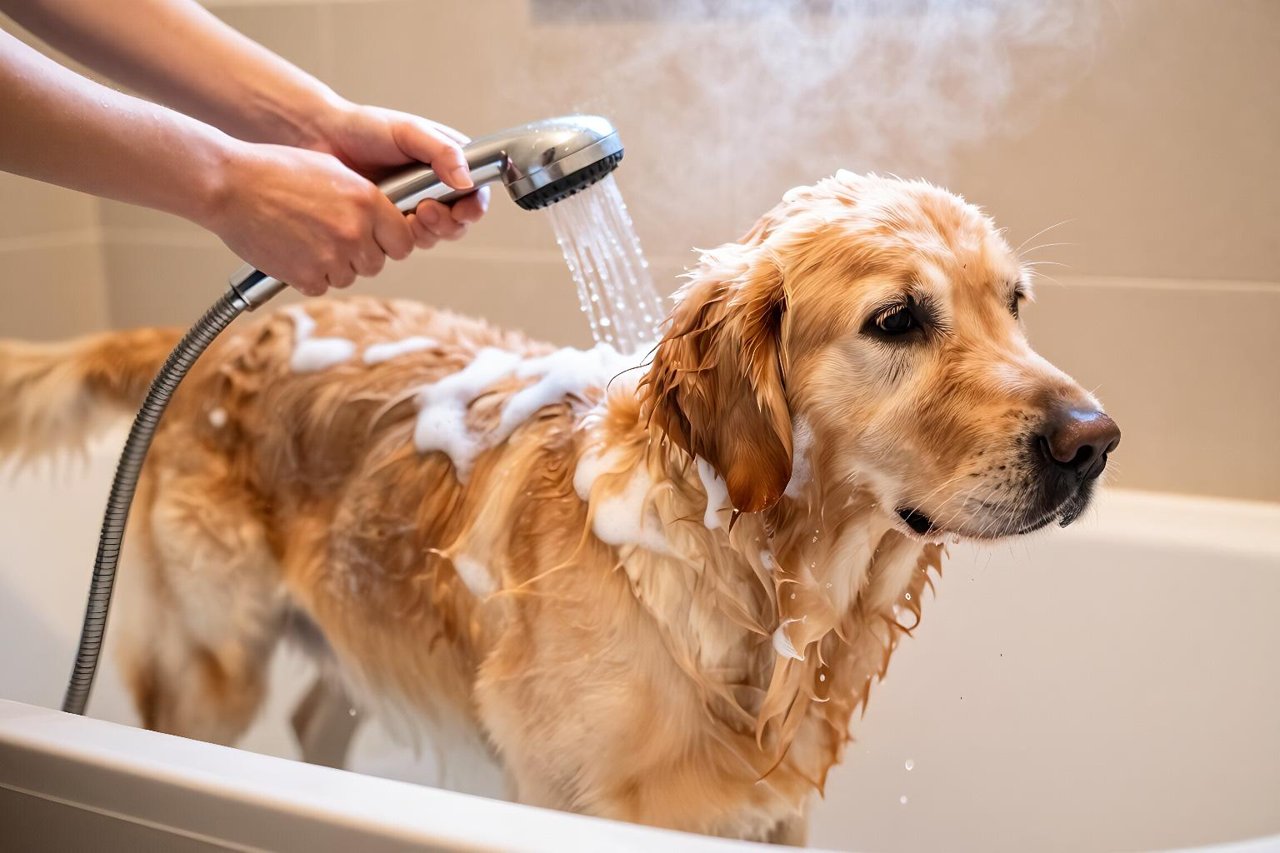
Use a shampoo formulated for dogs, not your own. Human shampoo is too acidic and too harsh for their skin barrier. Dilute it in a cup of warm water first — it spreads more evenly and rinses out faster, which matters more than most people realise. Lukewarm water, not hot. Rinse until the water runs clear, then rinse for another thirty seconds.
Drying is where things go wrong most often. Towel thoroughly, then either air-dry in a warm room or use a dryer on the cool setting, keeping it moving. A damp undercoat left against the skin is a breeding ground for hotspots. And a lot of the frustration people feel during bath time traces back to small technique errors — a slick tub floor, shampoo in the eyes, a coat that wasn’t brushed out first. There’s a useful rundown of these in common grooming mistakes every dog parent makes that’s worth five minutes before your next bath.
What to Do Between Baths
The gap between baths is where most of the smell, shedding and matting is actually managed. Brush two or three times a week — daily for double coats during shedding season. Wipe paws after every walk, which cuts down on both mud and the yeasty paw smell. Wash your dog’s bedding every couple of weeks; a clean dog sleeping on a stale bed smells like a stale dog within days.
Dog-safe wipes or a damp cloth handle spot cleaning on the chest, belly and rear end, which is where odour builds first. And if your dog has floppy ears, check them weekly and dry them carefully after every bath or swim. Get those small routines right and you’ll find you can stretch the time between full baths considerably — which is better for their skin, their coat and your water bill.


