
Table of Contents
Most travel advice is written for someone who has never left their postcode. Drink water on the plane. Bring a scarf. Keep your passport somewhere safe. Cheers.
The tricks below are the ones that survived real trips: delayed connections, a 4am arrival in a city where nothing opens until seven, a suitcase that had to be repacked standing up in a hostel corridor. Some saved money. Some saved hours. A couple saved an entire ruined afternoon. None of them require a spreadsheet.
The flight-booking rules that survive contact with reality
You have probably heard that Tuesday at midnight is the magic hour for cheap airfare. It isn’t. Airline pricing algorithms shift constantly, and there is no weekday that reliably undercuts the rest.
What does work is timing the window. For domestic flights, prices tend to bottom out around six to eight weeks before departure. For long-haul international, start watching three to five months out. Set a price alert and then leave it alone. Checking twice a day does nothing except make you anxious.

Two tricks that quietly save hundreds:
- Price the legs separately. A return ticket is not always cheaper than two one-ways on different carriers. Compare both before you commit.
- Fly into a nearby city and take the train. Landing at a secondary airport 90 minutes out can cut the fare in half, and the rail connection is often cheaper than the price difference.
One warning: hidden-city ticketing (booking a longer route and getting off at the layover) breaks your contract with the airline. It works if you carry only a cabin bag and never check in luggage. It falls apart the moment your bag ends up in the wrong city.
Pack for five days, travel for twelve
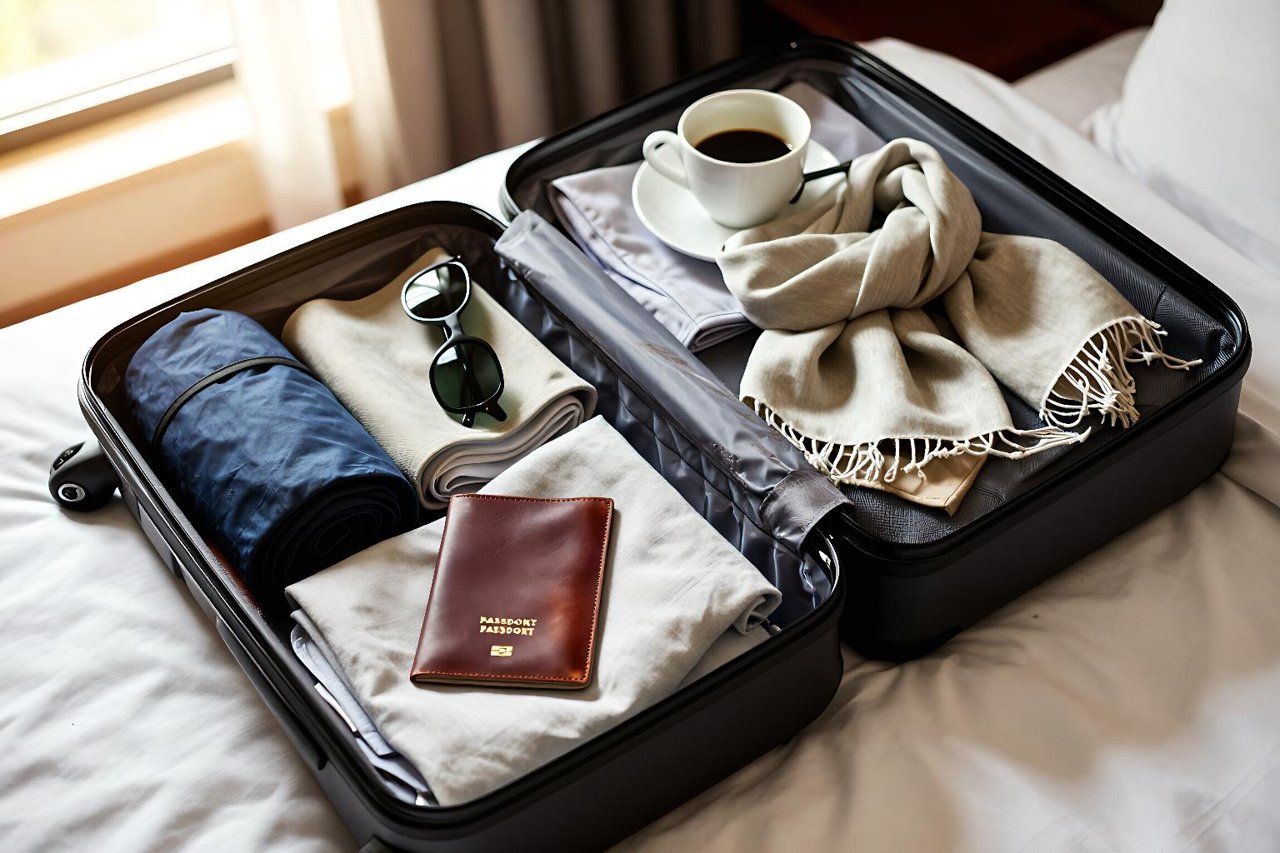
The single biggest packing upgrade is accepting that you will do laundry. Once that’s settled, a 12-day trip needs roughly five days of clothes, not twelve. A laundrette run costs about €6 and takes 45 minutes of a trip you were going to spend sitting in a café anyway.
Roll clothes instead of folding them. Put the heaviest items at the wheel end of the case so it doesn’t tip over when you stand it upright. Weigh the bag on your bathroom scale before you leave, because airport scales are unforgiving and the excess-baggage fee is usually more than the contents are worth.
If you want a checklist that covers the things people genuinely forget (the plug adapter, the second bank card, the tiny bottle of whatever you can’t buy abroad), this guide to travel essentials worth packing on any trip is closer to reality than most.
Airport moves that buy back hours
Arriving three hours early for a short-haul flight is not caution, it’s a waste of an afternoon. Two hours is generous for most European and domestic routes. What actually determines whether you make your flight is how you get to the airport, not how early you queue.
Two specifics worth knowing. First, screenshot your boarding pass and your booking reference before you leave the house, because airport wifi has a habit of collapsing exactly when you need it. Second, if you drive, book the car park in advance. Turn-up rates are brutal, and the money spent on avoiding overpriced airport parking is one of the highest-return decisions in the whole trip.
Lounge day passes are worth the maths if you have a long layover: €30 to €40 gets you food, decent wifi, a plug socket and a chair that isn’t bolted to a stranger. If you’re paying €15 for a sad sandwich and a coffee anyway, the upgrade is closer to free than it looks.
Reset your body clock faster than the people around you
Jet lag advice usually boils down to “get some sunlight.” True, but incomplete. Light is the signal, and the timing of it matters more than the quantity.
If you fly east, get outside in the morning light and avoid bright screens after 9pm local time. If you fly west, do the opposite and chase evening light. Eat your meals on local time from the moment you land, even if that means a full dinner at 5pm with your body screaming that it’s midnight. Skip the in-flight meal on a night flight and sleep instead. Fasting for 14 to 16 hours before your first local breakfast is one of the few jet lag tricks with real evidence behind it.
Book the first night somewhere boring and convenient: an airport hotel or a place 10 minutes from the station. Arriving at 11pm and then navigating three transfers to a charming apartment in the old town is how people lose a day.
Find the places the guidebook missed
Here is a method that works in almost every city. Walk 20 minutes in any direction from the main square, then stop and look for a bakery with a queue of people who clearly live nearby. That’s your lunch. The tourist district rarely extends beyond a 15-minute radius, and the quality of food and prices both improve the moment you cross it.
Asking “where do you eat on your day off?” gets better answers than “where’s good around here?” The first question forces a personal answer. The second gets you a shrug and directions to the place with the biggest sign.
If you want a proper system rather than wandering hopefully, this approach to finding hidden gems while traveling is the most reliable version I’ve used. It works in cities where you don’t speak the language and it works in your own country.
Cut the bill without cutting the trip
Money-saving advice often means doing worse things in cheaper places. That’s a bad trade. The worthwhile cuts are the ones you barely notice.
- Always pay in the local currency. When a card terminal or ATM offers to convert for you, decline. That “convenience” rate is usually 3 to 6% above the real one.
- Do the city card maths once. Museum passes rarely pay off unless you plan to hit three or more included sites in a day. Add up the actual entry fees first.
- Take the transit pass seriously. A three-day metro card in most European cities costs less than two taxi rides.
- Use free walking tours, then tip properly. €10 to €15 per person is fair for two hours of someone’s local knowledge.
A fuller set of tactics for saving money on travel without downgrading the experience covers the balance better than a list of coupons ever will. If you’re travelling on a tight budget and still want the trip to feel good, the student travel hacks that make a trip feel seasoned are genuinely transferable to any budget.
The 10-minute prep that saves a disaster
Most travel chaos is boring rather than dramatic: a cancelled flight, a lost card, a phone that dies at the wrong moment. Ten minutes of setup before you leave handles nearly all of it.
Photograph your passport, insurance details and the front and back of every card you’re carrying, then email them to yourself. Download offline maps for every city on your route. Carry two cards from different banks and never keep them in the same pocket. If a flight is cancelled or delayed by more than three hours in the EU, you have rights to compensation and meals under EU261, but the airline will not volunteer this. Ask, and keep receipts.
Book directly with the airline or hotel when a trip matters. Third-party sites are cheaper until something goes wrong, at which point you’ll be on hold to a call centre while the airline tells you to contact your agent. That’s an hour of your holiday gone for a saving of €14.
Leave one morning completely unplanned
Every good trip I’ve taken has had a gap in it, and every gap turned into the part I remember. Overscheduling is the most common travel mistake, and it’s the hardest to fix because it happens before you leave, at a desk, when everything feels optimistically achievable.
Book the flight, the first night’s accommodation and anything that genuinely sells out, such as a specific museum slot or a train with limited seats. Then leave the rest loose. Two fixed things per day is plenty. The afternoon you wander into a neighbourhood because the tram looked interesting beats the itinerary you crammed in at 11pm on a Tuesday.
That’s the real difference between travel hacks that look good on a list and the ones you keep using for the next decade. They buy you time, money, or freedom to change your mind. Everything else is just noise.


