
Table of Contents
People rarely fail at healthy eating because they have never heard of blueberries. They fail because they build an anti-aging food routine around a few loud ingredients and a handful of quiet mistakes. One reader told me she spent $180 a month on berry powders, collagen sticks, and a green juice subscription. Her actual meals were still white toast, deli sandwiches, and two glasses of wine most nights. She was not short on anti-aging foods. She was short on a pattern that could survive a normal Tuesday.
That gap between intention and execution is where most longevity eating goes wrong. The goal is not to collect the most impressive grocery list. It is to avoid the traps that make good choices matter less than they should.
Mistake 1: Hunting for superfoods instead of building a plate
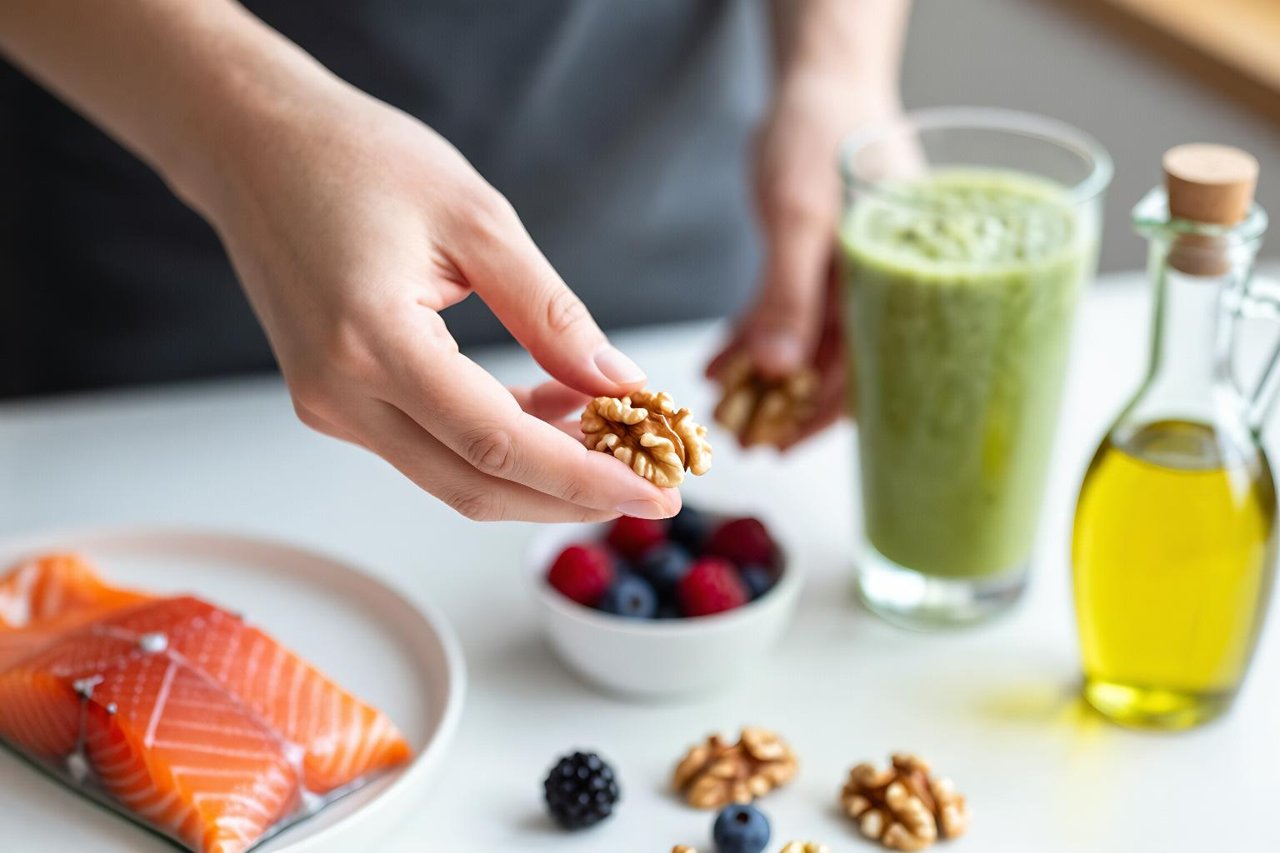
Kale, blueberries, walnuts, fatty fish, olive oil, and fermented foods all have real evidence behind them. The problem starts when they become trophies. A handful of blueberries on top of a low-fiber diet will not do much for inflammation or metabolic health. A salmon dinner once a week will not offset six nights of refined carbohydrates and rushed eating.
Store shelves reward novelty. Your body rewards repetition. The stronger approach is to look at the pattern. Eating for a longer, healthier life is less about one miracle ingredient and more about a steady supply of vegetables, fruit, legumes, whole grains, nuts, fish, and olive oil. Use the superfood as a bonus, not the foundation.

Mistake 2: Believing a supplement can cover a mediocre diet
Supplement shelves are very good at selling certainty. Resveratrol, NMN, collagen, vitamin D, omega-3s, and a dozen berry extracts all promise a shortcut. Some are useful in specific cases, especially vitamin D or omega-3s when intake is low. A capsule still cannot replace the fiber, potassium, polyphenols, and chewing involved in whole foods.
Human trials on many popular longevity compounds are modest, mixed, or short. That does not make them worthless. It means they are not a substitute for meals. If you want a clearer breakdown of where food, supplements, and fasting actually stand, this comparison of superfoods vs supplements vs fasting is worth a read. Supplement-first thinking also creates a false sense of permission: take the pill, skip the lentils. A targeted supplement can fill a gap. It cannot become the meal.
Mistake 3: Turning fruit into a sugar delivery system
Juicing removes most of the fiber and makes fruit very easy to drink quickly. A smoothie can be better than juice, but a large one with three apples, a banana, dates, and honey can carry 50 grams of sugar or more before you sit down. Whole fruit asks you to chew, slows the pace, and brings fiber along with water and polyphenols. A 250ml glass of orange juice has about 21 grams of sugar and very little of the fiber you get from eating an orange.
None of this makes fruit bad. The form matters. Eat berries whole with yogurt. Add spinach to a smoothie but keep the fruit to one or two portions. Choose whole oranges over orange juice. If you have diabetes or prediabetes, watch the size and timing of smoothies rather than assuming green means harmless. Fiber also feeds gut bacteria, and those bacteria are part of the reason whole fruit behaves differently from a sweet drink.
Mistake 4: Eating anti-inflammatory foods while keeping inflammatory habits
Olive oil, turmeric, ginger, leafy greens, and fatty fish get a lot of attention. They are useful. They are also fighting an uphill battle if sleep is five hours, stress is constant, and alcohol is nightly. The same principle applies to inflammation: there are common anti-inflammatory foods and the eight mistakes that quietly cancel out the benefits, from pairing them with too much refined sugar to expecting a single meal to fix a stressful week.
Alcohol is a good example. A nightly glass of wine with dinner can undo some of the upside of an otherwise good plate, especially if it shortens sleep and raises late-night snacking. Food is one input, not a force field. A 30-minute walk after dinner and a consistent bedtime can do more for your inflammatory profile than a teaspoon of turmeric in a sugary latte.
Mistake 5: Overdoing the good stuff
Even healthy food has a dose. Three common overcorrections show up again and again.
Protein: more is not automatically better
Protein matters for muscle as you age. Many adults under-eat it at breakfast and over-eat it at dinner. Aiming for 25 to 30 grams per meal is a practical target for many people. Piling on protein powders without strength training will not build much muscle. Kidney disease requires medical guidance, not a social media macro plan.
Fiber and nuts: ramp up slowly
Going from 12 grams of fiber to 35 grams overnight is a recipe for bloating and abandonment. Add beans, oats, or berries gradually and drink enough water. Nuts are excellent, but a 500-calorie handful while standing at the counter is still 500 calories. Measure them for a week if weight is a concern.
Olive oil is not a free food
Extra virgin olive oil is one of the best fats you can use. It is still calorie-dense at about 120 calories per tablespoon. Drizzling half a cup over a salad turns a light lunch into a heavy one. A tablespoon or two is usually plenty.
Mistake 6: Eating the right foods at the wrong rhythm
Timing is not everything, but it is not nothing. A day of good anti-aging foods can be undermined by skipping breakfast, grabbing a pastry at 3 p.m., and eating a large dinner at 10:30 p.m. For many people, front-loading protein and vegetables earlier in the day makes appetite and blood sugar easier to manage.
Intermittent fasting can work, but it is not a magic switch. If the eating window becomes an excuse for a late-night feast, the benefit shrinks. Consistency matters more than the perfect schedule. A practical guide to eating anti-aging foods step by step can help you build a rhythm you can keep.
Mistake 7: Expecting food to do the job of sleep, movement, and stress control
Diet is powerful, but it is not the only lever. Muscle mass and insulin sensitivity respond to resistance training. Skin health responds to sleep, stress, and sun protection. You can eat salmon and still feel terrible if you are sleeping on a bad mattress and working 70-hour weeks. If life is already full, these ways to maintain healthy habits when life gets busy without adding hours to your day are more useful than a stricter meal plan.
Anti-aging foods work best inside a life that supports them. That is a less sexy sentence, but it is the accurate one.
A five-minute anti-aging food audit
Instead of adding another superfood, check five things:
- One protein anchor per meal: eggs, Greek yogurt, fish, chicken, tofu, or lentils. Aim for a palm-sized portion, not a mountain.
- Two colors of plants at lunch and dinner: spinach plus tomatoes, peppers plus carrots, berries plus broccoli. Color is not a perfect nutrient measure, but it is a useful nudge.
- Whole fruit, not just fruit flavor: choose the orange, apple, or berries over juice most days.
- A fiber ramp: add one extra serving of beans, oats, or vegetables this week, not five.
- One habit that is not food: a 20-minute walk, a consistent bedtime, or ten minutes of breathing before dinner.
Run that audit for two weeks. If it feels boring, that is a good sign. Boring is repeatable.
Pick the one mistake above that sounds most like your week. Fix that before you buy another supplement.


