
Table of Contents
Ask ten people whether they’d like to eat more vegetables and most will say yes. Ask what they actually ate yesterday and you’ll hear about a bit of lettuce on a sandwich and a side of peas. The gap between intention and plate isn’t laziness. It’s friction. Vegetables are perishable, they need washing and chopping, and they’re competing with food that’s already cooked and sitting in front of you.
So the goal isn’t more willpower. It’s fewer obstacles. Here’s what actually works, based on the things that stick rather than the things that sound impressive in January.
Make vegetables the easiest thing in the kitchen
The crisper drawer is where vegetables go to die. It’s dark, it’s out of sight, and by Thursday there’s a bag of slime where your courgettes used to be. Move them. Put the washed peppers, cucumbers and carrots at eye level in the fridge, in clear containers you can see through. Keep a bowl of snap peas or cherry tomatoes on the counter next to the kettle.
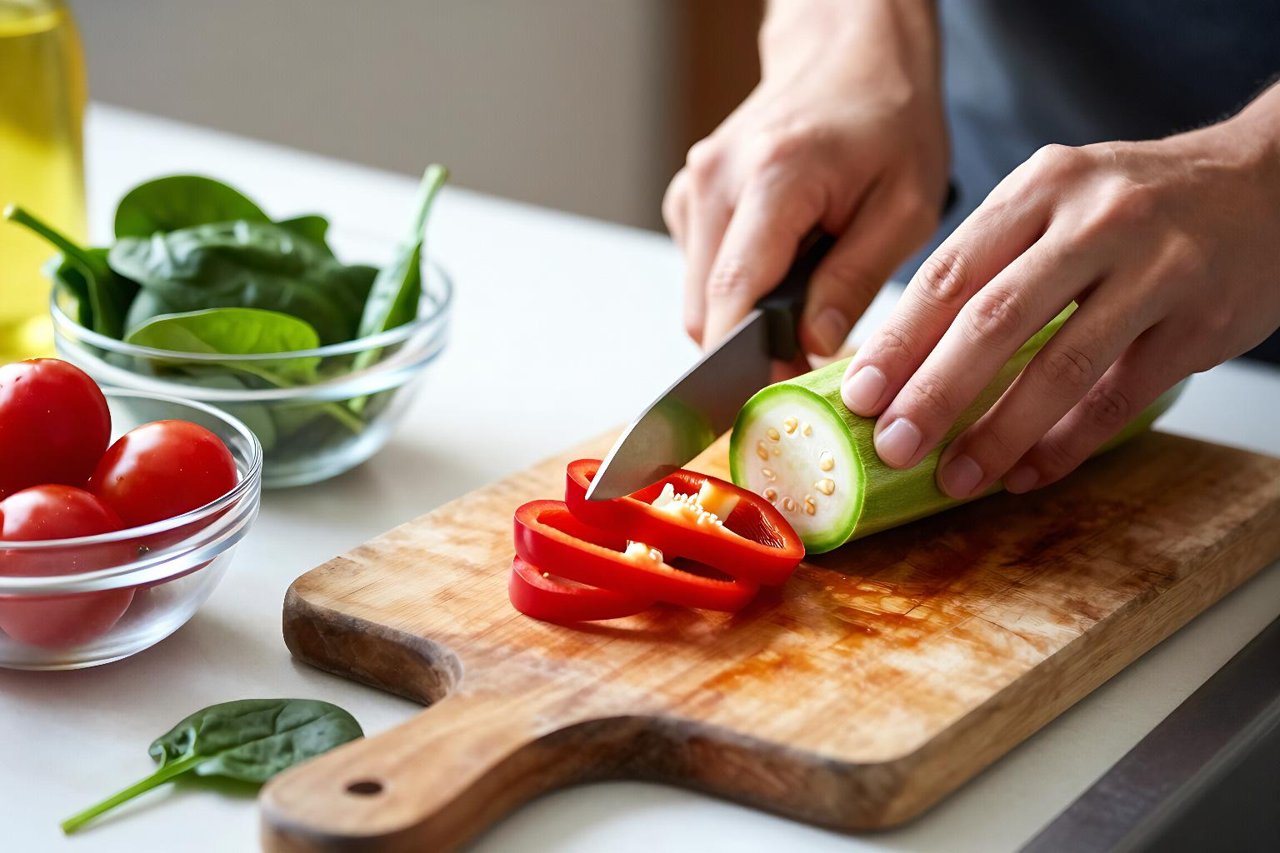
Then do the boring part once. Twenty minutes on a Sunday spent washing, chopping and storing pays you back four times over during the week. A decent practical guide to buying, storing and actually eating fruits and vegetables is worth reading properly, because half of vegetable waste is a storage mistake, not a taste problem. Cut peppers and carrots keep for days in a sealed container with a piece of kitchen paper at the bottom. Fresh herbs last far longer standing in a glass of water.

Bulk up the meals you already cook
You don’t need new recipes. You need to add vegetables to the ones in your rotation. This is where most people gain the most, fastest.
Breakfast
Two eggs on toast becomes two eggs with a handful of spinach wilted in the pan and a sliced tomato on the side. Oatmeal takes grated apple or pear without anyone noticing. A smoothie will swallow a cup of frozen spinach and taste exactly the same. If you eat yoghurt, add defrosted berries and a spoon of pumpkin seeds.
Lunch
Any sandwich improves with crunch and colour: cucumber, roasted peppers, shredded carrot, a few radishes. Soup is the easiest hiding place in the house. Stir a couple of big handfuls of spinach into a bowl of shop-bought soup at the end of heating and it collapses in thirty seconds. Add frozen sweetcorn to a tin of tuna. Add black beans to a quesadilla.
Dinner
Treat mince as a base, not the whole dish. Half mince and half finely chopped mushrooms works in bolognese, chilli and tacos, and most people genuinely can’t tell. Grate a carrot and a courgette into the sauce while it simmers. Frozen peas go into rice, pasta and curry at the last minute and cost almost nothing. If you’re building a plate from scratch, it helps to understand which foods combine protein, fat and carbohydrate, because vegetables fill you up far better when they’re eaten alongside something substantial rather than as a sad garnish.
Fix the cooking, not your character
Plenty of people who “hate” broccoli have only ever met boiled broccoli. Roast it at 220°C with oil and salt until the tips char and the stems go sweet, and it’s a different vegetable entirely. The same applies to cauliflower, carrots, sprouts and cabbage. High heat, enough oil to coat, a generous pinch of salt, and space between the pieces so they brown instead of steam.
If you’re choosing what to cook with, start from a short list of nutrient-rich vegetables that fit everyday meals rather than buying whatever looks virtuous and then watching it rot. Sweet potato, frozen peas, broccoli, spinach, red cabbage, carrots and tinned tomatoes will carry you through most weeks.
Stop treating frozen as second best
Frozen vegetables are picked and frozen within hours of harvest, which often means the nutrients hold up better than a fresh head of broccoli that’s spent a week in transit and three days in your fridge. They’re cheaper per serving, keep for months and require zero chopping. Keep peas, sweetcorn, edamame, spinach and a bag of mixed roasted vegetables permanently in the freezer. Cauliflower rice is a useful volume filler in a bowl. Frozen spinach stirred into curry or pasta adds a portion without changing the taste.
Play the numbers game
Aim for two to three cups of vegetables a day and count portions, not grams. One portion is roughly a cupped handful, about 80g. That sounds like a lot until you spread it across meals.
- Add a handful of spinach to eggs or a smoothie (1 portion)
- Put cucumber, tomato or peppers in your sandwich (1 portion)
- Eat raw veg with hummus at 4pm instead of biscuits (1 portion)
- Serve two vegetables at dinner instead of one (2 portions)
- Stir frozen peas or edamame into rice or pasta (1 portion)
That’s six portions without a single new recipe. The trick is the +1 rule: whatever you’re eating, ask what one vegetable could join it. Not a full portion, not a side dish, just one addition.
Eat the vegetables first
Before dinner, while you’re cooking, put out a bowl of raw carrots, radishes or peppers and eat them standing up. It takes the edge off your hunger so you’re not raiding the cupboard at 6pm, and it means the vegetable portion is done before the meal starts. Starting with a salad has the same effect. It sounds almost too simple, but hunger is the reason most good intentions collapse, so dealing with it early is worth the ten seconds it takes.
Go deep on greens
Leafy greens are the highest-return vegetable in the kitchen. Spinach, kale, chard and rocket are cheap, cook in minutes and shrink to almost nothing, which means a huge handful becomes a normal portion. If you want to know why they punch so far above their weight, there’s a good explanation of why leafy greens are so nutrient-dense. Treat a bag of spinach as a default purchase the way you treat milk.
Keep a rotation, not a repertoire
Nobody needs forty vegetables. Three or four reliable ones, cooked two or three ways each, will cover most of your meals. Roast a big tray on Sunday, keep a bag of frozen peas and a box of spinach in the freezer, and have one raw option in the fridge for crunch. That’s a working system.
One last thing worth saying plainly: this doesn’t have to be perfect. A plate of vegetables alongside a frozen pizza is still a net win, and labelling food as clean or dirty usually creates more guilt than it prevents, as this honest look at what clean eating actually means makes clear. Aim for more, not flawless. Roast the tray, chop the peppers on Sunday, throw the spinach in the pan, and let the repetition do the work.


