
Table of Contents
A chicken breast is a protein powerhouse, but eat it alone and you’ll be hungry an hour later. A bowl of white rice fills you up, yet it won’t do much for muscle repair. The meals that actually satisfy and keep you going usually bring protein, carbohydrate, and fat to the same plate.
That’s the practical appeal of foods that contain all three macronutrients. They do more of the work for you, so you’re not chasing a balanced meal through five separate containers. Nutrition writers sometimes call them “three-macro foods” or “complete macronutrient foods.” The label sounds technical, but the idea is simple: one ingredient supplies meaningful amounts of protein, carbs, and fat.
What Counts as a Food With All Three Macronutrients?
Protein, carbohydrate, and fat are the three macronutrients your body needs in large amounts. Plenty of foods are famous for one: olive oil for fat, rice for carbs, chicken for protein. A smaller group supplies all three in the same bite.
None are magic. A food can contain all three and still be mostly refined carbohydrate, or mostly fat. The useful question is whether the amounts are meaningful and whether the food brings fiber, vitamins, and minerals along for the ride.

Here’s a rough guide: if a standard serving gives you at least 5 grams of protein, 10 grams of carbohydrate, and 2 grams of fat, it’s playing a real role on all three fronts. That threshold is not official, but it keeps “contains all three” from being a technicality.
Plant Foods That Contain All Three Macronutrients
Soybeans, edamame, and tempeh
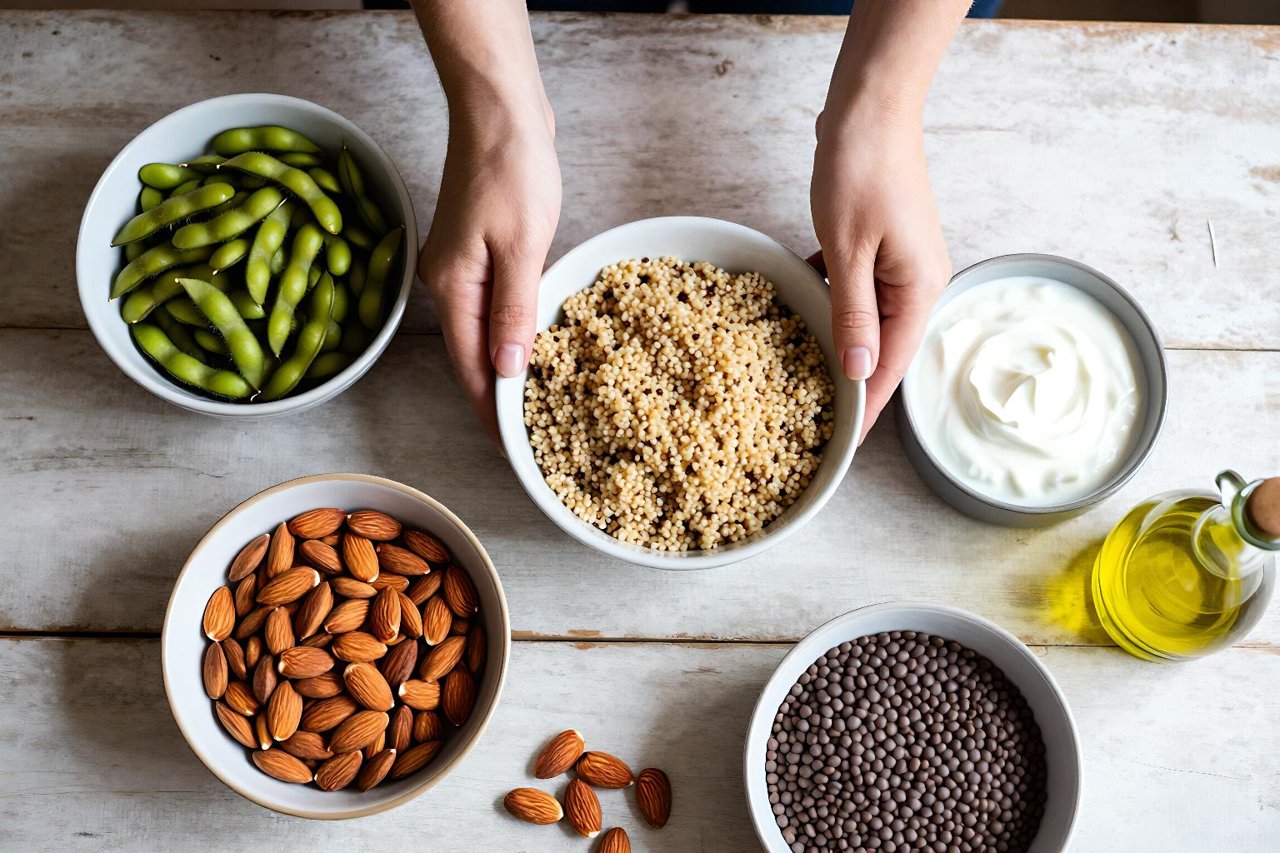
Soybeans are one of the strongest examples. One cup of cooked edamame delivers about 18 grams of protein, 14 grams of carbohydrate, and 8 grams of fat. That’s a genuinely balanced package, not a token sprinkle of each. Tempeh is similar but denser: 3 ounces gives roughly 16 grams of protein, 9 grams of carbs, and 9 grams of fat. Toss edamame into a grain bowl or roast tempeh cubes with broccoli and sesame oil.
Lentils, chickpeas, and beans
One cup of cooked lentils has around 18 grams of protein and 40 grams of carbohydrate, with just 1 gram of fat. The fat number is low, so lentils are not a perfect three-macro food on their own. Add a tablespoon of olive oil, some walnuts, or feta and the balance shifts. Chickpeas and black beans follow the same pattern: solid protein and carb, modest fat. These are the workhorses of a longevity-focused pantry because they bring fiber and potassium along with the macros. If you’re building meals around foods for longevity, legumes earn their shelf space.
Quinoa, oats, and other whole grains
Quinoa gets the spotlight for a reason. One cup of cooked quinoa contains about 8 grams of protein, 39 grams of carbohydrate, and 4 grams of fat. Oats are close behind: a 40-gram serving of rolled oats has roughly 5 grams of protein, 27 grams of carbs, and 3 grams of fat. Buckwheat, amaranth, and wild rice also carry all three, though the fat is usually modest. Treat grains as a base and add a fat source—nuts, seeds, avocado, olive oil—so the meal doesn’t lean too heavily on carbohydrate.
Nuts and seeds
Almonds, peanuts, chia seeds, hemp hearts, and flaxseed all contain protein, carbs, and fat. A 1-ounce handful of almonds has about 6 grams of protein, 6 grams of carbs, and 15 grams of fat. Two tablespoons of chia seeds provide roughly 5 grams of protein, 12 grams of carbs, and 9 grams of fat. These are fat-forward foods, so portion size matters, but they’re an easy way to rescue a low-fat meal. Sprinkle hemp hearts over yogurt or stir chia into oatmeal.
Dairy and Animal Foods That Bring the Trio
Plant foods dominate the list, but a few animal foods carry all three without much help.
Greek yogurt and kefir
A 170-gram cup of plain Greek yogurt has about 17 grams of protein and 6 grams of carbohydrate from lactose. Fat depends on whether you choose 0%, 2%, or full-fat. The full-fat version is the closest to a complete three-macro food, with roughly 5 grams of fat per cup. Kefir is similar and drinkable, which makes it useful for smoothies.
Milk and cottage cheese
One cup of whole milk delivers about 8 grams of protein, 12 grams of carbs, and 8 grams of fat. Cottage cheese is protein-heavy—about 28 grams per cup—with 8 grams of carbs and 9 grams of fat in the 4% version. Both are simple vehicles for all three macros, though lactose intolerance will rule them out for some people.
Eggs are close, but not quite
One large egg has 6 grams of protein and 5 grams of fat, but less than 1 gram of carbohydrate. It’s not a true three-macro food on its own. Pair eggs with whole-grain toast or oats and you get there quickly. The same logic applies to salmon, chicken, and beef: excellent protein and fat, negligible carbohydrate. They belong on the plate, just not on a list of foods that contain all three macronutrients by themselves.
How to Read the Numbers Without Overthinking It
Labels can make a three-macro food look better than it is. A granola bar might list 4 grams of protein, 25 grams of carbs, and 3 grams of fat, but if 12 grams of that carbohydrate is added sugar, it’s not the same as a bowl of oats. Use the nutrition panel to compare similar products, not to crown a hero food. This guide to reading food labels like a pro is useful if you want to compare yogurt, granola, or plant-based milks without getting lost in front-of-pack claims.
Simple Meals Built From Three-Macro Foods
Here are combinations that hit all three without a spreadsheet.
- Breakfast: full-fat Greek yogurt with rolled oats, berries, and a spoon of chia seeds.
- Lunch: quinoa bowl with lentils, roasted vegetables, olive oil, and feta.
- Dinner: tempeh stir-fry with brown rice, broccoli, and sesame oil.
- Snack: apple slices with peanut butter, or edamame with a drizzle of chili oil.
- Smoothie: kefir, oats, peanut butter, and frozen banana.
Notice that many of these meals stack two or three three-macro foods together. That’s fine. The goal is a meal that holds your appetite for more than an hour, not a perfect ratio.
Portions Matter More Than the Label “Balanced”
An ingredient can contain all three macros and still be easy to overeat. Peanut butter is a good example: two tablespoons have 7 grams of protein, 6 grams of carbs, and 16 grams of fat. That’s useful in a snack, less useful if you eat half the jar. The same goes for cheese, granola, and trail mix.
Your plate doesn’t need mathematical precision. A palm-sized portion of protein, a cupped handful of carbohydrate, a thumb of fat, and a couple of fists of vegetables is a decent starting point. If you’re active, you’ll likely need more carbohydrate. If you’re cutting calories, protein and fiber become more important, and fat is easy to overshoot. For a more practical framework, this guide to building a balanced diet without living in the kitchen covers how to assemble meals from what’s already in your fridge.
Keep a Few Three-Macro Foods Within Reach
Foods that contain all three macronutrients are convenient, but they aren’t a shortcut around variety. Lentils and oats are excellent; so are eggs, salmon, leafy greens, and oranges. The goal is a diet that covers your bases over a day or a week, not a single perfect ingredient.
If you’re vegetarian or vegan, soy foods, legumes, whole grains, nuts, and seeds do most of the heavy lifting. If you eat animal foods, dairy and eggs can fill gaps. Either way, the three-macro list is a starting point for building meals that hold together—not a ranking of moral virtue.
A practical rule: keep one protein-rich three-macro food, one carbohydrate-rich three-macro food, and one fat-rich three-macro food in your kitchen. For many people that’s Greek yogurt, oats, and peanut butter. For others it’s tempeh, quinoa, and almonds. Rotate them through the week, add vegetables and fruit, and you’ll spend less time calculating macros and more time eating food that actually keeps you full.


