
Table of Contents
A 250g punnet of frozen blueberries costs about £2. A 200g pouch of “superfood” berry powder costs £24. Both contain anthocyanins. One of them you can eat by the handful on a Tuesday night without measuring anything.
That gap between the marketing and the food itself is the whole story of superfoods and nutrient-rich ingredients. The label sells certainty. The actual nutrition is sitting in the produce aisle, often for a couple of quid, and it rarely comes in a pouch with a slogan on it.
Here’s what’s worth knowing before your next shop.
“Superfood” Is a Marketing Term, Not a Scientific One
There is no agreed definition. No regulator maintains a list. The EU went further and restricted the word on packaging in 2007 unless it comes with an authorised health claim, which is why European labels lean on phrases like “source of vitamin C” instead. In the UK and US, the term floats free and attaches itself to whatever sold well last quarter.

What nutrition researchers actually talk about is nutrient density: how much usable nutrition a food delivers per calorie. Kale, lentils, sardines and eggs all score well. So does a bag of frozen spinach for 89p.
Nutrient-Rich Ingredients Worth Keeping Around
You don’t need a spiraliser or a matcha whisk. A short, unfashionable list covers most of it.
Dark leafy greens
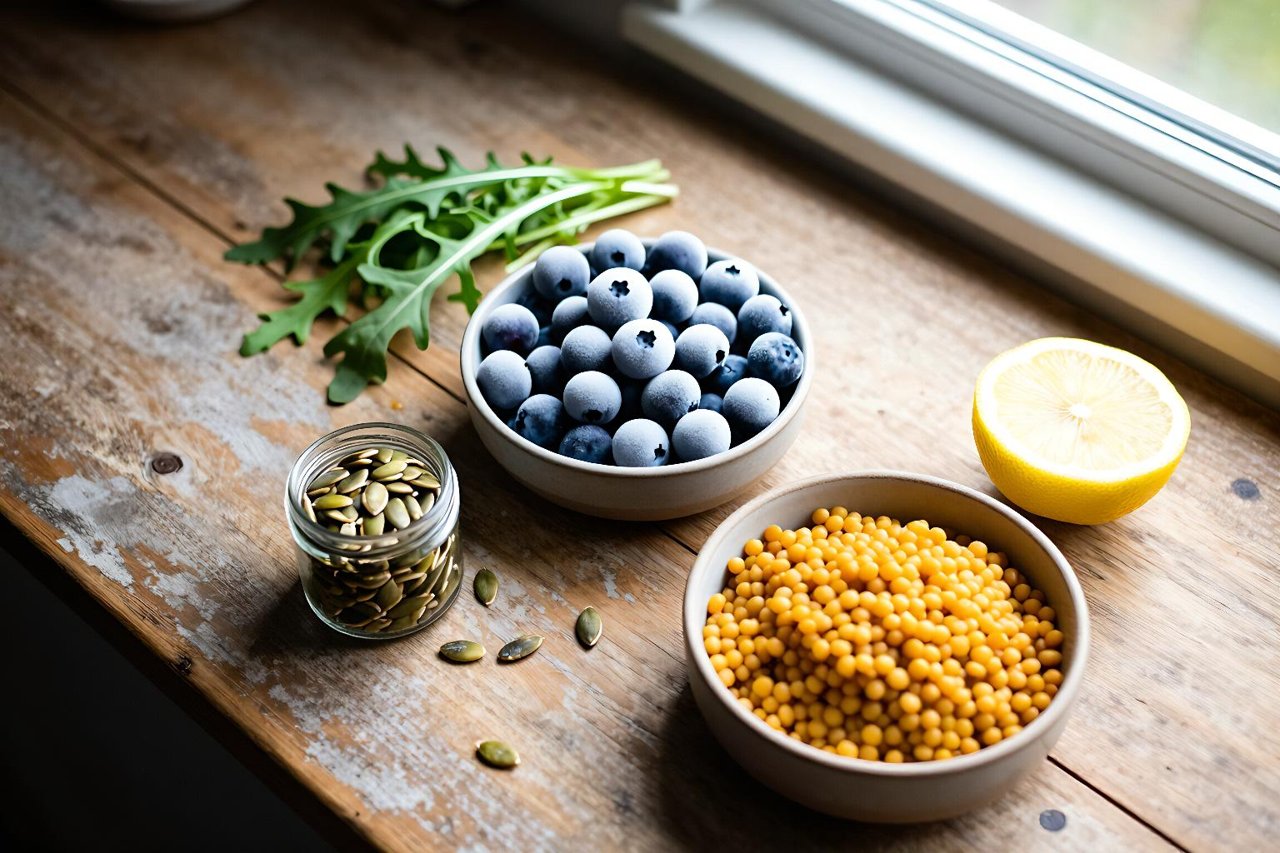
Arugula gets overlooked because it’s usually treated as a garnish. A 100g portion delivers roughly 25 calories, more vitamin K than you need in a day, and dietary nitrates that support blood pressure. For the detail on what it does and doesn’t do, there’s a solid breakdown of the science-backed benefits of superfood arugula. Spinach, watercress and chard sit in the same bracket.
Berries, fresh or frozen
Frozen berries keep most of their polyphenols because they’re frozen within hours of picking. Fresh ones shipped across continents can lose more in transit. A 100g serving of mixed berries is about 45 calories with 4g of fibre.
Seeds and nuts
Thirty grams of pumpkin seeds gives you roughly 8g of protein, 2.5mg of iron and a useful hit of magnesium for about 170 calories. Hemp seeds add omega-3s. Flaxseed needs grinding to be absorbed properly, since whole seeds tend to pass straight through.
Pulses
Lentils, chickpeas and black beans are the least glamorous entry here and probably the most useful. A cooked cup of lentils has around 18g of protein and 15g of fibre. They’re cheap, they keep for years, and they stretch a meal further than any powder will.
Fermented foods
Live yoghurt, kefir, kimchi and sauerkraut add to gut diversity. Check the label for “live cultures”, because heat-treated versions on the ambient shelf have had the bacteria cooked out of them.
The Quick Test for Nutrient Density
Ignore the front of the pack. Turn it over and look at the panel per 100g, then ask two questions. How much fibre and protein is in there, and how much of your daily iron, calcium, potassium and vitamin C does it cover? A food that scores well across those on modest calories is doing real work. If you want a fuller explanation of how the metric is measured, this piece on what nutrient-dense foods are and why they matter goes much deeper.
Pairings That Make the Nutrition Accessible
Plenty of good ingredients get eaten and then poorly absorbed because they’re combined badly. A few combinations worth remembering:
- Iron plus vitamin C. Plant iron from lentils and spinach is absorbed far better alongside citrus, peppers or tomato. Squeeze lemon over the bowl.
- Fat-soluble vitamins plus fat. Vitamins A, D, E and K need fat to be absorbed, so a drizzle of olive oil on the greens is chemistry rather than indulgence.
- Turmeric plus black pepper. Piperine in pepper raises curcumin absorption considerably. A pinch is enough.
- Legumes plus grains. Rice and beans, bread and hummus, lentils and barley. Together they form a complete amino acid profile.
- Cooked tomatoes plus olive oil. Heat breaks down cell walls and releases lycopene, which is fat-soluble.
The 3pm Slump Isn’t a Superfood Problem
Most people searching for superfoods are really looking for energy. No powder fixes an afternoon where you had toast at 7am, a sandwich at 1pm and nothing since. Energy comes from steady carbohydrate intake, adequate protein and enough fluid. The mechanics are covered properly in this guide to foods that beat fatigue and keep you charged. Adding goji berries to a day that’s missing lunch won’t touch the sides.
Powders, Blends and the Price Tag
The supplement aisle is where nutrient-rich ingredients get expensive. A greens powder with 40 ingredients often contains doses so small they’re hidden under “proprietary blend”, which is a legal way of not disclosing the amounts. One writer’s account of swapping pricey greens powders for a simpler mix is a fair illustration of the trade-off. You’re paying for convenience and shelf life, not extra nutrition.
If you do take a specific supplement, check the effect, benefits and precautions of that ingredient before stacking a second or third product on top of it. Interactions and upper limits are real, particularly with iron, zinc and vitamin A.
A Weekly List That Actually Gets Eaten
Based on what disappears from the fridge rather than what photographs well:
- Frozen mixed berries, one large bag
- Spinach or rocket, plus whatever greens are reduced
- Tinned lentils and chickpeas
- Pumpkin or sunflower seeds
- Plain live yoghurt
- Eggs
- Oats
- Frozen edamame
That covers fibre, protein, iron, omega-3s, live cultures and most micronutrients for around £12 in a UK supermarket. It is not photogenic. It does the job.
The Part Everyone Skips: Repetition
Superfoods work through repetition, not novelty. A tablespoon of ground flaxseed eaten daily for a month does more than a bag of acai powder used twice and forgotten behind the teabags. Rotate four or five nutrient-rich ingredients you genuinely like into meals you already cook: seeds stirred into porridge, a handful of spinach wilted into pasta, a tin of lentils added to a curry, a fistful of rocket under a piece of fish.
None of that is exciting. It’s also the version that survives past January, which is more than can be said for most of the pouches.


