
Table of Contents
A bowl of penne with tomato sauce and a little grated cheese can easily reach 600 calories. So can a plate of roast chicken, new potatoes, broccoli and a spoonful of olive oil. One leaves you rummaging in the cupboard an hour later; the other doesn’t. That difference is roughly what people mean by a nutritionally balanced meal.
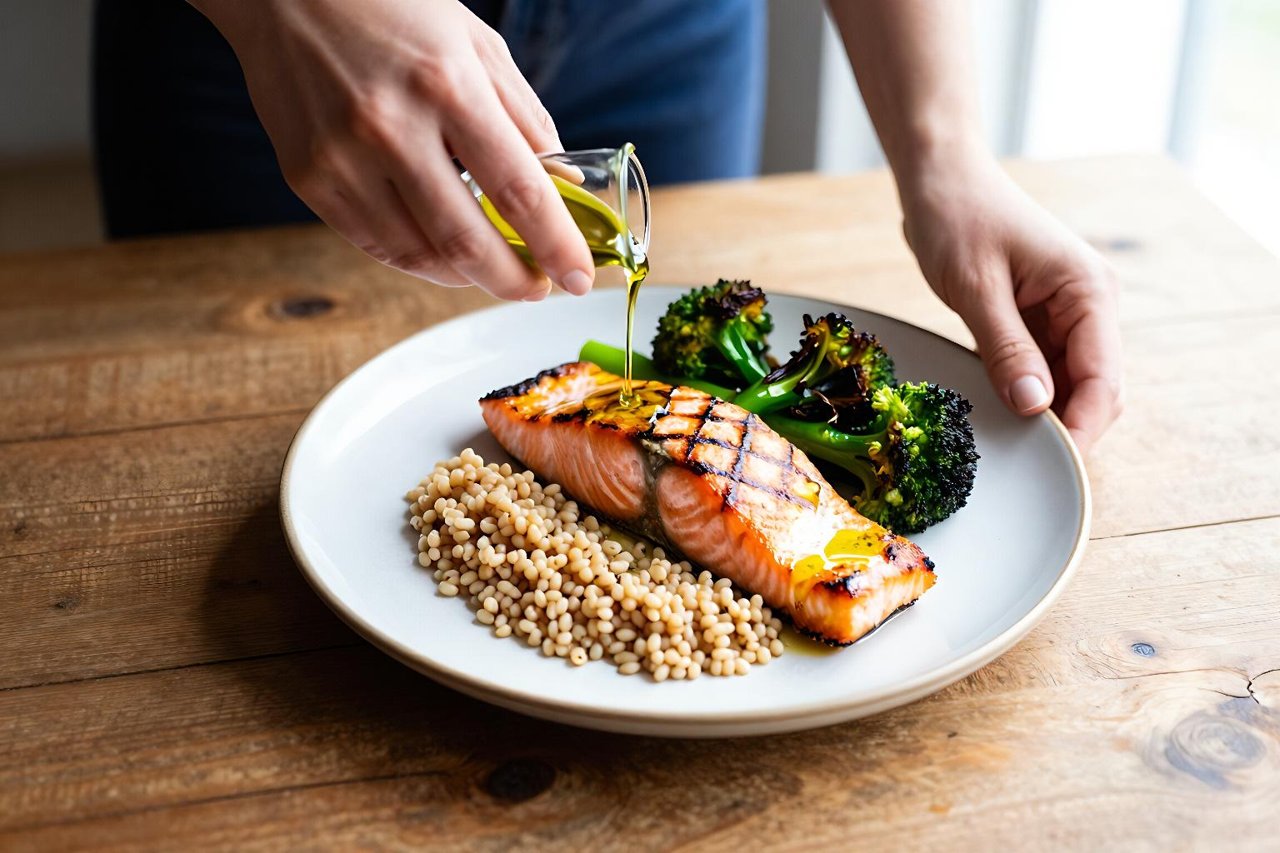
The phrase turns up everywhere: cereal boxes, gym plans, school lunch policies, magazine covers. Stripped back, it simply describes a meal that supplies energy, protein, fat, fibre, vitamins and minerals in amounts your body can use, without a large excess of anything it doesn’t need. There is no single correct plate. A lentil dhal with rice and spinach qualifies. So does a salmon fillet with barley salad. So does a cheese omelette with tomatoes on toast.
What a nutritionally balanced meal actually contains
Dietitians tend to split the job into macronutrients (protein, carbohydrate, fat) and everything else (fibre, vitamins, minerals, water). A balanced meal lands in a sensible range on each rather than maxing out one and ignoring the rest. A rough adult template looks like this:
- Protein: around 25–30g at a main meal. That’s a palm-sized piece of chicken or fish, two eggs plus a spoon of Greek yoghurt, or a cup of cooked lentils at roughly 18g.
- Fibre-rich carbohydrate: wholegrains, pulses, potatoes with the skin on, or fruit. Not refined white starch at every single meal.
- Vegetables or fruit: half the plate, ideally two or three different colours for a wider spread of micronutrients.
- Fat: a tablespoon or two of oil, a small handful of nuts, avocado, or oily fish. Enough to carry flavour and help you absorb the fat-soluble vitamins A, D, E and K.
- Something wet and something sharp: water, a squeeze of lemon, herbs, a spoon of yoghurt. Easy to forget, and it’s often why a technically balanced meal feels flat.
Breaking the plate into quarters
The half-plate-veg, quarter-protein, quarter-starch model isn’t perfect, but it’s fast and it works for most people who don’t want to weigh food. Here’s what each quarter is doing.

Half the plate: vegetables and fruit
This is the volume section. Roasted peppers, raw cucumber, frozen peas, a grated carrot, an apple sliced into a lunchbox. Frozen and pre-cut count. Tinned tomatoes count. The target across a whole day is at least five portions, and pushing two or three onto the plate at lunch and dinner is the least painful way to get there.
A quarter: protein
Protein is the part that keeps you full and protects muscle, which matters more after 50. Roughly 100g of cooked chicken breast gives about 31g, a 140g salmon fillet about 25g, 170g of Greek yoghurt about 17g, and a 400g tin of chickpeas around 14g. Vegetarian meals often need two sources to hit the target: beans plus cheese, tofu plus edamame, lentils plus a spoon of yoghurt.
A quarter: starchy carbohydrate
Carbs aren’t the problem; the refined, low-fibre versions eaten alone are. Cooked wholewheat pasta carries around 4g of fibre per 100g against roughly 1.8g for white. A medium baked potato with skin gives about 4g. Adults should be aiming for 30g of fibre a day, and most manage closer to 18g, so choosing the higher-fibre option at two meals makes a real dent.
A thumb of fat
One tablespoon of olive oil is about 14g of fat and 120 calories, which is why measuring it once is instructive. Fat is where a lot of meals quietly fall apart, either because it’s stripped out entirely (steamed everything, dry chicken, no dressing) or because it arrives invisibly in sauces, pastries and cheese.
600 calories is not 600 calories
Two meals can match on calories and behave completely differently. A croissant and a large orange juice lands around 480 calories and delivers very little protein, almost no fibre, and a blood-sugar spike followed by a slump. A tuna and bean salad with olive oil at a similar calorie count brings 30g of protein, 10g of fibre and a slow release of energy. Neither is morally superior, but only one keeps you steady until dinner. Judging a meal by its calorie number alone is like judging a house by its square footage and ignoring whether it has a roof.
Balanced meals from five different kitchens
- Mediterranean: baked cod with new potatoes, green beans, olive oil and lemon.
- Indian: chana masala with brown rice, cucumber raita and wilted spinach.
- Japanese: grilled mackerel with soba noodles, edamame and pickled cucumber.
- Mexican: black bean and corn tacos on corn tortillas with salsa, avocado and crumbled feta.
- British comfort: lentil and vegetable soup with a slice of wholemeal bread and a little mature cheddar.
Notice the pattern: each one has a protein anchor, a fibre source, vegetables, and some fat for flavour. The cuisine changes; the structure doesn’t.
Where “balanced” quietly goes wrong
Some of the most virtuous-looking meals miss the mark by a wide margin.
A bowl of mixed leaves with cherry tomatoes and balsamic dressing contains almost no protein and about 90 calories. Two hours later you’re eating biscuits standing up. Add a boiled egg, a handful of chickpeas and a drizzle of oil and it becomes a meal.
Smoothies are another one. Banana, berries, oat milk and a scoop of protein powder can look balanced on paper, but liquid calories pass through quickly. Chewing matters for satiety, so a smoothie works better alongside something solid than instead of it.
Then there’s the “clean” trap: a plate of plain grilled chicken and steamed broccoli with no carbohydrate and no fat. Nutritious ingredients, unbalanced meal. You’ll be hungry by 4pm and you’ll blame willpower rather than the plate.
Portions without a scale
Hand measures are surprisingly reliable and travel well.
- Palm of the hand: a portion of meat, fish or tofu.
- Fist: a portion of vegetables or a piece of fruit.
- Cupped hand: a portion of rice, pasta, lentils or nuts.
- Thumb: a portion of oil, butter or cheese.
Appetite varies enormously between a 55kg office worker and a 90kg bricklayer, and the hand scales with the body, which is exactly what a fixed gram target doesn’t do.
Getting there on a Tuesday night
Few people cook properly at 7pm after a commute. The realistic fix is to keep components ready rather than meals ready: a tray of roasted vegetables, a pot of grains, a protein cooked plain, and a jar of dressing in the fridge. Ten minutes then produces a bowl that hits every marker.
Eating out usually works if you scan the menu for a protein and a vegetable before anything else. A steak with a side of greens and a baked potato beats a pasta bake, not because pasta is bad but because it’s usually all starch and cheese with a garnish of basil.
When the standard advice needs adjusting
The template above is a starting point, not a prescription. Someone training for a marathon may need double the carbohydrate portion. A person with type 2 diabetes may find that pairing carbs with fat and protein slows glucose response more than reducing carbs does. Over-65s typically need more protein per meal, not less, to counter muscle loss. Anyone with irritable bowel syndrome may need to moderate fibre types rather than push for 30g a day.
Medical conditions, medication, pregnancy, and food allergies all shift the picture, and a registered dietitian can adjust it in a way a blog post can’t.
Pick one meal and rebuild it
Overhauling a whole week’s eating rarely lasts past the first Thursday. Choose the meal you eat most often, probably lunch, and add two things: a proper protein portion and an extra handful of vegetables. Leave everything else alone for a fortnight. That single change usually does more for energy and appetite control than a complete diet rewrite, and it teaches you what a balanced plate feels like before you start applying it everywhere else.


