
Table of Contents
A gondola slips past, someone is eating a panino on the steps of a bridge, and a uniformed officer is already walking over. Venice has fined people for exactly that since 2018, with penalties that start small and climb well past €500 for repeat offenders.
Most travel rules are dull: visa paperwork, baggage weight, how many litres of liquid you can carry. Some places go much further, regulating everything from chewing gum to how loud you’re allowed to be on a holy day. The seven destinations below are all worth the airfare. They just come with house rules that catch visitors out, often at the worst possible moment.
Nobody plans a holiday around a rulebook. You go for the food, for the sort of slow afternoon you’d spend eating through Mexico City’s Miguel Hidalgo district, and the rules exist to keep the place liveable for the people who stay after you fly home. Here’s what to know before you land.
1. Venice, Italy: No Sitting, No Picnicking, No Hard Wheels
The #EnjoyRespectVenezia campaign has been running since 2017, and the banned list is longer than most visitors expect. Sitting or lying on bridges and monument steps gets you a fine. So does picnicking in St Mark’s Square, buying from unauthorised street vendors, and feeding the pigeons (illegal since 2008, though the seagulls will rob you regardless).

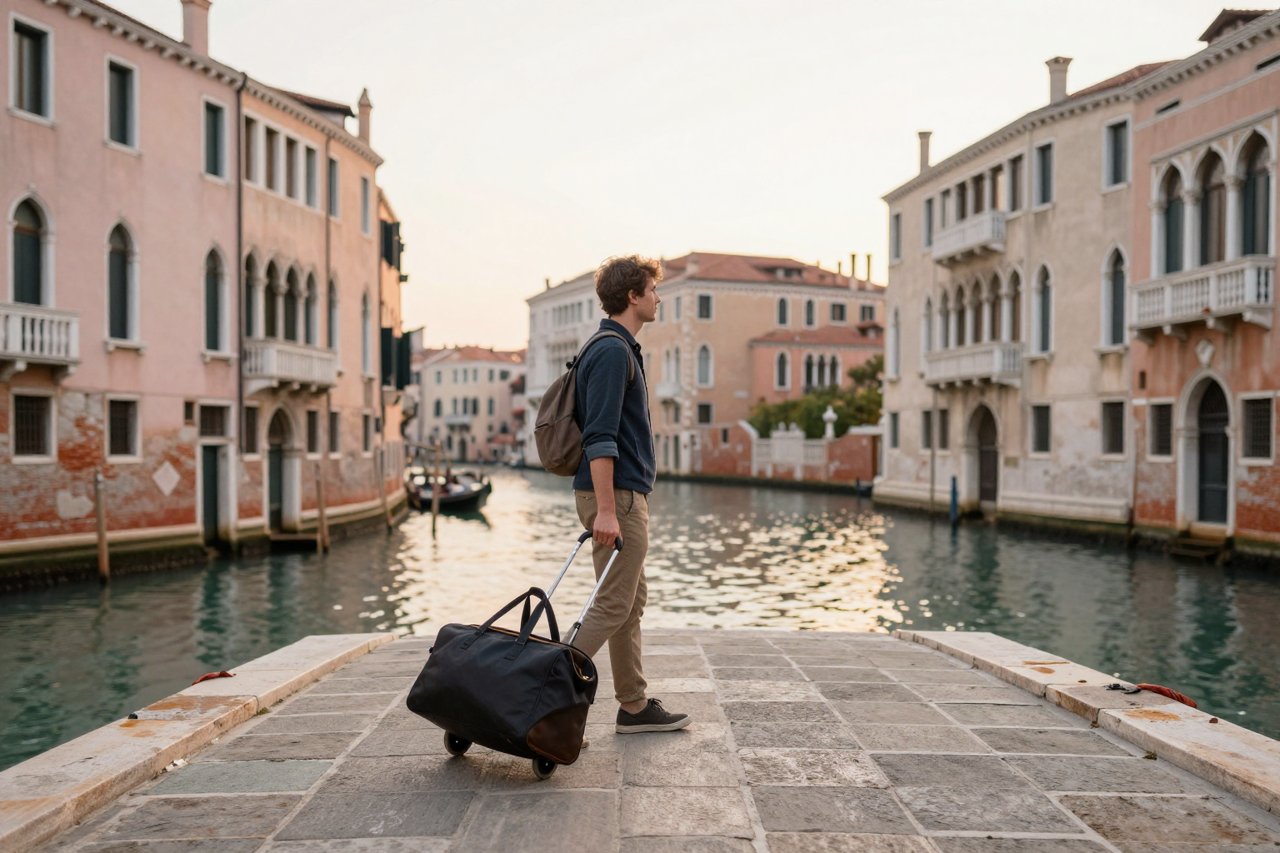
The oddest rule is about luggage. Since 2021, hard-plastic-wheeled trolleys have been banned from the historic centre, so you’re meant to arrive with soft wheels or carry your bag. Venice also charges day-trippers an access fee: €5 on peak days, rising to €10 if you book late. Pay online before you travel and keep the QR code to hand.
2. Singapore: Durian on the Train Is a Fineable Offence
Chewing gum is the famous one, and the reality is narrower than the legend. Selling gum has been illegal since 1992, but chewing it, and bringing a few packs in for yourself, is not. Importing it in bulk is where people come unstuck.
Fewer visitors know about durian. The fruit is banned from the entire MRT network, with signs in stations and a S$500 penalty for eating or drinking on trains. Failing to flush a public toilet can cost up to S$1,000. Littering carries a first-offence fine of up to S$2,000, and repeat offenders get a Corrective Work Order, which means cleaning a public space in a high-visibility vest while people walk past. The country is spotless for a reason.
3. Bhutan: $100 a Night, and Almost No Cigarettes
Bhutan doesn’t do casual tourism. Every visitor outside India pays a Sustainable Development Fee of US$100 per person per night (it was $200 until 2023), on top of hotels, transport and a licensed guide. Independent travel isn’t really an option; you book through an operator.
Tobacco is the stranger rule. Bhutan banned the sale of tobacco products in 2010. You can bring a limited amount for personal use and pay a heavy duty at customs, but lighting up in public is illegal and shops simply don’t stock cigarettes. Drones need written permission. Trekking without a permit is a non-starter. The upside is a country where the headline national indicator is Gross National Happiness, and the trailheads are empty.
4. Bali: One Day a Year When the Whole Island Stops
Nyepi, the Balinese day of silence, shuts the place down for 24 hours each March. The airport closes. No traffic, no lights, no work, no leaving your hotel grounds. Even the beaches are patrolled by pecalang, the traditional village police. Tourists are expected to stay inside and keep noise to a minimum. It’s genuinely eerie, and hotels plan around it with quiet activities and blackout curtains.
The rest of the year has its own rules. A tourist levy of IDR 150,000 (about US$10) is payable on arrival, and the official dos and don’ts are specific: dress modestly at temples, don’t climb sacred trees, and never step on the canang sari offerings left on pavements. They’re small palm-leaf baskets and easy to miss if you’re looking at your phone.
5. Amsterdam: No Smoking in the Red Light District
Amsterdam’s tolerance has limits, and they’ve been tightening. Since 2023, smoking cannabis outdoors in De Wallen is banned, and alcohol sales in the area are restricted at night. Photographing sex workers is prohibited, with signs in several languages and fines for anyone who ignores them. Guided group tours of the district are restricted too.
What surprises people is how ordinary the rules are elsewhere: no parking on the canals, no swimming in most of them (less obvious, given how many people try), and a stiff fine for public urination, which is why open-air urinals appear on busy nights. The city’s message to stag parties is blunt, and increasingly enforced.
6. Kyoto, Japan: Don’t Photograph Gion’s Private Lanes
Gion’s wooden lanes are private property, and since 2019 anyone photographed in them without permission can be fined up to ¥10,000. In 2024 the district went further, closing several private alleys to visitors entirely. Geisha chasing, a genuine problem for years, now has consequences beyond embarrassment.
Elsewhere in the city, smoking on the street inside designated no-smoking zones carries a ¥1,000 fine, and Nishiki Market asks visitors not to eat while walking. Onsen etiquette is strict in a different way: no swimsuits, wash before you get in, and many baths still refuse entry to anyone with visible tattoos. Check before you book.
7. Machu Picchu, Peru: Timed Slots, One-Way Paths and No Selfie Sticks
You can’t wander Machu Picchu. Tickets are sold in timed hourly slots, and once you’re in, you follow a one-way circuit that depends on which route you booked. Leave, and you can’t come back in. Tripods, drones, selfie sticks and walking poles without rubber tips are refused at the gate, and guards will confiscate food.
Jumping photographs are off the list too, along with anything else that risks a fall. A handful of visitors have been escorted out over the years for climbing where they shouldn’t. The reward for all that control is a site that has held together for 600 years, and a crowd that keeps moving instead of piling up in one spot.
How to Avoid a Rule-Based Disaster
Almost every fine above is avoidable with ten minutes of reading. A few habits cover most situations:
- Check the national tourism board site, not just the airline’s. Fees, dress codes and permits change every year.
- Carry a little local cash. On-the-spot fines are usually paid immediately, sometimes by card on the officer’s handheld device.
- Look for the signs. Most of these rules are posted at the exact spot they apply to, in several languages. A phone in your face is how people miss them.
- Dress for the destination. Shoulders and knees covered at temples, soft wheels on Venetian streets, shoes off before you step indoors.
- Ask your hotel. Front desk staff know the current fines, and which days they’re enforced hardest.
Behave the way you would on a friend’s street and the strangest rules stop feeling strange. These places are worth the effort. It’s the visitors who treat them like theme parks who end up paying for it.


