
Table of Contents
The number that changes how most people think about flea prevention is 50. A single female flea can lay around 40 to 50 eggs a day, and those eggs roll off your dog into the carpet, the sofa cushions and the gaps between the floorboards. By the time you notice one flea on your dog’s belly, the eggs and larvae in your home usually number in the hundreds.
Ticks play a slower game but carry bigger risks. A female tick can drop several thousand eggs after a feed, and an infected tick can pass on Lyme disease, ehrlichiosis or babesiosis within 24 to 48 hours of attaching. Blocking that bite is easier than treating what follows, and it costs far less than a blood test plus a month of antibiotics.
Fleas and ticks don’t read the calendar
The old advice to start protection in April and stop in October is out of date. Fleas develop happily at anything between about 10°C and 30°C, and the pupal stage can sit dormant in carpet fibres for months, waiting for a warm body to walk past. In a centrally heated house, that warm body shows up in January just as readily as in July.
Ticks are tougher than most people expect too. Some species stay active whenever the temperature climbs above roughly 4°C, which means a mild February walk through long grass is a genuine risk. Our guide to whether dogs can get fleas and ticks in winter covers the specifics, but the short version is that year-round cover is the only schedule that doesn’t leave gaps.

Match the product to your dog’s routine, not the shelf display
There is no single best product, only the one that suits your dog’s size, coat, swimming habits and your own memory. Four formats do most of the work.
Chewable tablets
Monthly chews such as NexGard or Simparica protect for 28 to 30 days. Bravecto runs for 12 weeks against fleas and ticks, which suits people who forget monthly doses. Give them with a meal, since absorption is noticeably better with food, and don’t split or crush a chew that’s designed to be swallowed whole.
Spot-on treatments
Part the fur at the base of the neck until you can see skin, then apply directly to the skin rather than the coat. Don’t bathe your dog for 48 hours either side of application, and keep the treated area away from other pets and children until it’s dry. If your dog swims twice a week, a spot-on will be washed away faster than the label suggests.
Collars and long-acting options
A single Seresto collar covers eight months, which makes it one of the cheapest per-day options on the market. Whether it beats a chew depends on your dog’s lifestyle and coat type, and our Seresto collar versus Bravecto chew comparison breaks down the real differences in cost, duration and effectiveness.
Puppies and dogs on medication
Most products carry a minimum age and weight, often 8 weeks and 2kg, and a few are licensed from 12 weeks. Never use a dog product on a puppy outside its label without checking first. There’s a detailed breakdown in this guide to safe flea treatment for puppies if you’re working out what a young dog can tolerate.
The schedule is where most people slip up
Flea products don’t fail because they’re weak. They fail because a dose arrives four days late, or a collar comes off for a bath and never goes back on. A monthly chew that’s 10 days overdue leaves your dog unprotected for 10 days, and a female flea needs only 24 to 48 hours on a host before she starts laying.
Set a recurring reminder on your phone for the same date each month, and buy the next box before the current one runs out. If you’re on a 12-week chew, put the date in a calendar with an alert a week early so you can order in time.
Run a two-minute check every week
Prevention works best when you’re verifying it. Once a week, sit your dog down and work through a quick routine:
- Flea comb the rump and belly. Dark specks that turn reddish-brown on a damp piece of white kitchen paper are flea dirt, which means fleas are feeding somewhere on your dog.
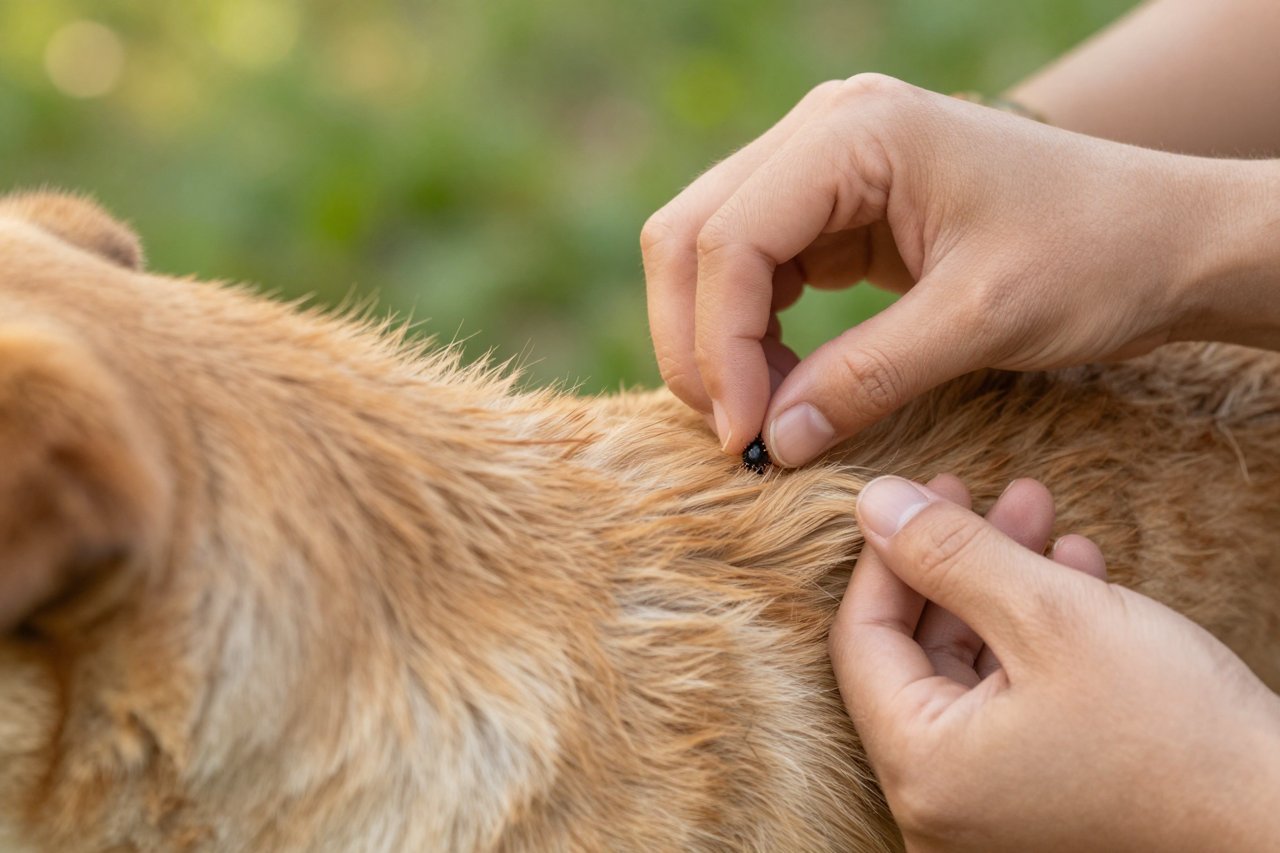
- Check the warm spots for ticks. Ears, armpits, the groin, around the tail base and between the toes. Run your fingertips against the coat so you can feel a small bump before you see it.
- Look for scabs and bald patches. Flea allergy dermatitis usually shows up at the lower back and tail base, and the itching is often worse than the infestation.
If you’re not sure what you’re looking at, this two-step method to find out whether your dog has fleas is a quick way to confirm it before you buy anything.
Treat the home and garden too, or the cycle just resets
Roughly 95% of a flea infestation lives off the animal, as eggs, larvae and pupae in bedding, carpet and soft furnishings. Killing every adult flea on your dog does nothing to the pupae waiting in the living room.
- Wash pet bedding weekly at 60°C, and tumble dry on high if the fabric allows.
- Vacuum daily for at least two weeks after a sighting, moving furniture and working along skirting boards. Empty the canister or bag straight into an outdoor bin.
- Keep grass short and clear leaf litter, especially along fence lines and the boundary between lawn and woodland, where ticks wait on grass stems.
- Discourage foxes and stray cats from bedding down in your garden. They’re a common source of new ticks.
- Steam clean carpets if you’ve had an active infestation. Heat kills every life stage, including the pupae that vacuuming misses.
Don’t forget the parasites you can’t see
Flea and tick prevention usually sits in the same conversation as worming, and it should. Heartworm is spread by mosquitoes rather than fleas, but the treatment timeline is identical: it’s far easier to prevent than to treat. Many combination products cover fleas, ticks, roundworm, hookworm and heartworm in one dose, which removes three separate reminders from your month. If you’re currently doing flea cover only, it’s worth reading up on why year-round heartworm prevention matters before you decide.
If fleas keep coming back, look at these three things
Repeated infestations usually trace back to one of three causes, and none of them is resistance.
An unbroken cycle somewhere in the house. If you treated the dog but skipped the vacuuming, you’ve killed the adults and left the next generation untouched. Pupae can emerge over several weeks, so expect to see new fleas for up to six weeks even when everything is working correctly.
A second host. A cat that goes outdoors, a visiting dog, or a neighbour’s pet that sleeps over. Treat every animal in the household on the same day, even the ones that never scratch.
A product that doesn’t match the risk. A repellent-only collar in a high-tick area, or a spot-on applied to fur rather than skin, will underperform without ever looking broken. Check the label against your dog’s weight, then check that you applied it correctly. If you’re still seeing live fleas a week after a fresh dose, that’s a conversation for your vet rather than another trip to the pet shop.


