
Table of Contents
A dog’s skin does a lot of quiet work. It’s the largest organ on their body, it renews itself roughly every three to four weeks, and it takes the first hit from fleas, pollen, dry indoor air and whatever ended up in the bowl at dinner. That’s why a dog can look perfectly fine on Monday and be leaving scabby little patches on the sofa by Friday.
The reassuring part is that most skin trouble isn’t random. It usually traces back to a handful of fixable things: diet, bathing habits, parasites, allergies and grooming. Work through those in order and you’ll clear up a surprising number of itches without a single prescription.
Start with what goes into the bowl
Skin and coat are built from protein and fat, so a dog eating a borderline diet usually shows it in the fur before anywhere else. Look for a named animal protein as the first ingredient and a guaranteed analysis with 22–25% protein for an average adult dog. Puppies, seniors and very active dogs need more than that.
Fats matter just as much. Omega-6 fatty acids keep the skin’s outer barrier intact, while omega-3s (specifically EPA and DHA) help calm inflammation underneath it. Most kibble carries plenty of omega-6 and very little omega-3, which is why fish oil or a marine algae supplement is one of the few add-ons vets recommend without hesitation. Give it time: skin turns over on a roughly four-week cycle, so judge any dietary change after six to eight weeks, not six days.

If you’re rebuilding your dog’s diet from scratch, this guide to finding the best food for your pup walks through labels, life stages and portion sizes. For the nutrition science behind it, there’s a useful breakdown of how food supports skin and coat health.
Bathe less often than you think
Over-bathing is one of the most common self-inflicted skin problems. Shampoo strips the sebum that keeps the skin barrier waterproof. Wash a healthy dog every week with a harsh shampoo and you’ll have a dry, flaky, itchy dog inside a month.
For most dogs with normal skin, a bath every four to eight weeks is plenty. Oily breeds and dogs who roll in something unmentionable may need more; thick double coats can go far longer. Our guide on how often to bathe your dog by coat, lifestyle and skin has a breed-by-breed breakdown if you want a firmer number.
Two details do more good than any expensive shampoo: rinse for twice as long as feels necessary, and dry thoroughly, especially in the armpits, groin and under the collar. Trapped moisture is a yeast infection waiting to happen.
Grooming is skin care, not vanity
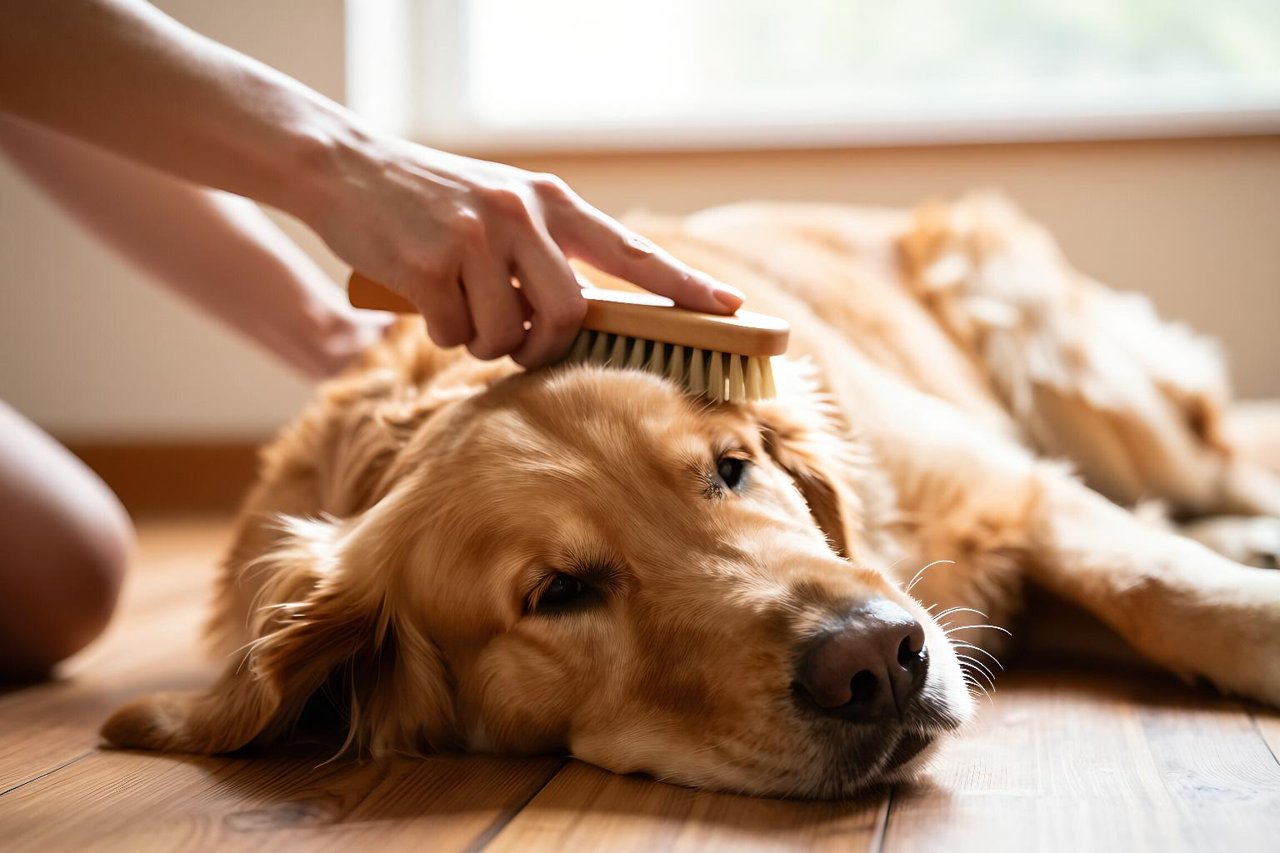
Brushing three or four times a week does three useful jobs. It removes dead hair before it mats, it spreads natural oils along the coat, and it gives you a chance to run your hands over the whole dog and notice lumps, scabs or tender spots early.
For double-coated breeds, a slicker brush plus an undercoat rake in spring removes an astonishing amount of loose fluff. One caution: never shave a double coat to “fix” shedding. It grows back patchy and the skin underneath loses its protection from sun and insects. There’s a fuller explanation in this piece on stopping excessive shedding without shaving.
Mats deserve respect. A matted patch holds moisture against the skin, blocks airflow and can turn into a hot spot within days. If you can’t comb it out with your fingers, clip it rather than soak it.
Keep parasites off the skin
Flea allergy dermatitis is the most common cause of itchy skin in dogs. One bite is enough to set off a dog who’s allergic, and a single flea bites repeatedly through the day. Check the base of the tail and around the groin for flea dirt, which looks like coarse black pepper and turns rusty red when you smear it on a damp paper towel.
Year-round flea prevention beats seasonal treatment, even in cold climates, because central heating keeps fleas breeding indoors in January. Mites and ringworm are rarer but worth recognising: hair loss in a circular patch with crusty edges, or frantic scratching around the ears and elbows, needs a vet rather than another shampoo.
Allergies: the usual three suspects
When a dog is itchy, vets think in threes: fleas, food, environment. Environmental allergies usually appear between one and three years of age and show up as licking at the paws, rubbing the face along the carpet and repeated ear infections. Food allergies are less common but look similar, and the only reliable test is an eight-week elimination trial with a novel protein or hydrolysed diet.
Managing environmental allergies is a routine rather than a cure. Wipe paws after walks during pollen season, wash bedding weekly on a hot cycle, and keep the lawn short before it goes to seed. If you’re unsure whether a product, plant or household item is safe around an itchy dog, this guide on what’s safer for your dog is a handy reference.
Watch your indoor environment
Heating dries skin out. Aim for 40–60% humidity in winter and check it with an inexpensive hygrometer. Skip fabric softener on dog bedding, since the residue sits against the coat all night. Plastic and ceramic bowls with chipped glaze can trigger chin acne in some dogs, so stainless steel is the safer bet. Breeds with skin folds, like bulldogs and pugs, need those folds wiped and dried daily rather than weekly.
Know what healthy skin looks like
Do a five-minute check once a week: part the coat in a few places, look at the skin underneath, and press gently on the armpits and groin. Healthy skin is pale pink, supple and odourless, with no flakes and no redness.
Book a vet visit if you spot any of these:
- Scratching, chewing or licking that lasts more than a few minutes at a time, several times a day
- Redness or a rash in the armpits, groin or between the toes
- Greasy or smelly patches, or a sour, yeasty odour
- Bald patches, crusts, scabs or a ring of flaking skin
- Head shaking or dark discharge in the ears
- Any lump that grows or changes shape
Itching that has carried on for more than two weeks is worth investigating properly. Skin problems seldom fix themselves, and the longer a dog scratches, the thicker the skin becomes and the harder the whole thing is to treat.
A routine you can actually keep up
Nothing here is complicated. The trick is doing the small things on a schedule instead of waiting for a problem to appear.
- Brush three times a week, longer during shedding season
- Bathe every four to eight weeks with a gentle oatmeal or ceramide shampoo
- Give omega-3s daily and check the dose against your dog’s weight
- Stay on year-round flea and tick prevention
- Wash bedding weekly on a hot cycle, no fabric softener
- Run a five-minute skin check every Sunday
- Note flare-ups in your phone calendar so seasonal patterns become obvious
Most dogs settle into that rhythm within a couple of months, and the payoff shows up fast: less scratching, a shinier coat, fewer vet bills. If something changes suddenly, though, don’t wait for the calendar. A fast-moving skin problem is usually the one that’s easiest to fix while it’s still small.


