
Table of Contents
There are two kinds of people in the spice aisle. One grabs a knobbly hand of fresh ginger every week without thinking. The other picks it up, turns it over, wonders what on earth to do with it, and buys a bottle of capsules instead. If you’re in the second group, this one’s for you.
Ginger is one of the most studied plants in the kitchen, with hundreds of clinical trials behind it, and also one of the most misunderstood. So here’s a plain-English primer: what the rhizome actually is, what it genuinely seems to do, how much to use, and where beginners tend to slip up.
What you’re actually holding
Ginger (Zingiber officinale) is a rhizome, which means it’s an underground stem rather than a root. It’s been traded for at least two thousand years, mostly because the compounds inside it do something noticeable. The ones that make your tongue tingle are called gingerols, with 6-gingerol being the most abundant.
Here’s the detail worth remembering: when ginger is dried or heated, those gingerols convert into shogaols, which are sharper and hotter. That single chemical fact explains a lot. Fresh ginger tastes bright and almost lemony. Ground ginger tastes warmer, drier, more peppery. Same plant, different behaviour, both in the pan and in your body.

The benefits with the strongest evidence behind them
Ginger gets credited with everything from curing colds to sharpening memory. The honest picture is narrower. A handful of effects are well supported, a few are promising, and the rest are folklore. Start with these four.
1. Nausea, including morning sickness
This is ginger’s strongest claim by a wide margin. A review pooling 12 trials with around 1,278 pregnant women found that roughly 1 to 1.1 grams a day reduced nausea more than a placebo did. It also has decent evidence as an add-on for chemotherapy-related nausea and for nausea after surgery. If you’re pregnant, keep the dose modest and run it past your midwife first.
2. Sore muscles and achy joints
In a University of Georgia trial, 2 grams of raw or heated ginger daily for 11 days cut exercise-induced muscle soreness by about 25%. Small studies on knee osteoarthritis using 2 grams of ginger extract a day over three to six weeks found similar modest pain reductions. Modest is the operative word. Ginger is a supporting player here, not a replacement for prescribed medication.
3. Blood sugar and cholesterol, slightly
Meta-analyses of people with type 2 diabetes suggest around 2 grams of ginger powder daily lowered fasting blood glucose and HbA1c by small but measurable amounts, with a slight dip in LDL cholesterol too. Useful context if you’re managing both. Nobody should be swapping out metformin for tea, though.
4. Digestion
Ginger speeds up gastric emptying, which is why it helps with that heavy, slow feeling after a large meal. The traditional use for indigestion and wind has some modern support behind it. Counterintuitively, it can make reflux worse for some people, because it relaxes the valve at the top of the stomach.
If you want the trial-by-trial detail rather than the headlines, the science-backed guide to ginger’s healing powers goes deeper into the research.
How much ginger is a useful amount?
Rough working numbers for most healthy adults:
- Fresh: 2 to 4 grams a day, which is about a 2cm thumb of peeled rhizome.
- Ground powder: a quarter to half a teaspoon, roughly 0.5 to 1 gram.
- Capsules: 250 to 500mg of extract, once to three times daily depending on the label.
Four grams a day is a commonly cited ceiling for general use. Doubling it won’t double the benefit. It just raises your odds of heartburn and a rumbling stomach.
Fresh, powdered or capsule?
The short version: fresh for tea, stir-fries and dressings; powder for baking and smoothies; capsules when you want a reliable measured dose and can’t stand the taste. One trap worth flagging. Commercial ginger ale usually contains little or no real ginger and a lot of sugar, so it’s a fizzy drink, not a remedy. Look for a ginger brew or make your own syrup.
Potency differs more than most people expect, so if you’re weighing up options, fresh ginger vs powder vs capsules breaks down how each form compares dose for dose.
Six easy ways to actually use it
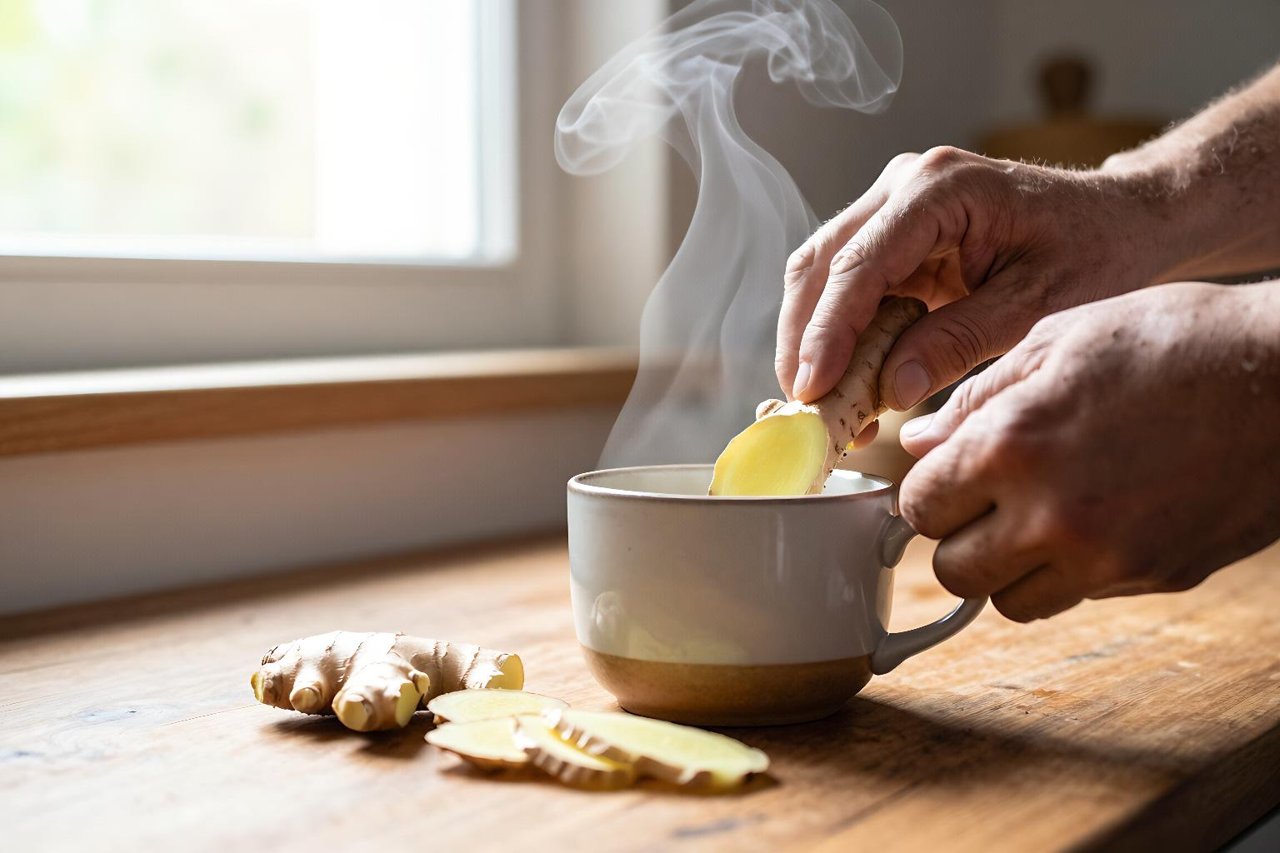
- Slice a thumb’s width of fresh ginger into a mug, pour boiling water over it, cover for 10 minutes, then add honey and lemon. Covering the cup keeps the volatile oils where you want them.
- Freeze whole rhizomes and grate them straight from frozen into a hot pan. No peeling, no waste, no fiddly knife work.
- Whisk grated ginger with soy sauce, sesame oil and rice vinegar for a two-minute salad dressing that lifts plain greens.
- Stir half a teaspoon of powder into plain yoghurt with a spoon of honey.
- Pair it with turmeric and a crack of black pepper in soups and rice. New to turmeric? This beginner’s primer on turmeric benefits explains why the two are so often cooked together.
- Keep a few pieces of crystallised ginger in the glovebox if winding roads make you queasy.
Who should be careful
Ginger is a mild blood thinner. If you take warfarin, aspirin or clopidogrel, or you have surgery booked, talk to your doctor before using supplement-sized doses, and stop capsules about two weeks before an operation. People with gallstones should be cautious, since ginger stimulates bile flow. If you already get heartburn, test a strong cup of ginger tea on a quiet day rather than assuming it will settle your stomach.
Where beginners quietly lose the benefits
Most of the disappointment people report comes down to a few repeat offenders. Ground ginger that’s been in the cupboard since 2019 has lost most of its punch, since the oils fade within about six months of opening. Crystallised ginger is a sweet, and the sugar load can undo the point. Taking capsules on a completely empty stomach is a reliable way to get a burning sensation and decide ginger doesn’t suit you.
There are a few more, and they’re surprisingly common. These eight mistakes that cancel out ginger’s benefits are worth a scan before you spend money on a supplement.
Your first seven days with ginger
Don’t overhaul anything. Days one and two, make one cup of covered ginger tea and drink it mid-morning. Days three and four, grate a teaspoon into a single meal, whether that’s a stir-fry, soup or yoghurt. Days five to seven, if you’re targeting nausea, sore joints or blood sugar, shift to a consistent measured dose at the same time each day, because consistency matters far more than quantity with this root.
Keep a two-line note each evening: what you took and how you felt. After a week you’ll know more about how ginger works for your body than any article can tell you. If you’d rather follow a structured plan from day one, the practical step-by-step ginger guide lays the whole sequence out in order, doses included.


