
Table of Contents
A ceramide cream can feel almost boring the first time you use it. No tingle, no instant glow, no dramatic tightening. Then a week passes, the flaky patches beside your nose have quietly disappeared, and your foundation stops catching on dry spots by mid-afternoon.
That slow, unglamorous improvement is the entire point. Ceramides are the workhorses behind most barrier-repair moisturizers on the shelf, and knowing what they actually do makes it much easier to tell a genuinely well-built formula from one that just borrowed the word for its front label.
What Ceramides Are, Precisely
Ceramides are lipids — fats — that occur naturally in the outermost layer of skin, the stratum corneum. They account for roughly half the lipid content there, sharing space with cholesterol and free fatty acids. Your skin manufactures them on its own, and they sit between skin cells the way grout sits between tiles.
Chemically they’re sphingolipids: a fatty acid bound to a sphingoid base. That shape matters. One end of the molecule attracts and holds water; the other packs tightly against neighbouring lipids, forming an ordered, water-resistant layer. On ingredient lists you’ll see them with suffixes — ceramide NP, AP, EOP, NS, AS — which describe slightly different molecular geometries. Healthy skin contains a mix of several types, which is why a thoughtfully built cream usually includes two or three rather than a token single ceramide at the bottom of the list.

The Real Job: Plugging the Gaps Between Skin Cells
The brick-and-mortar picture
Picture corneocytes, the flattened dead cells at the surface, as bricks, and the lipid matrix as mortar. Water passes through mortar far more easily than through brick. Fill the gaps with the right lipids and moisture stays in the wall; leave them cracked and water drifts straight out into the air.
Water loss is measurable
Dermatologists call this transepidermal water loss, or TEWL, and it’s a number, not a feeling. Clinical trials on ceramide-containing creams routinely record TEWL dropping within days of first use. In one frequently cited study, a ceramide-dominant barrier cream improved eczema severity about as much as a mid-potency prescription steroid over four weeks. That isn’t marketing copy — it’s a measurable shift in how well skin holds water.
What Happens When Ceramide Levels Drop
Several everyday forces drain them:
- Age. Production falls noticeably after your thirties and keeps sliding, which is part of why skin turns drier and more reactive over time.
- Sun exposure. UV radiation degrades the lipid matrix and disrupts the enzymes that assemble new ceramides.
- Harsh cleansing. Strong surfactants lift lipids along with dirt. You don’t need an expensive cleanser for clear skin — you need a gentle one that doesn’t leave your face squeaky, as we’ve argued in this breakdown of why fancy face washes are overrated.
- Retinoids and acids. Tretinoin speeds up cell turnover and commonly leaves the barrier fragile for the first month or two. Pairing it with a ceramide-heavy cream is standard dermatology advice, and you can see specific options in our roundup of the best moisturizers to use alongside tretinoin.
- Eczema and psoriasis. Both involve genetically lower ceramide levels, which is why ceramide creams sit near the top of most dermatologists’ recommendations.
Ceramides Rarely Work Solo
Here’s a detail that separates serious formulas from decorative ones. Research from the University of California, San Francisco, showed that barrier repair depends on the ratio of ceramides to cholesterol to free fatty acids — roughly 3:1:1. Load a cream with ceramides alone and the mixture can actually delay recovery; add the other two lipids in the right proportion and repair speeds up.
That’s why you’ll often spot these alongside ceramides on a good ingredient list:
- Cholesterol and fatty acids (stearic, linoleic, palmitic) to complete the lipid trio.
- Niacinamide, which nudges skin to synthesise more of its own ceramides.
- Glycerin or hyaluronic acid to pull water into the upper layers in the first place.
- Squalane, shea butter or petrolatum to sit on top and slow evaporation.
- Panthenol and madecassoside to calm the redness that tends to accompany a compromised barrier.
Do Ceramides Help Oily and Acne-Prone Skin?
Yes, and this surprises people. Acne treatments — benzoyl peroxide, salicylic acid, adapalene — all chip away at barrier lipids, and a damaged barrier produces more inflammation, which produces more breakouts. A light ceramide gel or lotion in the morning can break that loop without adding heaviness. Look for ceramides high in the ingredient list paired with niacinamide and skip anything where petrolatum or coconut oil dominates the first five ingredients.
Where They Fit in Your Routine
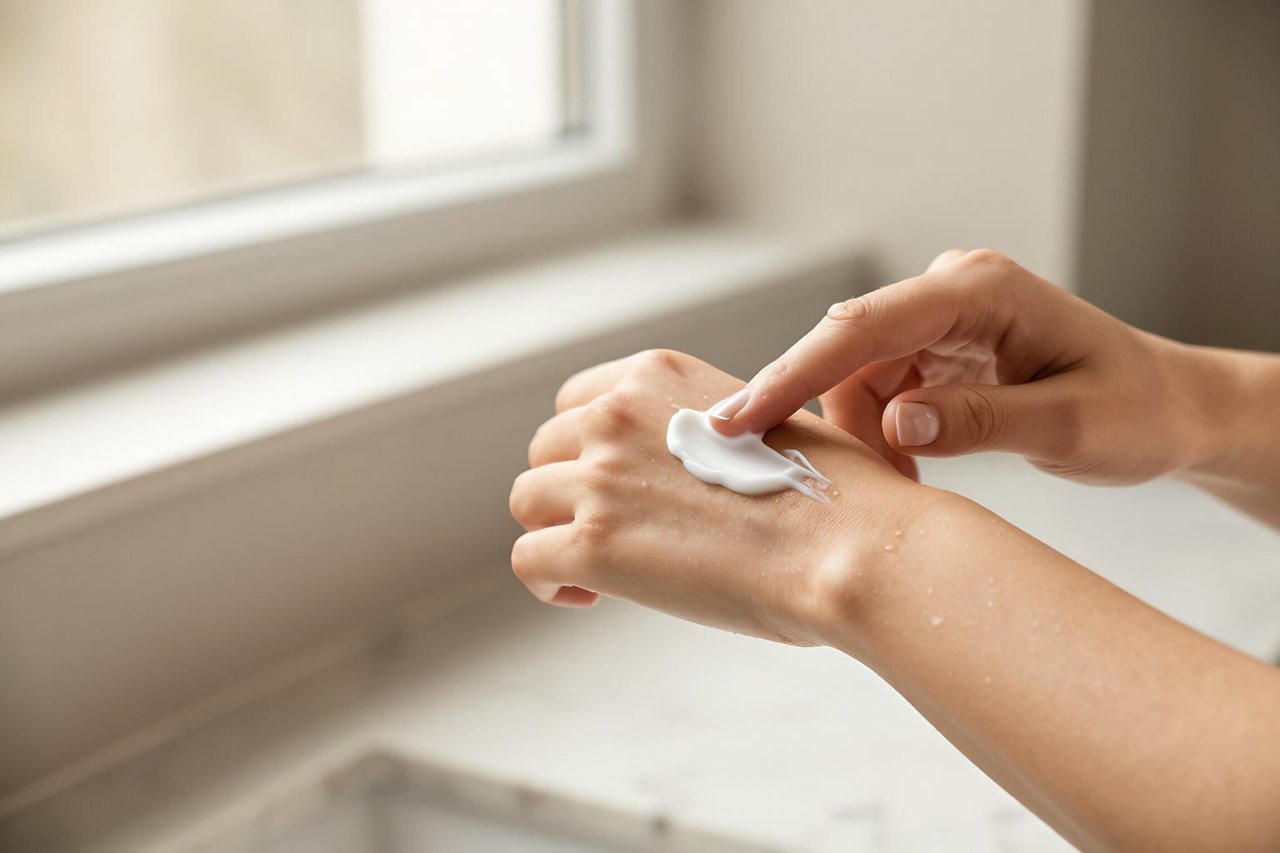
Ceramides are most useful on slightly damp skin, within about sixty seconds of cleansing, so there’s water for them to trap. Apply after water-based serums and before any occlusive balm or facial oil. Twice daily is fine; nightly is the minimum for most people.
The skin around your eyes is thin and short on oil glands, so a ceramide cream patted on gently does useful work there too — the case for a separate product is more nuanced than the marketing suggests, as we looked at in whether you really need a dedicated eye cream.
Bodies benefit just as much as faces. A ceramide body cream after a shower does something structurally different from a body oil, which mostly seals in water that’s already there rather than replenishing the lipids that are missing.
What Ceramides Won’t Do
They won’t exfoliate, fade pigmentation, or stand in for sunscreen. Penetration is also limited — most ceramides stay in the upper layers rather than travelling deep, which is exactly where you want them. And no cream can outrun ongoing damage: if you’re scrubbing daily with a hot shower and a rough cloth, you’re refilling a bucket with a hole in it.
How to Tell If Your Ceramide Cream Is Actually Working
Ingredient lists only get you so far. Judge the formula by behaviour over three to four weeks:
- Skin feels comfortable rather than tight in the first minute after washing your face.
- Flaking around the nose and mouth settles, especially if you use retinoids.
- Makeup sits more evenly by late afternoon instead of separating over dry patches.
- Products that used to sting — vitamin C, acids — become tolerable again.
- Redness after cleansing fades faster than it used to.
If none of that happens in a month, the formula may be underpowered or the problem may not be barrier-related at all. Price is a poor guide either way; several drugstore moisturizers with solid ceramide blends cost less than a sandwich and perform as well as tubes five times the price. What matters is the lipid trio, a short list of irritants, and packaging that limits air exposure so the ceramides don’t oxidise before you finish the jar. Get those right and the boring cream quietly does more for your skin than the exciting one ever will.


