
Table of Contents
Walk down any skincare aisle, and you’ll see shelves stacked with tiny jars promising to erase dark circles, smooth lines, and deflate puffiness. But is eye cream really necessary, or is it just clever marketing? The short answer: yes, but not all eye creams are created equal. The skin around your eyes is fundamentally different from the rest of your face—it’s thinner, more delicate, and prone to showing the first signs of fatigue and aging. Using a targeted formula can make a real difference, provided you pick the right one.
Why the Eye Area Needs Special Treatment
The skin surrounding your eyes is only about 0.5 mm thick—roughly one-third the thickness of the skin on the rest of your face. It contains fewer oil glands and less collagen and elastin, which means it dries out faster and loses firmness sooner. Everyday expressions like squinting, smiling, and rubbing your eyes add mechanical stress that accelerates fine lines. Plus, the area has a dense network of blood vessels, which is why lack of sleep or allergies can show up instantly as dark circles or puffiness.
Regular face moisturizers are often too heavy or contain ingredients like retinol in concentrations that can irritate the eye area. A dedicated eye cream is formulated to be gentler while delivering active ingredients at appropriate levels. For a deeper look at how these products address dark circles specifically, check out The Ultimate Guide to Eye Creams for Dark Circles.
Key Ingredients to Look For (and Avoid)
Not every ingredient lives up to its promise. Here’s what actually works, based on dermatological research.

Hydrators: The Foundation
Dryness exaggerates every line. Look for hyaluronic acid, glycerin, and ceramides. Hyaluronic acid can hold up to 1,000 times its weight in water, plumping the skin temporarily and making fine lines less visible. Glycerin is a humectant that draws moisture into the skin, while ceramides help restore the barrier.
Peptides: The Repair Signals
Peptides are short chains of amino acids that signal your skin to produce more collagen and elastin. They’re especially effective for firmness and fine lines. If you’re curious about which peptide formulas stand out, the 7 Best Peptide Eye Creams for Fine Lines, Puffiness, and Firmness is a great resource.
Caffeine: The De-Puffer
Caffeine is a vasoconstrictor—it narrows blood vessels, which reduces swelling and puffiness. It also has antioxidant properties. A 3% caffeine concentration is typical in effective eye creams. Results are temporary (a few hours), so apply in the morning before makeup.
Retinol: Handle with Care
Retinol is the gold standard for anti-aging, but it can cause redness, peeling, and irritation around the eyes. Opt for a low concentration (0.01% to 0.03%) in a time-release formula, or use a retinoid ester like retinyl palmitate, which is gentler. Always apply at night and follow with sunscreen during the day.
Vitamin C: Brightening Boost
Vitamin C (L-ascorbic acid) inhibits melanin production, helping fade dark circles caused by pigmentation. It also boosts collagen synthesis. Look for stable forms like ascorbyl glucoside if your skin is sensitive.
Ingredients to avoid: fragrances, denatured alcohol, and high concentrations of essential oils—they irritate the delicate eye area.
How to Choose an Eye Cream for Your Specific Concern
There’s no one-size-fits-all. Identify your primary issue, then match it to the right formula.
- Fine lines and wrinkles: Look for peptides, retinol, and bakuchiol (a plant-based retinol alternative). A rich cream texture works best for dry skin; a gel-cream for oily skin.
- Dark circles: If they’re bluish or purple, vitamin C, caffeine, and niacinamide can help. For brownish pigmentation (more common in darker skin tones), use vitamin C and kojic acid. Read more in The Ultimate Guide to Eye Creams for Dark Circles.
- Puffiness: Caffeine and cooling applicators (like a metal rollerball) are your friends. Store your eye cream in the fridge for extra depuffing effect.
- Sagging/loss of firmness: Peptides and growth factors can stimulate collagen. Products with a thicker consistency may provide a temporary tightening sensation.
For a curated list of top performers across categories, see the Best Eye Creams for 2024.
How to Apply Eye Cream Correctly (Most People Do It Wrong)
Using eye cream isn’t complicated, but technique matters.
- Use a tiny amount. A rice-grain size per eye is enough. More won’t increase benefits—it can migrate into your eyes and cause irritation.
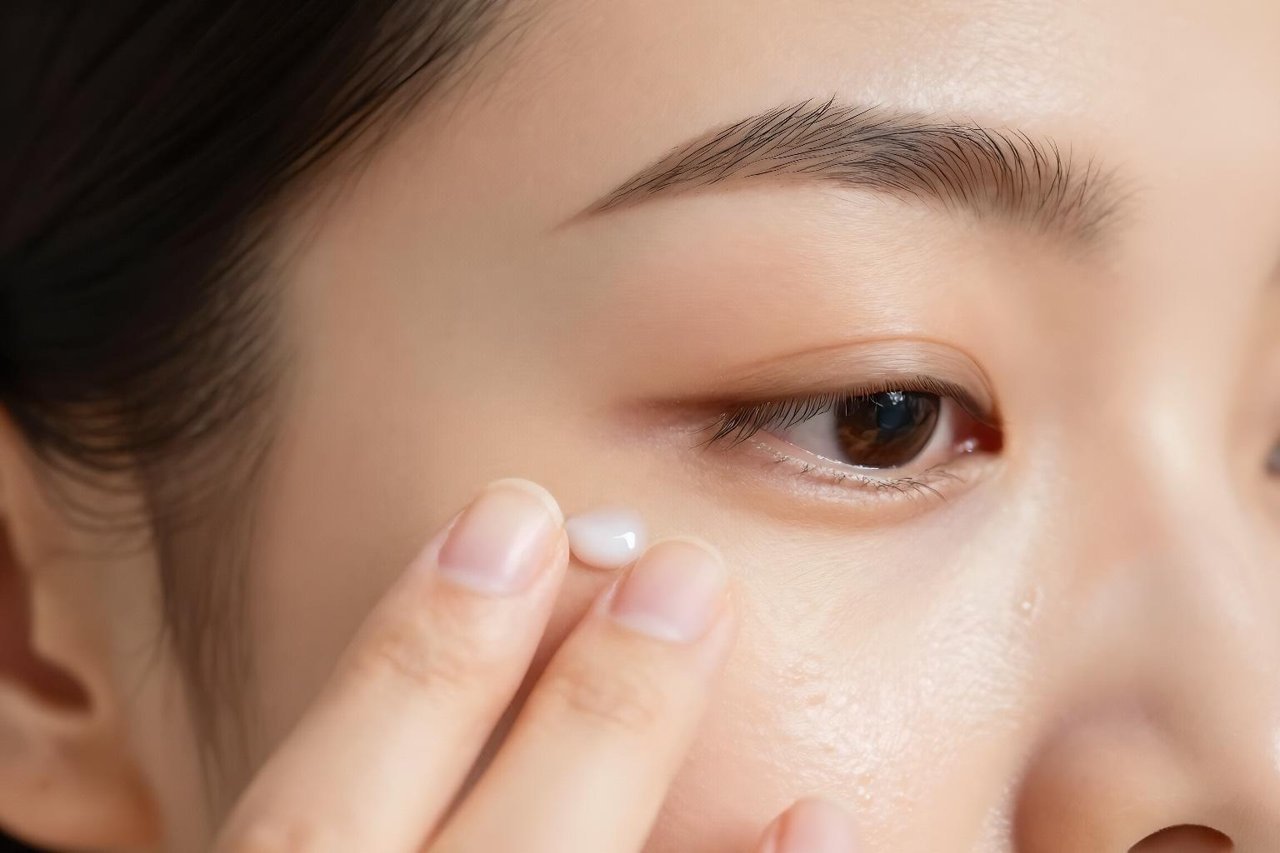
- Apply with your ring finger. It’s the weakest finger, so you’re less likely to press too hard. Gently dab—never rub or tug.
- Follow the bone, not the lash line. Start at the inner corner of your eye socket (near the tear duct) and pat along the orbital bone—under the eye and up toward the brow bone. Applying too close to the lash line can lead to product getting into your eyes.
- Wait 30 seconds before layering. If you’re using a serum under your eye cream, let it absorb first. Then apply cream.
Morning routine should focus on hydration and protection (vitamin C, caffeine, SPF). Evening is for repair (retinol, peptides, richer creams).
The Hype vs. Reality: What Eye Cream Can’t Do
Even the best eye cream has limits. It can’t fix structural issues like under-eye hollows caused by fat loss—those require fillers. It can’t erase deep wrinkles or severe sagging; you’d need treatments like lasers or surgery. And if your dark circles are due to genetics (like a deep tear trough), no topical will fully eliminate them—though it can improve the appearance.
What eye cream can do is visibly reduce fine lines, hydrate, brighten, and de-puff with consistent use over 4–8 weeks. If you’re over 30 and not using one, you might be missing a chance to delay deeper wrinkles. The article Don’t Think You Need an Eye Cream for Wrinkles? You’re Missing Out explains why prevention is key.
Eye Creams vs. Regular Moisturizers: A Quick Comparison
Face moisturizers aren’t designed for the eye area. They often contain larger molecules that can’t penetrate the thin skin, or ingredients like glycolic acid that cause irritation. Eye creams have smaller molecules, lower pH, and are tested for ophthalmological safety. If you’re on a budget, you can use a gentle face moisturizer that’s fragrance-free and contains ceramides—but you won’t get the targeted actives. For a broader perspective on smoothing the eye area, Smoothing Skincare & Eye Creams offers more insights.
DIY Eye Creams: Do They Work?
Social media is full of recipes using coconut oil, cucumber slices, or even hemorrhoid cream. Most are ineffective or risky. Coconut oil can clog the tiny oil glands around your eyes, leading to milia (those little white bumps). Cucumber provides temporary cooling but no lasting benefit. Hemorrhoid cream constricts blood vessels but can cause rebound swelling and contains ingredients not meant for long-term use. Stick with tested formulations.
When to Start Using Eye Cream
You don’t need to wait until you see wrinkles. If you’re in your twenties and have dry skin or a family history of early eye aging, a basic hydrating eye cream can act as prevention. In your thirties, add peptides or retinol. By your forties, look for richer formulas with growth factors. The earlier you start, the better you can slow down the visible signs.
Ultimately, the best eye cream is one you’ll use consistently. It doesn’t have to be expensive—drugstore options with hyaluronic acid and caffeine can work well. Pay attention to your skin’s reaction and adjust as needed. Your eyes work hard every day; giving them a little extra care is worth it.


