
Table of Contents
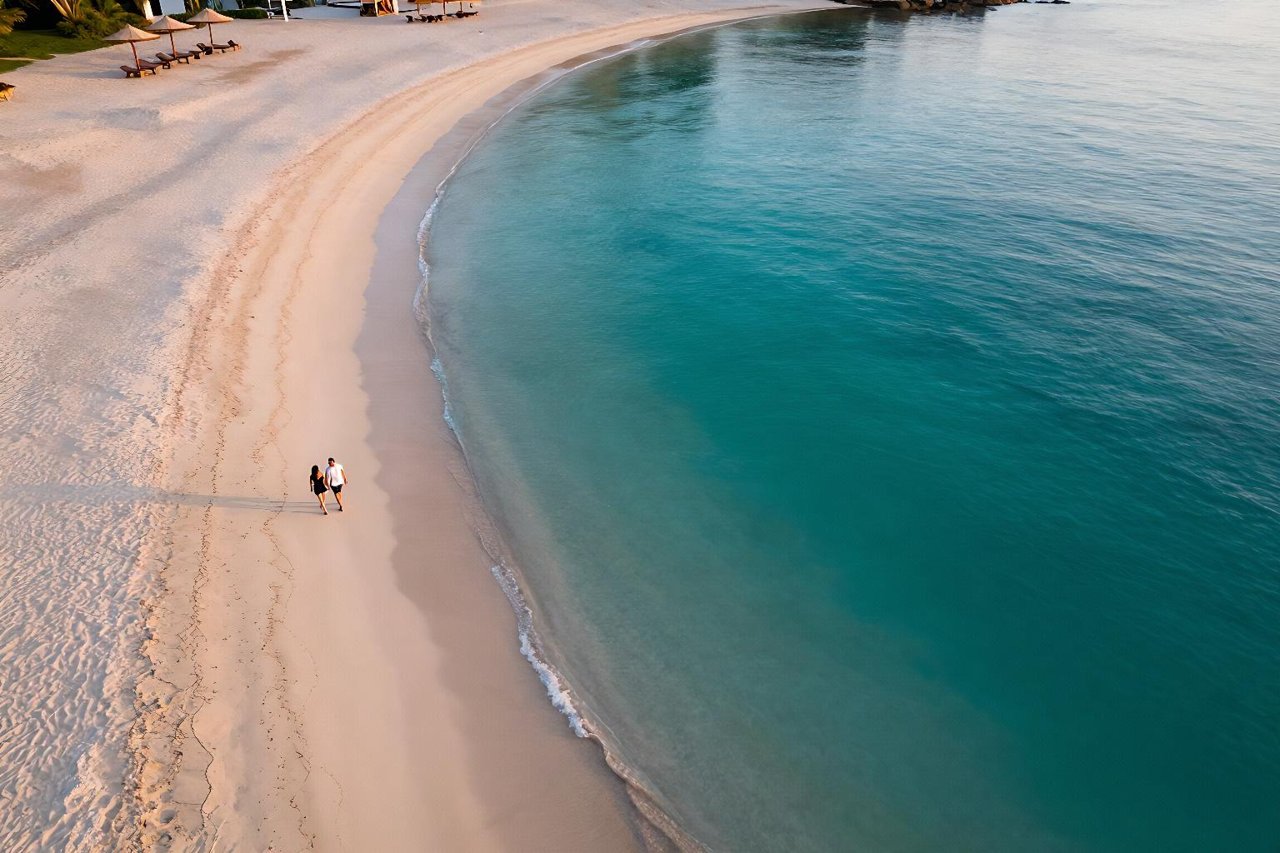
Every beach has a quiet hour. Most people never find it, because they arrive at 11am, park in the first car park they see, and unfold their towel within sight of the ice cream van. Finding a stretch of sand with room to breathe isn’t about secret knowledge or an app that nobody’s heard of. It’s a handful of habits that take about ten minutes of planning the night before.
Start with the approach, not the beach
Open Google Maps, switch to satellite view, and zoom until you can count individual cars. The question you’re answering isn’t “where is the beach” but “how many ways in does it have”. A sandy bay with a road running right up to it, a car park, and a lifeguard flag is built for volume. In July it will be busy by 10:30 and there is nothing you can do about it.
Look instead for the second car park, the dead-end lane, the dotted footpath. Distance from the nearest parking space is the best single predictor of how many people you’ll share the sand with. In most of Mediterranean Europe, a 15-minute walk filters out the large majority of day visitors. Twenty-five minutes and you’re often on your own.
This is why coastlines with awkward terrain give up their best spots so easily. On Milos, where there are more than 70 beaches scattered around a single coastline, the famous ones are reachable by paved road and the good ones usually aren’t.

The 20-minute rule, and exactly where to walk
Once you’re on the sand, most people stop walking. That’s your advantage. There’s a reliable pattern to how crowds distribute themselves across a beach, and it barely changes whether you’re in Cornwall or Costa Rica.
- Walk past the first set of flags or umbrellas. Concessions cluster at the main access point because that’s where the customers are.
- Hunt for the second access path. Many beaches have a lane or stairway at the far end that only locals use. Parking there saves you the walk and lands you in the quiet third of the bay.
- Carry on until the sand gets coarser or the rocks begin. Families with cool boxes and small children stop where the ground is flat. Rockier edges are usually empty.
- Check the headland at low tide. Around two hours either side of low water, you can often walk around a point into a cove with no land access at all.
Coastal footpaths are goldmines for this. The hidden coves reached only on foot along the North Wales coast are a good example: no car park, no café, no crowd, and a genuine sense of having found something.
Cruise ships rewrite the timetable
If you’re anywhere near a cruise port, port schedules are published online and they’re free to check. Ships typically dock between 7am and 8am and sail again around 5pm, and the passengers move in a fairly predictable wave: town first, then the nearest accessible beach.
That gives you two clean windows. Get to the beach before 9am and you’ll beat the first tenders ashore. Or go after 4pm, when the coaches have gone back and the water is at its warmest. On a ship day in Kotor or Santorini, that late-afternoon gap is the difference between a scrum and a swim.
Also worth knowing: islands with their own airport get a different kind of visitor than islands reached only by ferry. Day-trippers don’t linger. Overnight guests spread out.
Let the wind choose your beach
On a breezy day, everyone piles into the one sheltered cove on the leeward side. That’s the day to check Windy or Windguru, look at the forecast direction, and drive to the opposite coast. You’ll get a beach that’s technically windier and practically empty, and if you’re swimming rather than sunbathing, a bit of chop is rarely a problem.
Swell direction matters too. A beach that’s glorious in a flat spell turns into a washing machine when a long-period swell arrives, and it empties out fast. Surfers will know where the clean water is. In Bali, the best beaches for swimming and surfing sit on opposite coasts for exactly this reason, and picking the wrong side means crowds plus the wrong conditions.
Tides, and the two hours that matter
Tide tables are free, boring, and the most underused tool in beach planning. High tide squeezes everyone into a narrow strip of sand, so a beach that feels packed at 1pm can feel empty at 4pm. Low tide does the opposite: it exposes sandbars, opens up walkable routes around headlands, and reveals rock pools that keep children occupied for hours.
Aim for the two hours either side of low water if you want space and exploration, or the couple of hours before high tide if you want the deepest, clearest swimming. On a big spring tide, the difference between the two can be 30 metres of beach.
Shift the calendar, not just the map
The single biggest lever isn’t geography, it’s timing. Late May, June, and September give you the same water and the same light with a fraction of the people. In Crete, the sea is still around 24–25°C in the last week of September while the charter flights have thinned out. Weekdays beat weekends everywhere, and August is the one month to avoid in southern Europe if quiet sand is the goal.
If you’re building a trip around this, it pays to look at destinations where the shoulder season is the whole point rather than trying to squeeze solitude out of a peak-season resort town.
Ask someone who actually swims there
The most useful question you can ask a taverna owner, a dive shop, or the person behind the counter at a bakery is not “which beach is best” but “where do you swim on your day off”. You’ll get a name that isn’t in the guidebook, usually followed by directions involving a left turn after a chapel.
Local Facebook groups and hiking blogs beat glossy listicles for this, because they describe access. A beach with no parking, a 20-minute scrubby path, and no facilities will never trend. That’s precisely why it’s worth the walk.
What a quiet beach asks of you in return
Empty usually means unsupported. No lifeguard, no shade, no tap, no one to notice if something goes wrong. Budget for that and the trade-off stops feeling like a sacrifice:
- Two litres of water per person, minimum, and more in August
- A proper shade option, because a remote cove often has zero natural cover
- Footwear for the walk in and out, especially if the path involves hot rock or goat tracks
- Cash, because the one beach bar that exists may not take cards
- A rubbish bag, since anything you leave has to be carried out by someone, and it won’t be
One last thing: don’t geotag it. The barefoot-worthy stretches of pale sand in every destination tend to get loved to death once they’re pinned on a map. Take the photo, keep the coordinates to yourself, and let the next person earn it with the same 20-minute walk you did.


