
Table of Contents
Southeast Asia has somewhere north of 25,000 islands, and Indonesia alone accounts for roughly 17,000 of them. That number is useless when you’re trying to book a flight. What you actually need is a short list of islands that reward the effort of getting there, sorted by the kind of trip you’re planning.
Here’s a working shortlist, drawn from places that hold up in person rather than just on a feed. Some are cheap. A couple are not. A few suit divers, others suit people whose main ambition is to lie still.
Bali, Indonesia: the island that covers every base
People love to announce that Bali is ruined. It isn’t, but it is big, and the Bali you get depends entirely on where you land. Canggu is scooters and brunch queues. Ubud is rice terraces with a side of traffic. Head 90 minutes east to Sidemen and you’re in a valley of coffee farms where the loudest thing is a rooster. Amed, on the northeast coast, has black-sand coves and some of the cheapest diving in the region.
Bali works as a first island because it’s easy: direct flights from most of Asia and Europe, cheap ride-hailing, reliable Wi-Fi, a guesthouse on every second street. From Sanur it’s a 45-minute fast boat to Nusa Penida, where the cliffs at Kelingking draw a crowd by 9am and manta rays cruise the cleaning stations at Manta Point year-round.

Palawan, Philippines: the postcard that’s real
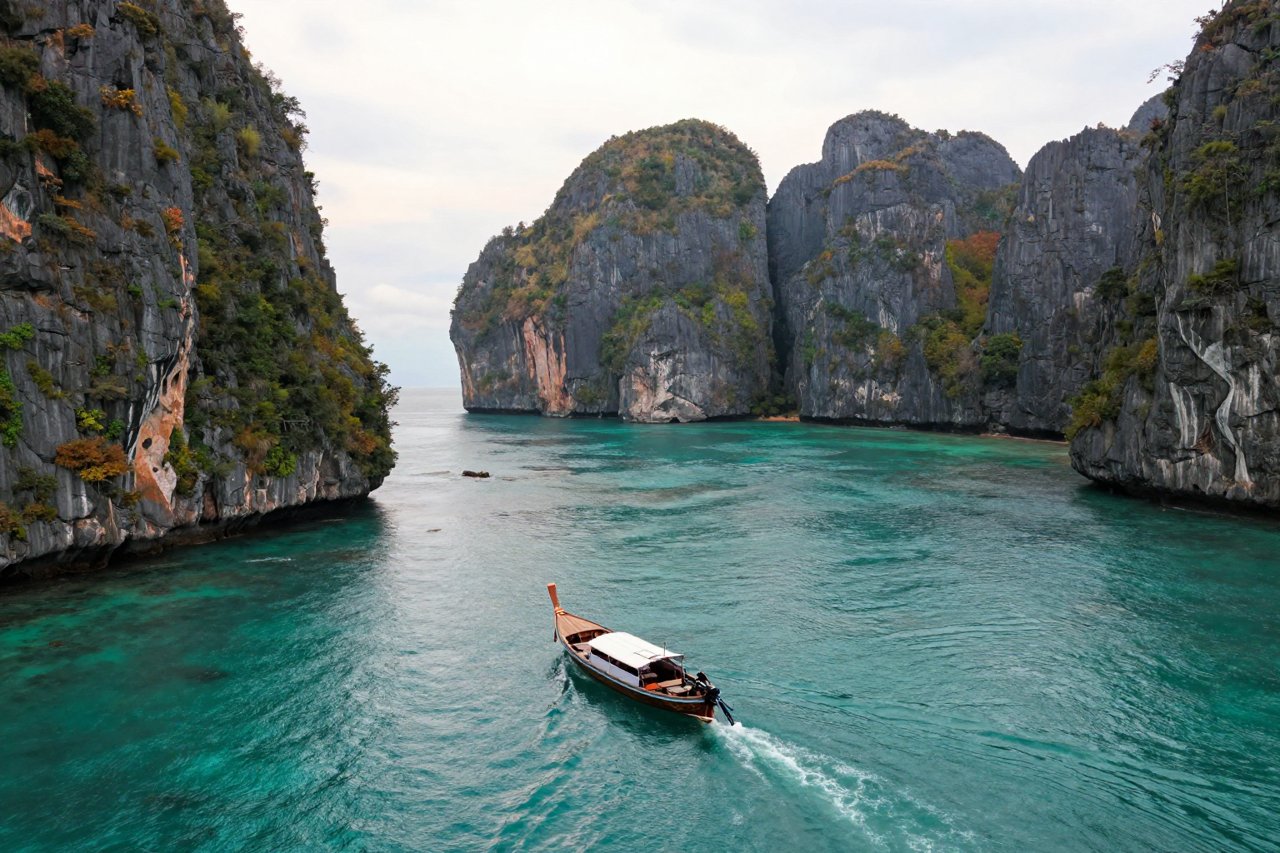
El Nido sits at the top of Bacuit Bay, a jigsaw of around 45 limestone islands and islets. The island-hopping tours run ₱1,200 to ₱1,800 for a full day including lunch, and yes, they’re crowded in high season. Rent a kayak instead and paddle into the small lagoons on your own schedule. Further south, Coron trades lagoons for wreck diving, with a dozen Japanese World War II ships sitting in 20 to 40 metres of water.
Getting around Palawan takes longer than people expect. El Nido to Coron is a five-hour ferry in good weather, or a small-plane hop if the budget stretches.
Siargao, Philippines: surf, coconut roads and not much else
Siargao used to be a surf secret and now has a proper airport at Sayak, about 45 minutes from the main strip in General Luna. Cloud 9 is the famous break, but there are easier waves at Jacking Horse for anyone who has never stood on a board. Outside the water, the roads cut through coconut groves and the pace is genuinely slow in a way that Bali no longer is. Sugba Lagoon, a 40-minute boat ride from Del Carmen, has water so clear the boats look like they’re floating on air.
Come between March and October for the best conditions. September is peak swell and also peak crowds.
Thailand’s two very different islands
Koh Lanta: for families and slow days
Koh Lanta is about 30 kilometres long and has nine or ten west-coast beaches, each with its own personality. Klong Dao in the north is wide and shallow, which makes it the obvious pick with small children. The south end stays quiet, and the sunsets from the viewpoint bars near the national park are worth the drive. Ferries from Krabi take about two hours in high season.
Koh Tao: for anyone who wants a dive certification
Koh Tao is only 21 square kilometres and certifies more new divers than anywhere else on earth, largely because a PADI Open Water course costs around 9,000 to 11,000 baht including accommodation. Visibility runs 15 to 30 metres, and Sail Rock and Chumphon Pinnacle are the standout sites. It’s a party island too, but the diving crowd and the bar crowd mostly keep to separate bays.
The Gili Islands and Lombok: no cars, no scooters
Gili Trawangan bans motorised vehicles entirely, so your transport options are a bicycle, a horse cart, or your own legs. The three Gilis sit 20 minutes by boat off Lombok’s northwest coast, and each has a distinct character: Trawangan for bars and snorkelling with turtles, Meno for quiet, Air for the cheapest rooms.
Lombok next door gives you the towering Rinjani volcano and the surf at Kuta Lombok, which is a different Kuta entirely from Bali’s. The combination of beach days and mountain days makes this stretch a genuinely good pick for couples, and it sits comfortably among the best beach destinations for a honeymoon depending on who they suit.
Phu Quoc, Vietnam: the easy one
Vietnam’s largest island is 574 square kilometres and a 50-minute flight from Ho Chi Minh City. Half of it is a national park, the other half is resort development, and the two coexist better than you’d guess. The cable car to Hon Thom island runs 7.9 kilometres over open water and is genuinely spectacular regardless of how you feel about cable cars.
Phu Quoc suits people who want a beach holiday with Vietnamese food and without ferry connections. Rent a scooter and drive the empty northern roads, where the fishing villages still outnumber the hotels.
The Perhentian Islands, Malaysia: the quiet one
Two islands, Kecil and Besar, off the Terengganu coast, reached by a 30 to 40-minute speedboat from the Kuala Besut jetty. No roads, no ATMs, and a monsoon that shuts the whole place from roughly November to February. In exchange you get reef sharks in the shallows, turtles grazing on seagrass, and beach chalets for RM150 a night.
Book accommodation before you arrive. Boats don’t run without a confirmed booking, and turning up on spec is a good way to spend a night in Kuala Besut.
Raja Ampat, Indonesian Papua: for divers who mean it
This is the one that costs real money and rewards it. Around 1,500 small islands sit in the Coral Triangle, which holds the highest recorded marine biodiversity on the planet. A liveaboard runs seven to ten nights and several thousand dollars; homestays on Gam or Kri bring the cost down considerably if you’re willing to sacrifice hot water. Getting there means flying to Sorong, usually via Makassar or Jakarta, then a ferry or a resort transfer. Add a marine park permit to the budget.
What a week actually costs
Rough mid-range daily figures per person, including a private room, three meals and local transport. Flights are extra.
- Bali. $45–70 a day, more in Canggu, less in Amed or Sidemen
- Siargao. $45–70, with surfboard rental adding about $8 a day
- Koh Lanta or Koh Tao. 1,500–2,600 baht a day
- Gili Trawangan. 400,000–700,000 Indonesian rupiah, higher than Lombok for the same standard
- Phu Quoc. $40–65, though resort prices climb fast in the December high season
- Perhentian Islands. RM150–260, cash only in most places
If those numbers feel tight, several of these islands get considerably cheaper outside peak months. It’s worth cross-checking against a list of the cheapest countries to visit in 2026 and what a day actually costs before you commit to dates, because shoulder season in the Philippines can halve your accommodation bill.
How to string islands together without wasting days
The single biggest mistake is underestimating transfer time. A ferry that looks like 90 minutes on a map is a half-day once you add the tuk-tuk to the pier, the wait, the wet landing and the walk to your guesthouse. Two islands in a ten-day trip is comfortable. Three is pushing it. Four means you’ll spend your holiday in transit terminals.
Book internal flights early and directly with regional carriers, and keep a buffer day before any international departure. Weather cancels boats in the Philippines and Indonesia regularly, particularly from July to September.
Pick one island for the first half that’s easy to reach and has good infrastructure, then a second that’s harder, and finish on the harder one so the journey home feels like a natural end rather than a scramble. If you’re still sketching options, the wider guide to unforgettable places to visit when you’re deciding where to go next is a useful sanity check, and there’s a solid case for matching your island to your budget using this round-up of tropical getaways that won’t blow the budget.
One last thing worth knowing: the monsoon runs on different clocks across the region. Thailand’s Gulf coast peaks in rain from October to December while Lombok stays dry, and Palawan’s wettest months are July and August. Picking the island to match your travel window, rather than the other way around, is the difference between a great trip and three days in a hotel room watching water come off a roof.


