
Table of Contents
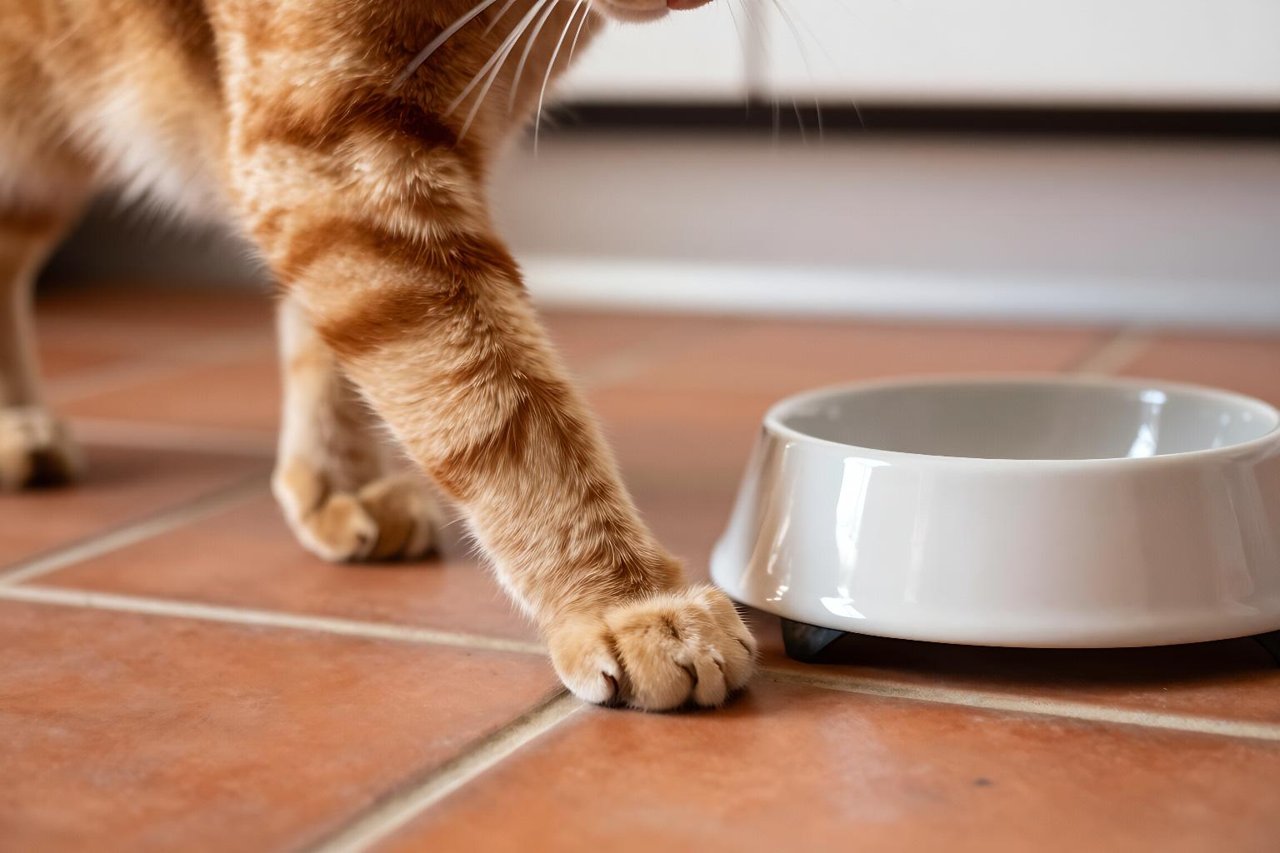
It’s 6pm, the bowl goes down on the kitchen tile, and your cat walks over, sniffs once, then drags a paw across the floor beside it. Three or four strokes, claws clicking, before she finally settles in to eat. Some cats do it afterwards instead, pawing at the mat as if trying to cover something up. The food stays put. The floor takes a beating.
It looks like fussiness or a pointless little ritual. It’s actually one of the more explainable things cats do, once you know what’s driving it. The answer usually sits somewhere between a wild instinct, a badly designed bowl, and whatever else is happening in the kitchen at 6pm.
A Leftover Instinct From Wild Relatives
Before cats lived in flats, they were solitary hunters taking down small prey several times a day. A mouse is a snack, not a meal, so there were almost always leftovers. A half-eaten carcass left in the open advertises to rivals and to bigger predators that a cat is nearby and there’s food worth taking.
So wildcats cover the remains. Dirt, dry leaves, loose soil, whatever’s within reach gets scraped over the kill to lock the smell down. Cats have no hands, so the motion is a paw-drag plus a bit of nose-pushing. That’s the sequence running on your kitchen floor. There are no leaves, so the tile gets it.

Regular meals don’t switch it off
Cats fed twice a day on a set schedule still cache. If anything, cats with a rough start do it more: ex-strays, rescues, cats who spent their first year competing at a shared bowl. The instinct was laid down when food was uncertain, and it doesn’t get unlearned just because the pouches now arrive on time.
Or she’s saving it for later
Free-roaming cats eat somewhere between 10 and 20 small meals across a day. Two big portions is a human arrangement. A cat who isn’t hungry yet may cover what she can’t finish and come back for it. Watch for the pattern: she scratches, walks off, and reappears 40 minutes later to clean the bowl. That’s not rejection. It’s a cat using the fridge.
Paw Pads Leave a Message, Too
Scratching isn’t only about hiding. Cats have scent glands between their paw pads, so every scratch deposits a signature. That’s why they rake the same spot on the doorframe over and over.
Around a food bowl, that turns into a claim. In a house with three cats, the one who paws the floor around her dish after eating is often making a point: this was mine, and I was here. The motion can look almost identical to caching, so watch direction. Scratching that pulls inward towards the bowl tends to be covering. Broad, vigorous raking outwards reads more like marking.
The Bowl Might Be the Actual Problem
Whiskers and narrow dishes
Whiskers aren’t decoration. They’re packed with nerve endings and feed the cat constant information about nearby surfaces. A deep, narrow bowl presses them against the sides with every mouthful. Some cats tolerate it. Others start hooking kibble out with a paw and eating off the floor, and a cat who has learned to use her paws to extract food is a cat who may well paw around the bowl too.
A bowl that slides, rings, or sits somewhere exposed
Stainless steel on bare tile skates the moment a nose touches it, so some cats pin it with a paw. Others are put off by the clatter. Position matters just as much: a bowl jammed into a corner, next to the washing machine, or within sight of the litter tray is not a relaxed place to eat. A cat who eats on edge tends to finish fast and start covering.
What’s actually in it
Food quality plays into this more than most owners expect. A kibble the cat isn’t keen on gets sniffed, pawed at, and abandoned. If you’re weighing up brands, it helps to know how to read the marketing, and this guide to choosing pet food without being led by the label covers that side of it properly.
Temperature and Smell Matter More Than You’d Think
Cats judge food with their noses first and their mouths second. Wet food straight from the fridge sits around 4°C, and at that temperature the aroma that says “this is dinner” is mostly locked in. Warm it slightly, or stir in a spoon of warm water, and the same food suddenly passes inspection.
Dry food has the opposite problem. An open bag left for six weeks loses its smell as the fats oxidise, and the last few inches at the bottom are the stalest thing in the kitchen. Cats notice. They nibble, walk away, and paw at the floor. Smaller bags and an airtight tub fix most of it.
Kitchen Politics and Stress
In a two-cat household, bowls placed 30cm apart are one feeding station, not two. The more confident cat finishes and blocks the route. The other eats what she can, quickly, then scratches to cover the smell so the food stops advertising itself to a rival.
A new puppy, a toddler who has discovered the bowl, a moved feeding spot, or building work can push the same button. Mixed households add their own logistics, and the differences in how dogs and cats handle a bowl are covered in caring for dogs versus cats if you’re juggling both.
When Scratching Is Worth a Vet Call
Most of the time this is harmless. Occasionally it’s the first thing you notice about a cat who’s uncomfortable. Dental pain is the one to watch for. Cats with resorptive lesions or inflamed gums often approach the bowl eagerly, take a bite, paw at the floor, and walk away. If your cat is scratching around food and also dropping kibble, chewing on one side, or eating noticeably less, get her mouth checked.
Nausea and gut trouble look similar. A cat who wants food, then paws and leaves, may be feeling sick rather than fussy. Cats hide discomfort well, and the odd behaviours that do leak out often turn out to be pain or stress in disguise, which is why seemingly random habits like staring at an empty wall deserve attention rather than a laugh.
Eating non-food is a separate flag. Dogs eat grass and cats chew plastic, wool, or cardboard, and neither habit should be ignored when it shows up alongside changes at mealtimes.
What Actually Helps
- Swap deep bowls for wide, shallow ceramic dishes or a flat plate. Whiskers should never brush the sides.
- Put a non-slip mat under the bowl. It gives the cat something legitimate to scratch and stops the skidding.
- Move the bowl out of corners and away from appliances, doorways, and the litter tray.
- Serve wet food at room temperature, or add a splash of warm water.
- Feed smaller portions more often if she’s a cover-and-return cat. Two meals becomes three or four.
- In multi-cat homes, feed in separate rooms or at opposite ends of a hallway, out of sight of each other.
- Keep kibble sealed and buy smaller bags so the last scoop smells as good as the first.
Track the Pattern for a Fortnight
The timing tells you which explanation you’re dealing with, and it’s worth jotting down for two weeks. Scratching that consistently happens after she’s eaten points to caching or marking. Scratching before she’s taken a bite, especially with food pushed onto the floor, points to the bowl or the whiskers. Scratching that only appears when a particular cat or person is in the room points to stress. Scratching that arrives suddenly in a cat who has never done it, alongside a smaller appetite, points to the vet.
Two weeks of notes beats guessing, and it gives your vet something concrete if you do book an appointment. Change one thing at a time, starting with the bowl, since that’s the cheapest and most likely fix. Most cats who paw at the floor beside their food are doing exactly what their ancestors did, just with worse materials. Give them a shallower dish, a mat, and a quieter corner, and a fair number of them quietly stop.


