
Table of Contents
Your cat is purring on your lap one minute and sinking teeth into your forearm the next. Or a cat who has ignored the doorbell for years suddenly hisses at your partner and blocks the hallway. Sudden aggression in cats rarely comes from nowhere, even when it feels that way. Cats are subtle communicators, and aggression is often the loudest message they have left.
The trick is to look at the whole scene: what changed, where the cat was, who was nearby, and whether a medical problem is underneath. These are the most common reasons cats suddenly become aggressive, plus what to do in the moment.
Why cats suddenly become aggressive: the short answer
Aggression is not spite or revenge. It is a response to threat, pain, frustration, or competition for resources. A cat may switch from friendly to aggressive because something has pushed them past their coping limit: a new smell, a painful tooth, a stranger at the window, or a toddler who has learned to grab. The behavior can look explosive because cats hide discomfort until they cannot.
Behavior researchers like Prof. Carri Westgarth have spent years correcting these misconceptions. In this Ask Me Anything with Prof. Carri Westgarth, she explains how cat behavior and welfare are often misunderstood. A cat is not being "bad"; they are solving a problem with the tools they have.

1. Pain or illness is the first suspect
A cat with a sore mouth, aching hip, or urinary blockage can become snappy when touched or lifted. One day the cat tolerates being picked up, the next they swipe. Dental disease, arthritis, hyperthyroidism, abscesses, and gastrointestinal pain are common culprits.
Signs that point to a medical cause
- Aggression only when a specific area is touched, such as the belly, tail base, or mouth.
- Hiding more, eating less, or skipping the litter box.
- Yowling at night, pacing, or seeming disoriented.
- New sensitivity to brushing, picking up, or being approached while resting.
Book a vet visit before assuming it is behavioral. Ask for a pain assessment and a dental check. In older cats, bloodwork and blood pressure matter. If nothing turns up, log the aggression for two weeks; patterns can reveal a hidden trigger.
2. Fear, cornering, and the "no escape" trap
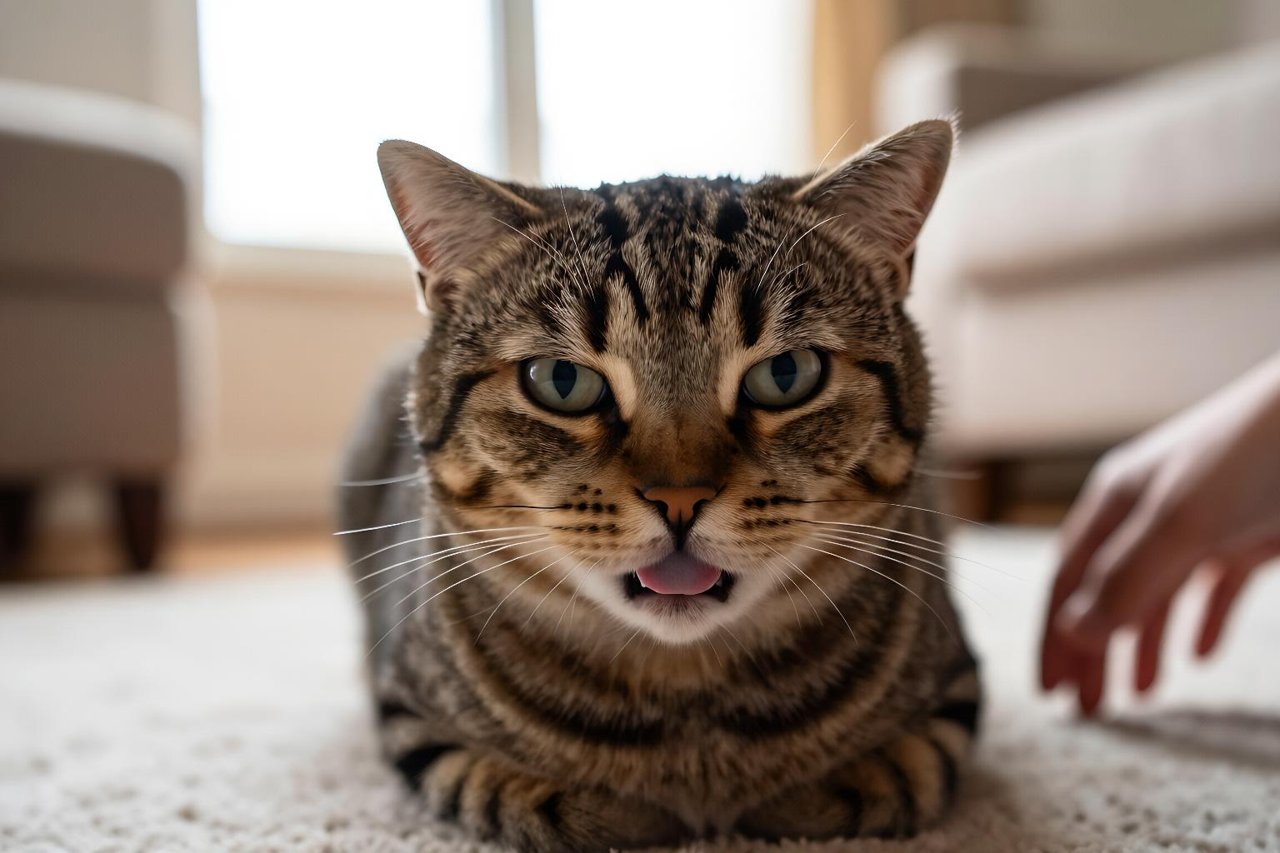
A frightened cat who cannot run will fight. Aggression often happens near doorways, in carriers, under beds, or when a cat is cornered by a vacuum, a visitor, or another cat. The cat may hiss, flatten their ears, tuck their tail, and dilate their pupils before striking. If the escape route is blocked, a swat is the next option.
Give the cat distance and a clear path out. Do not scoop them up to "calm them down." A scared cat can bite hard enough to send you to urgent care. Open a door, step back, and let them retreat. If visitors are the trigger, set up a quiet room with a litter tray and hiding spot before they arrive.
3. Petting-induced overstimulation
Some cats have a touch threshold. They enjoy five minutes of chin scratches, then the tail starts twitching, the skin along the back ripples, and the ears rotate backward. That is your warning. Ignore it and you may get a bite that seems unprovoked. It is not random; the cat asked you to stop with body language first.
Shorten petting sessions and end on a good note. Stick to the cheeks and chin rather than the belly or tail. If your cat has a history of overstimulation, use a wand toy instead of hands for play. Hands are for feeding and gentle handling, not wrestling.
4. Redirected aggression
Redirected aggression is one of the most confusing types of cat aggression. A cat sees an outdoor cat through the window, becomes highly aroused, and cannot reach the intruder. You walk past, and the cat attacks your ankle. You were the nearest target when the arousal boiled over.
This can also happen after a loud noise, a vet visit, or a fight between two cats. The attacked cat may stay on edge for hours. Keep cats separated, close the curtains, and avoid contact until everyone settles. Do not punish the cat; punishment adds fear and can make the next encounter worse. For two cats, use a slow reintroduction with scent swapping.
5. Play aggression that has gotten out of hand
Young cats and indoor cats with too little stimulation often stalk ankles, pounce on hands under blankets, and ambush feet on the stairs. This is play aggression, but it still hurts. A 9-month-old cat with no outlet for hunting behavior may treat moving legs like prey. The fix is not a squirt bottle. It is more appropriate play and a predictable routine.
Try two focused play sessions a day, 10 to 15 minutes each, with a wand toy that mimics a bird or mouse. End with a small meal or food puzzle so the hunt has a natural finish. Keep hands out of the game. If your cat targets ankles at 2 a.m., add a session before bed and leave a puzzle feeder out overnight.
6. Territory, resources, and household tension
Cats are not naturally great at sharing. A new cat, a new baby, or even a new couch can change the social map. Resource guarding often shows up around food bowls, litter boxes, favorite sleeping spots, and doorways. One cat may block another from the litter box, then a fight erupts in the hallway. To us it looks sudden; to the cats, it has been building for days.
Set up separate feeding stations and at least one litter box per cat, plus one extra. Put resources on different levels and in different rooms so no cat has to pass a rival to eat or toilet. For introductions, go slower than feels necessary; scent swapping and feeding on opposite sides of a closed door work better than a face-to-face meeting.
7. Hormones and maternal aggression
Unneutered male cats fight over territory and can become aggressive when hormones are high. A mother cat with kittens may bite anyone reaching into the nest. This is protective, not permanent. Spaying and neutering reduce hormone-driven aggression, and mothers usually settle once kittens are weaned.
8. Big changes and tiny triggers
Moving house, remodeling, a new pet, a new work schedule, or a family member returning after a long absence can unsettle a cat. Cats rely on routine and scent. A strange smell on your clothes after you visit a shelter or another cat’s home can trigger hissing and swatting. So can a neighborhood cat spraying the front door.
Keep changes predictable. Set up a safe room with food, water, litter, scratching posts, and a high perch. Plug in a pheromone diffuser if it helps, but do not rely on it as a cure. Spend quiet time nearby without forcing interaction. Most cats need a few days to reset; some need weeks.
9. Aging cats and cognitive dysfunction
Older cats can develop cognitive dysfunction, the feline version of dementia. They may yowl at night, forget the litter box, stare at walls, and become irritable when handled. A 16-year-old cat who suddenly bites when picked up may be confused, in pain, or both. Ask your vet about pain management, blood pressure, thyroid function, and cognitive support. Add night lights, low-sided litter boxes, and ramps to reduce friction.
What to do in the moment
When a cat is mid-strike, discipline is likely to escalate things. Use these steps instead:
- Freeze and avoid direct eye contact. Do not scream or swat back.
- Give the cat an escape route. Open a door or step aside.
- Separate cats with a barrier, not your hands, if a fight starts.
- Note the trigger: time, location, people, sounds, and what happened just before.
- Call your vet if the aggression is new, sudden, or paired with appetite or litter box changes.
Build a calmer household without punishment
Punishment teaches cats to fear the person or situation and can make aggression more unpredictable. Focus on three things: control the trigger, give the cat choices, and reward calm behavior. Provide vertical space, scratching posts, hiding spots, and a consistent routine. If the aggression involves another cat, work with a qualified behaviorist who uses force-free methods. A cat who feels safe is far less likely to bite.


