
Table of Contents
Zion Canyon Scenic Drive closes to private cars for most of the year. That single rule shapes how thousands of people spend their morning: parked in Springdale, on a free shuttle, at the trailhead by 7:30am instead of circling a lot for forty minutes. A first national park trip gets easier the moment you pick a park where systems like that already exist.
I’ve watched plenty of people plan a two-week “see everything” tour of the American West and come home wrecked. The parks below are the opposite. Short trails, staffed visitor centers, beds inside the gates, and enough infrastructure that a wrong turn costs you twenty minutes rather than a whole day.
What “easy” actually means in a national park
Every park on this list shares a handful of traits that make a first visit forgiving. Use the same checklist when you’re weighing up somewhere else.
- A shuttle, one-way loop, or scenic drive, so parking isn’t the entire day
- At least three hikes under three miles with a genuine payoff at the end
- Lodging or camping inside the park boundary, not 45 minutes down the highway
- A visitor center that’s open when you arrive, with rangers who know current conditions
- One gateway town with a grocery store, laundry, and a room you can still book late
This is close to the checklist I use when someone asks where to go for their first trip abroad at all, which is why the easiest countries for first-time travelers tend to look a lot like the easiest parks: clear transport, clear signage, and room to make a mistake.

Zion National Park, Utah
The shuttle does the thinking for you. From roughly March through November, private vehicles stay out of Zion Canyon and free buses run every few minutes from the visitor center and from Springdale. Board before 8am and the Riverside Walk, 2.2 miles round trip, is quiet enough to hear the Virgin River.
Angel’s Landing now needs a permit won through a seasonal lottery, so don’t build the whole trip around it. The Canyon Overlook Trail is a mile round trip, finishes above the switchbacks, and asks nothing of you but a little easy scrambling at the top.
Yosemite National Park, California
Yosemite Valley covers about seven square miles of granite, meadow and waterfall, and nearly everything a first-timer wants sits inside that footprint. Lower Yosemite Fall is a one-mile loop. Bridalveil Fall is a paved half mile. Mirror Lake is two flat miles, best in spring when the water is actually there.
Peak-season entry often requires a daytime reservation, and the rules shift year to year, so check the park website the same week you book. Then drive up to Glacier Point at 7,214 feet and look down on the valley you just walked across. Lodging inside the park sells out about a year ahead; September gives you warm days, thinner crowds and waterfalls still running.
Yellowstone National Park, Wyoming, Montana and Idaho
Yellowstone is 2.2 million acres and the Grand Loop Road runs 142 miles through the middle of it. Give it three full days minimum or you’ll spend all of them behind the wheel. The geyser basins are the easy win: boardwalks at Upper Geyser Basin, Old Faithful going off roughly every 90 minutes, and Grand Prismatic seen from the Fairy Falls overlook, a 1.2-mile round trip.
Wildlife is the wildcard. Bison create genuine traffic jams, and visitors get hurt every year by walking too close. Stay 25 yards back, further from bears and wolves, and pull fully into the turnouts. Dawn in Lamar Valley is worth the 5am alarm.
Grand Canyon South Rim, Arizona
The South Rim stays open year-round, sits at 7,000 feet, and hands you the view from a paved path. The Rim Trail runs about 13 miles between the villages, mostly flat, with shuttle stops along the way, so you can walk one stretch and ride back.
The one mistake to dodge is assuming you can hike to the river and back in a day. You can’t, not comfortably. Turn around at Ooh Aah Point or the 1.5 Mile Resthouse and save the inner canyon for a trip with a permit and a proper plan. Sunrise at Mather Point in winter, with thin crowds and clear air, is the version I’d choose.
Bryce Canyon National Park, Utah
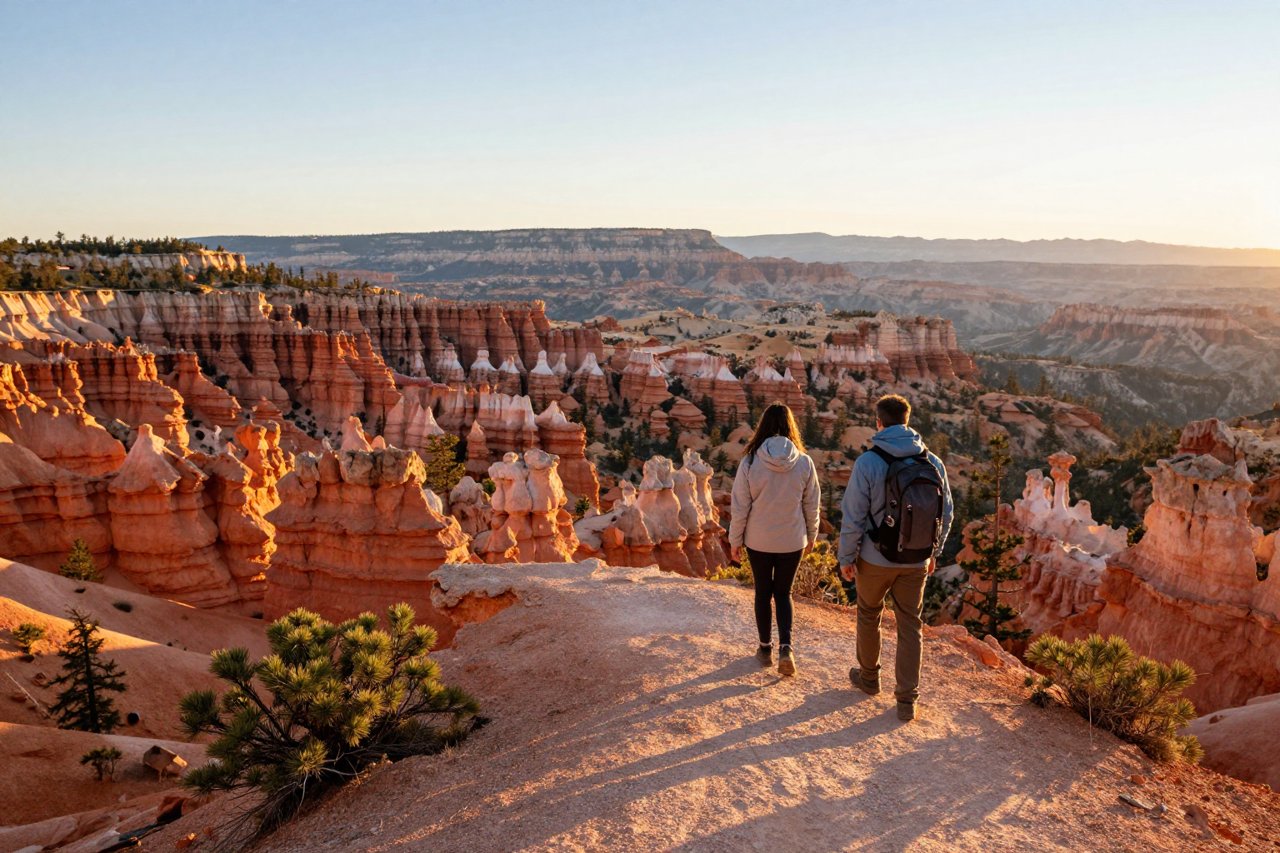
Bryce is small, high (8,000 to 9,100 feet), and built for half-day visits. The Navajo Loop and Queen’s Garden link into a three-mile figure-eight that drops you among the hoodoos and climbs back out in around two hours. The Rim Trail between Sunrise and Sunset points is flat, paved, and takes forty minutes.
Stay overnight if you can. Bryce is an International Dark Sky Park, and the summer ranger telescope programs are the rare park activity that beats the daytime version. Our guide to stargazing in Bryce Canyon covers the best viewpoints and what to pack.
Great Smoky Mountains, Tennessee and North Carolina
No entrance fee, which is unusual and part of why it’s the most-visited park in the country at more than 12 million people a year. You do need a $5 parking tag, and an early start if Cades Cove is on your list. The 11-mile one-way loop is bumper to bumper by 10am and nearly empty at 7am.
Kuwohi, renamed from Clingmans Dome in 2024, is the park’s high point at 6,643 feet. The half-mile path to the summit is paved and steep, and on a clear morning you can see four states. Skip Gatlinburg on a Saturday afternoon unless brake lights are your idea of scenery.
If you’re flying in from outside the U.S.
Two island parks make excellent first stops for international visitors. On Hawaii’s Big Island, Hawai’i Volcanoes has drive-up overlooks and a crater floor you can walk across. Haleakalā on Maui wants a sunrise reservation, and choosing the right island is half the planning battle.
Costa Rica works just as well as an entry point, with Manuel Antonio’s beaches, Arenal’s volcano and Tortuguero’s canals all reachable by organized transport. The problems there are mostly logistical, and the common Costa Rica travel mistakes for first-time visitors are avoidable with a little reading before you fly.
The reservations that trip people up
Fourteen days out is too late for most in-park lodging. Yosemite, Yellowstone and Grand Canyon cabins book six to twelve months ahead, and cancellations are the realistic backup plan: check recreation.gov midweek, in the morning, a few weeks before you travel.
Then come the timed-entry systems. Yosemite, Glacier, Arches and Rocky Mountain have all used them in recent summers, each with different hours and exemptions. Read the rules for your exact dates rather than a blog post from two summers ago, including this one.
Pack for cold mornings at altitude even in July. Bryce and the Grand Canyon can sit near 40°F at dawn and push 80°F by lunch. Carry two liters of water per person for any hike over an hour, and drop the itinerary that puts you in a different park every day. One park, three nights, one early start. That’s the trip people come home from still liking each other.


