
Table of Contents
A plate of roast chicken sits on the counter for roughly four seconds before a paw hooks over the edge. Usually the cat gets a stolen bite and you get a smug look. Every so often the thing they grab is one of the foods cats should never eat, and a quiet afternoon turns into an emergency vet visit.
Cats are fussier than dogs about what they’ll take, but their kitchen record isn’t much better. What follows is the practical version: the items that can kill within hours, the ones that cause slow or painful damage, and the ones people hand over every single day without thinking.
Why Human Food Hits Cats Harder Than It Hits Us
Cats are obligate carnivores with a narrower set of liver enzymes than ours. Compounds a human body clears without much trouble can accumulate to toxic levels in a cat, which is part of why paracetamol and certain plant compounds are so dangerous to them.
The maths makes it worse. A 4 kg cat is roughly one-eighteenth the weight of an average adult, so a scrap the size of a thumbnail lands like a person eating an entire onion. Small bodies also dehydrate faster, which means a day of vomiting or diarrhoea that would be a nuisance for you can put a cat on intravenous fluids.

The Foods That Can Kill
Onions, garlic, chives and leeks
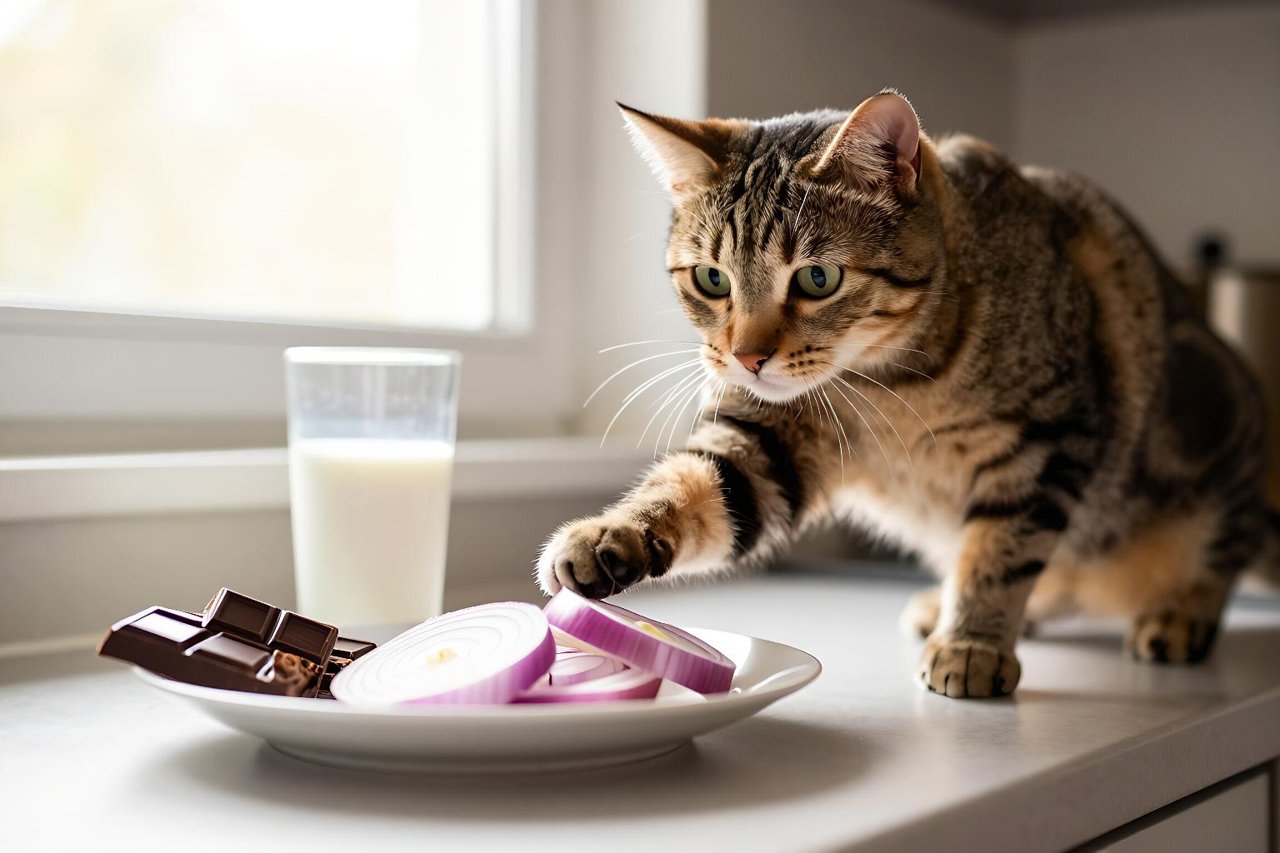
Every member of the allium family damages feline red blood cells, causing them to rupture in a condition called Heinz body anaemia. The toxic threshold sits around 5 g of onion per kilogram of body weight, so a single tablespoon of diced raw onion is enough to matter for an average cat. Garlic is roughly five times more potent gram for gram.
The nasty part is the delay. Symptoms often don’t appear for one to five days, and by then you may have forgotten the cat licked the gravy. Watch for pale gums, unusual tiredness and dark urine. Onion powder is the hidden culprit in stock cubes, some deli meats, baby food and shop-bought sauces.
Alcohol, raw dough and anything fermented
Cats process ethanol poorly. Small amounts bring on wobbliness and vomiting; larger amounts depress breathing and drop body temperature. Kombucha, rum-soaked cake and bowls of beer left on the floor all count.
Raw bread dough is worse than it sounds. Yeast keeps fermenting inside a warm stomach, so the dough expands and produces alcohol as it goes. A cat that eats a lump of proving dough can end up bloated and drunk at the same time, which is a genuinely hard combination to treat.
Chocolate and coffee
Theobromine and caffeine are both methylxanthines, and cats clear them slowly. Milk chocolate contains around 2 mg of theobromine per gram; dark chocolate can hold five times that. As little as 10 g of good dark chocolate can push a 4 kg cat into the range where vomiting, tremors and a racing heart appear. Cocoa powder is the most concentrated form of all.
Coffee grounds in the compost bin deserve their own warning. A lap of milky coffee is unlikely to do serious harm, but a mouthful of wet grounds is a different story.
Grapes and raisins
Grapes cause acute kidney injury in dogs, and while the feline data is thin, no vet will tell you the risk is worth taking. Raisins are worse by weight because they’re dried. Keep them off plates, out of trail mix and away from hot cross buns.
Foods That Cause Serious Harm Without Killing Outright
Milk, cheese and cream
The image of a cat with a saucer of milk is a cartoon, not a feeding guide. Most adult cats produce very little lactase, so the sugar in milk ferments in the gut and comes out the other end within about twelve hours. Repeated dairy treats lead to chronic loose stools that owners often blame on something else entirely.
If your cat has ongoing digestive trouble, the problem may be the food rather than the treats. It’s worth reading up on whether hypoallergenic cat food is the answer to your cat’s health woes before you start cutting out ingredients at random.
Raw fish and raw eggs
Several raw fish species, including carp, herring and anchovies, contain an enzyme called thiaminase that destroys vitamin B1. A raw-fish habit leads to thiamine deficiency, and the first signs are neurological: head tilt, circling, loss of balance. Raw eggs carry salmonella, and the white contains avidin, which binds biotin so tightly that the body can’t use it.
Cats also can’t manufacture their own taurine, and diets built on scraps or unbalanced raw mixes frequently fall short. Taurine deficiency in cats is linked to blindness and a specific type of heart disease, and it develops quietly over months rather than days.
Bones, fat trimmings and cooked scraps
Cooked chicken and rabbit bones splinter into shards that can perforate the gut. Fat trimmings are a slower threat: a few tablespoons of roast drippings can trigger pancreatitis, a painful inflammation that often means days in hospital and a bland diet for weeks afterwards. Chicken skin alone can add a hundred calories to a cat that needs about 250 in a day.
Xylitol and sugar-free products
Xylitol causes crashing blood sugar and liver failure in dogs. Cats aren’t known to be as sensitive, but it turns up in sugar-free gum, some peanut butters, dental chews and low-calorie yoghurts, and there’s no reason to test the theory on your cat.
What “Just a Little Bit” Adds Up To
These rarely cause an emergency. Fed regularly, they cause problems that take months to show up and are hard to trace back to the bowl.
- Tinned tuna. A treat now and then is fine. As a daily meal it delivers too much mercury, too little taurine and enough unsaturated fat to cause steatitis, a painful inflammation of body fat.
- Liver. A tablespoon of cooked liver a day for several weeks can push vitamin A to toxic levels, which causes bone pain and joint stiffness.
- Salty food. The toxic dose of sodium is roughly 2 to 4 g per kilogram, so a heaped teaspoon of salt is a real threat to a small cat. Crisps, bacon and soy sauce all stack up.
- Dog food. Dog kibble is short on taurine, arachidonic acid and preformed vitamin A. A cat living on it slowly develops deficiencies that may not show until the damage is done.
- Macadamia nuts and mouldy food. Nuts cause tremors and weakness; mouldy leftovers carry mycotoxins that attack the liver. The bin needs a lid that latches.
Counter Surfing Is Often Boredom, Not Hunger
A cat that launches itself onto the worktop every time you turn around usually isn’t starving. Indoor cats with limited stimulation get creative, and a kitchen counter is a great perch with interesting smells. Giving them somewhere better to be is more effective than shouting. If that sounds like your house, these ideas for keeping an indoor cat happy will do more for the counter problem than any deterrent spray.
Picky eating is a separate issue. If your cat nudges food onto the floor or refuses a bowl it happily used last week, the problem may not be the food at all. There’s a reason behind why cats scratch around their food, and it usually comes down to the bowl rather than the contents.
Building a Bowl That Doesn’t Need Your Dinner
The simplest way to keep cats out of human food is to make their own food better than yours. A complete cat diet has meat as the first ingredient, taurine added, and a guaranteed analysis that meets AAFCO standards for the cat’s life stage. Treats should make up less than 10% of daily calories, which is less than most people expect: for a typical cat that’s around 20 to 25 calories, or three or four small pieces of freeze-dried chicken.
If you’re rethinking the whole shelf, this step-by-step guide to the 7 best pet foods for 2026 walks through label reading, protein sources and portion sizes without the marketing noise.
If Your Cat Ate Something on This List
Don’t wait for symptoms. Note what was eaten, roughly how much, and what time it happened. Keep the packaging or a photo of the ingredient list, because the vet will want the exact composition.
Do not induce vomiting unless a vet tells you to. With sharp bones or caustic substances, bringing food back up does more damage on the way out. Call your vet or a pet poison helpline straight away, even at night, and mention the cat’s weight.
Signs that mean the car keys come out immediately:
- Pale, white or yellow-tinged gums
- Vomiting more than twice in an hour, or vomiting blood
- Tremors, wobbliness, or a head tilt
- Breathing faster than about 40 breaths a minute at rest
- Not passing urine for 12 hours or more
One last practical habit: keep a small notebook or a note on your phone with your vet’s number, the nearest 24-hour hospital and the pet poison line. The two minutes you save at 11pm are worth more than any of the advice above.


