
Table of Contents
The tea shelf in my local supermarket has quietly tripled in five years. What used to be four bays of black tea and one lonely row of peppermint now takes up half an aisle, and plenty of those boxes cost more than a decent bottle of wine. Herbal teas and natural beverages have moved from health-food shops into the mainstream, largely because people want something to drink that isn’t cola or a fourth coffee.
A crowded shelf isn’t the same as a good shelf, though. A lot of what’s sold as a “wellness blend” is flavouring, dust and marketing. The genuinely useful skill is knowing which plants do something measurable, which ones simply taste good, and how to brew them without turning the cup into bitter soup.
What Actually Counts as an Herbal Tea
An herbal tea, properly called a tisane or infusion, is any drink made by steeping plant material that isn’t Camellia sinensis: leaves, flowers, roots, seeds, bark or dried fruit. No true tea leaves means no caffeine, with the exception of a few caffeinated plant infusions like yerba mate and guayusa, which sit on the same shelf and behave more like coffee.
That distinction matters when you’re pouring a third cup at nine in the evening. Chamomile at 9pm and English breakfast at 9pm are not the same event, however similar they look in a mug.

The Herbs Worth Keeping in the Cupboard
You don’t need twelve boxes. Five or six good ones cover almost every mood and ailment you’re likely to meet.
Chamomile
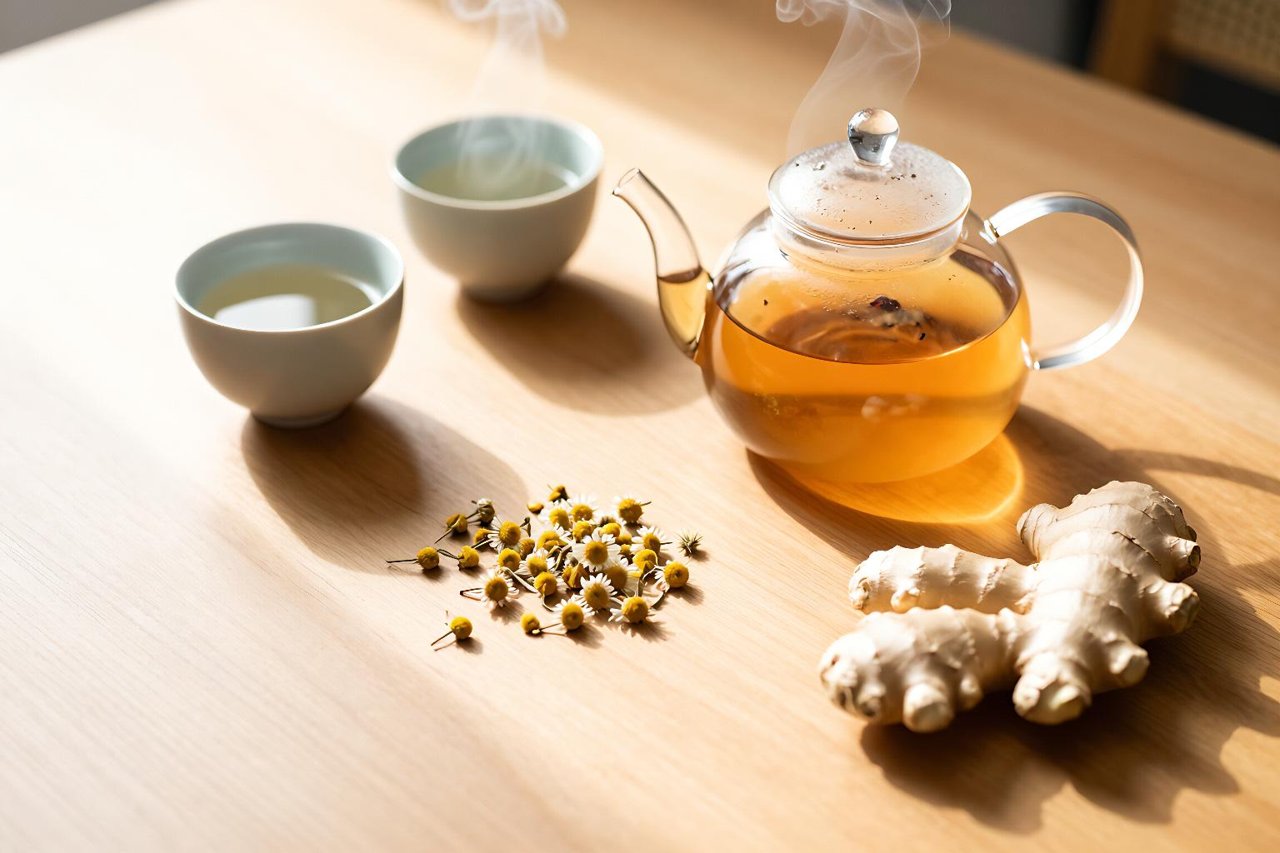
The most studied of the calming herbs, thanks largely to apigenin, a flavonoid that binds to benzodiazepine receptors in the brain. Clinical trials show modest improvements in sleep quality. Modest is the right word. It isn’t a sedative, it’s a signal that the day is over. Use two heaped teaspoons of dried flowers per mug, water just off the boil, and a saucer on top for seven minutes. The lid keeps the volatile oils from escaping into the kitchen.
Peppermint
Menthol relaxes the smooth muscle of the gut, and peppermint oil capsules are used clinically for irritable bowel syndrome. A cup is far milder, but it genuinely helps after a heavy meal. One caution: peppermint can loosen the valve at the top of the stomach, so if you get reflux it may make heartburn worse rather than better. Steep for five minutes, no longer, or the tannins turn it harsh.
If bloating is a regular evening visitor rather than an occasional ache, the tea is only half the answer. It’s worth looking at what’s on the plate too, starting with this guide to foods that cause bloating in women and the simple fixes that go with them.
Ginger
Fresh root beats powder by a wide margin. Gingerols and shogaols are the compounds behind that slow, warming burn, and they’re among the better-evidenced remedies for nausea, whether from travel sickness, pregnancy or a questionable takeaway. Slice three or four coins of fresh root and simmer them in water for ten minutes rather than steeping. Heat pulls out compounds that a quick infusion leaves behind. Lemon and a spoon of honey help, though the honey is optional.
Ginger also earns its place in the kitchen for reasons beyond the teapot. It’s one of the better-studied anti-inflammatory foods, which is why it turns up so often in plans built around reducing inflammation naturally.
Hibiscus
Tart, deep ruby, somewhere between cranberry and rhubarb. Trials show a modest drop in blood pressure, around 7 mmHg systolic in some meta-analyses, which is respectable for a flower. It’s also a mild diuretic and does interact with blood pressure medication, so don’t drink it by the litre if you’re on pills for hypertension. Boiling water, ten minutes, and it’s excellent poured over ice with a slice of orange.
Rooibos
Caffeine-free, low in tannins, naturally sweet without sugar. This is the one to hand to people who find green tea astringent or bitter. Ninety-five degrees, five to seven minutes, and it takes milk better than any other herbal infusion.
Brewing: Where Most Cups Go Wrong
Most disappointing herbal tea is disappointing because of technique, not the plant. Four things matter:
- Quantity: one heaped teaspoon of dried leaf or flower per 200ml of water. Loose leaf is usually fresher and better value, but bags work if you use two.
- Temperature: 95 to 100°C for roots, bark and seeds; 80 to 85°C for delicate flowers and leafy blends. Boiling water poured straight onto chamomile scalds the aromatic oils and leaves you with something that smells faintly of hay.
- Time: five to ten minutes for leaves and flowers. Roots and seeds need a decoction instead, simmered gently in a pan for 10 to 15 minutes.
- Cover the cup: a saucer or a lidded infuser keeps the aromatics where you want them.
Store dried herbs in a sealed tin away from the stove. Most lose their punch around the 18-month mark, and a forgotten two-year-old box of supermarket chamomile tastes of almost nothing at all.
Beyond the Teacup: Other Natural Beverages
Kombucha and water kefir
Fermented, lightly fizzy, alive with cultures. Good ones are dry, tart and complex. Bad ones are essentially soda wearing a health claim. Read the label: a 330ml bottle can carry 12 to 15g of sugar, and drinking three of those a day adds up fast. If sweet drinks are a big part of your routine, it’s worth understanding where liquid calories fit into losing weight and keeping it off.
Infused water and cold brews
Cucumber and mint, lemon and basil, a handful of raspberries crushed at the bottom of a jug. Twenty minutes gives you a hint of flavour, two hours in the fridge gives you a proper drink. Cold-brewing herbal tea overnight works on the same principle and produces a rounder, less bitter cup than hot brewing and chilling. On hot days this pairs well with the best hydrating foods for summer, which do more for your fluid levels than most people expect.
Coffee alternatives
Roasted chicory and dandelion root brew into something dark, nutty and bitter, with no caffeine and enough body to take milk. It is not coffee in any honest sense, but it makes a decent evening drink and a reasonable excuse to sit down. Ginger tea also earns its keep the morning after a long night, alongside these best foods for a hangover.
When to Slow Down
Herbal doesn’t mean harmless. Plants are full of active compounds, and a strong daily infusion is a dose, not a flavour.
Licorice root is the classic example. Glycyrrhizin raises blood pressure and depletes potassium, and there are documented cases of people landing in hospital after drinking several cups a day for weeks. Occasional is fine; habitual is not, particularly if you already have hypertension. St John’s wort is a bigger concern still, because it induces liver enzymes and reduces the effectiveness of oral contraceptives, warfarin and some antidepressants. Nettle and dandelion are diuretics, which is unhelpful if you’re already on diuretic medication.
Two smaller points that rarely get mentioned. Strong tannin-rich infusions, black tea included, reduce iron absorption if drunk with meals, so keep them between meals if you’re anaemic. And during pregnancy, keep to mild options like chamomile and ginger in normal amounts, while avoiding concentrated licorice, sage and any herbal blend whose ingredients you can’t identify. Children under twelve are generally better off with water, milk and the occasional weak chamomile.
Building a Shelf That Works
Start with four: chamomile, peppermint, ginger and hibiscus. Buy them in small quantities from a shop with decent turnover, and favour whole flowers and leaf over fine dust, which goes stale faster and brews muddy. Taste each one plain before you decide it needs honey.
The most useful habit is comparison. Buy two chamomiles from different shops, brew them side by side with the same water and the same timing, and taste. The difference between a fresh, well-stored flower and an old one is bigger than the difference between most brands, and once you’ve tasted it you’ll never go back to the box that’s been in the cupboard since 2021.


