
Table of Contents
Type “anti-inflammatory diet” into a search bar and you’ll land in a swamp. One site tells you to drink celery juice at dawn. Another insists you need fasting, a $400 supplement stack, or a private blood panel. Meanwhile your doctor mentions inflammation like everyone already agreed on what it means.
So let’s slow down and start from zero. No dogma, no miracle claims. Just what the term actually refers to, why food has anything to do with it, and how a normal person with a normal kitchen can start moving in the right direction this week.
What inflammation actually is
Inflammation is your immune system’s fire alarm. When you sprain an ankle or catch a cold, immune cells rush in, blood flow increases, and you get swelling, heat, and soreness. That’s acute inflammation, and it’s a good thing. It lasts days, does its job, and switches off.
The trouble starts when the alarm never fully turns off. Chronic low-grade inflammation is quieter. There’s no swollen joint to point at, just a body running slightly hot for months or years. Researchers link it to joint pain, stubborn fatigue, insulin resistance, heart disease, and flare-ups of autoimmune conditions.

You can’t feel it directly, but blood markers like C-reactive protein (CRP) and interleukin-6 give a rough reading. Certain medications target it. So does sleep, stress, movement, and, yes, what you eat. Diet is simply the lever you pull three times a day, which makes it one of the most practical places to start.
The label covers several diets, not one
Here’s something beginners rarely hear: there is no single “anti-inflammatory diet.” It’s an umbrella term for eating patterns that tend to lower inflammatory markers. The three with the most research behind them are the Mediterranean pattern, DASH, and lower-glycemic ways of eating. They disagree on details, but they overlap enormously: vegetables, fish, olive oil, beans, nuts, and less refined junk.
If you’re not sure which of those frameworks fits your body and habits, it’s worth comparing them rather than guessing. There’s a solid breakdown of the differences between the Mediterranean, DASH, and low-GI approaches that saves you the research rabbit hole.
The foods that do most of the work
You don’t need exotic ingredients. Most of the heavy lifting comes from a short, boring list.
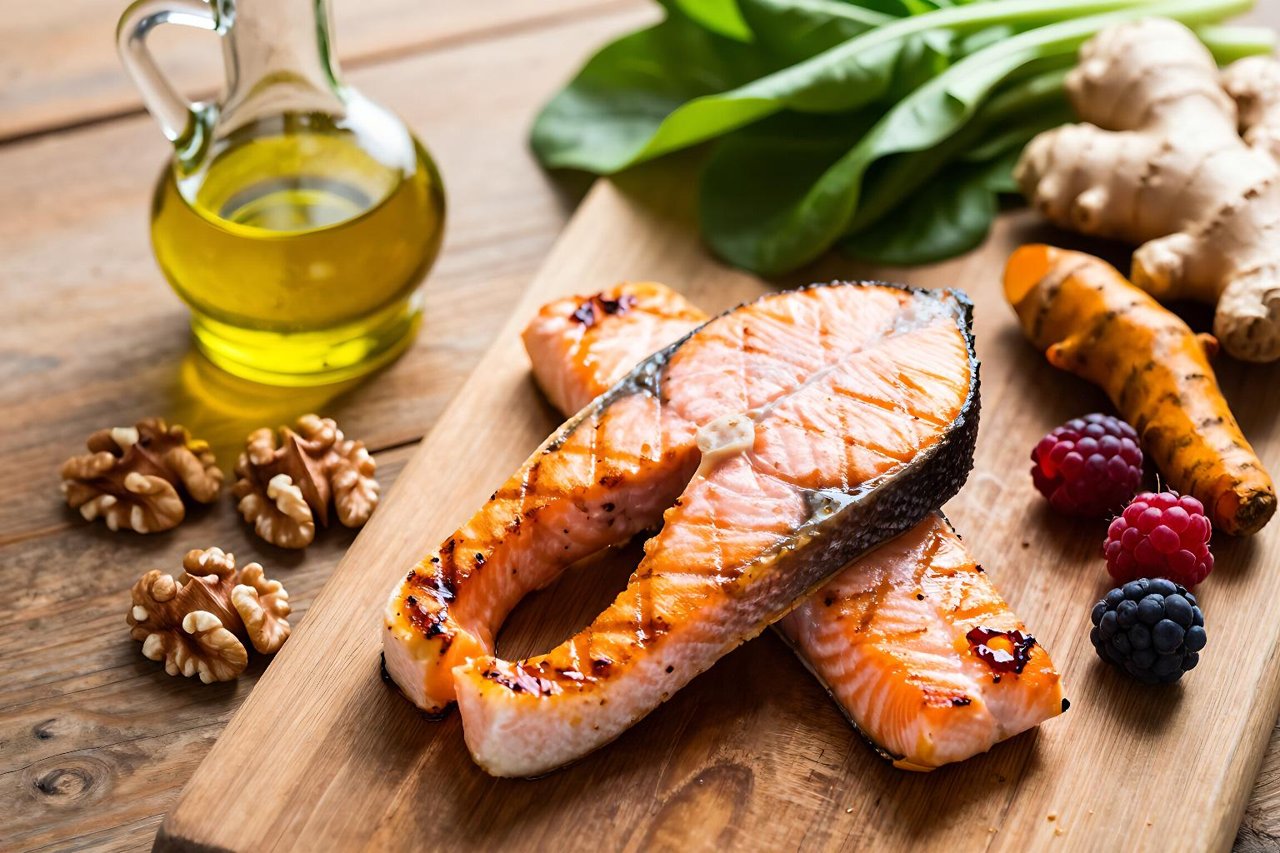
- Fatty fish such as salmon, sardines, mackerel, and herring, which supply omega-3s. Two servings a week is a common target.
- Extra virgin olive oil, especially as your default cooking and finishing fat.
- Leafy greens and cruciferous vegetables: spinach, kale, rocket, broccoli, cabbage, cauliflower.
- Deeply coloured fruit, with berries, cherries, and pomegranate leading the pack.
- Nuts and seeds: walnuts, almonds, flaxseed, chia, pumpkin seeds.
- Legumes and whole grains: lentils, chickpeas, black beans, oats, barley, brown rice.
- Herbs and spices: turmeric with a pinch of black pepper, ginger, garlic, rosemary, oregano.
- Green tea and coffee in reasonable amounts.
Why the combination beats any single superstar
People love the idea of one magic food. A turmeric capsule. A shot of tart cherry juice. The reality is that these compounds work as a team. Omega-3s, polyphenols, and fibre from plants feed gut bacteria that produce anti-inflammatory short-chain fatty acids. Olive oil helps you absorb fat-soluble nutrients from the vegetables sitting next to it. Pull one piece out and the effect shrinks.
If you want a fuller walkthrough of why each category earns its place, this guide on what to eat and what to skip on an anti-inflammatory diet goes deeper into the mechanisms.
What to dial down, not necessarily delete
Beginners often assume this diet is all about adding kale. Cutting back matters too, though few foods deserve outright bans.
- Sugary drinks and sweets, which spike blood sugar and inflammatory signalling.
- Refined white flour products: white bread, pastries, most crackers.
- Processed meats like salami, hot dogs, and bacon.
- Deep-fried and heavily processed snacks made with refined seed oils.
- Alcohol beyond a drink or two, particularly if you drink most days.
- Trans fats, still hiding in some packaged baked goods.
One slice of birthday cake won’t undo a month of decent eating. The pattern across weeks is what shows up in your bloodwork, not any single meal.
It’s a pattern, not a menu
This is where most beginner guides get vague, so here’s something concrete. A Tuesday dinner might be a fillet of salmon roasted with broccoli, red onion, and lemon, finished with a glug of olive oil and a scattering of parsley. Breakfast could be plain Greek yoghurt with frozen berries, walnuts, and cinnamon. Lunch: lentil soup with a handful of spinach stirred in at the end.
Now compare that to a bowl of “honey oat clusters” and a glass of orange juice, which looks wholesome on the box but delivers very little fibre and a fast hit of sugar. Same calories, different inflammatory signal. The gap between those two days is basically the whole diet.
How to start without overhauling your life
Pick three meals you already cook and upgrade them. Swap white rice for brown. Add a bag of frozen spinach to the pasta sauce. Replace one lunchtime sandwich with tinned sardines on toast. That’s it for week one.
If you’d rather follow a structured sequence, there’s a step-by-step anti-inflammatory reset plan built around real meals that takes the guesswork out of the first fortnight.
Mistakes that trip up nearly every beginner
Three come up again and again. Going too strict too fast, which lasts about nine days. Relying on supplements instead of food, which rarely delivers the same effect. And ignoring sleep and stress, both of which push inflammatory markers up on their own, no matter how much salmon you eat.
There’s a longer list of these pitfalls, including a few that are genuinely hard to spot, in this piece on common anti-inflammatory diet mistakes that sabotage progress.
What changes, and when
Expect digestion and energy to shift first, often within two to four weeks. Joint stiffness and skin tend to follow around the six to twelve week mark. Bloodwork like CRP usually moves slower, which is why testing every three months makes more sense than weekly. Keep a few lines of notes: how you sleep, how your knees feel on stairs, whether the afternoon slump still hits. Those subjective markers are more useful than a scale.
Make it fit your actual life
The best version of this way of eating is the one you’ll still be doing in a year. That means building it around food you genuinely like, a budget you can sustain, and shops you already visit. Batch-cooking a pot of bean stew on Sunday does more for you than a fridge full of ingredients you never get around to using.
Working out the structure, portion sizes, and weekly rhythm is easier than it sounds, and there’s a practical guide to building your own meal plan around these principles if you want the scaffolding.
Start with a single dinner this week. One fish dish, one extra vegetable, one swap away from refined grains. Do that consistently for a month and you’ll have learned more about your own body than any article, including this one, can tell you.


