
Table of Contents
You know protein is important. You’ve heard the advice, read the labels, maybe even bought that big tub of powder. But when you sit down to plan an actual day of eating, it’s easy to get stuck. How much do you really need? Which foods are the best bang for your buck? And how do you fit all those meals together without turning every lunch into a bland bowl of chicken and broccoli?
This guide walks through a practical, step-by-step method for eating more protein-rich foods—without overhauling your entire life. Use the steps in order, follow the examples, and adjust the numbers to your own body. By the end, you’ll have a clear picture of what a high-protein day looks like, along with the tools to build your own.
Step 1: Work out a realistic daily target
Before you start adding protein-rich foods, you need a number. The best place to start is your body weight. A common research-backed recommendation is 1.6 to 2.2 grams of protein per kilogram of body weight per day for active people. That sounds complicated, but you can simplify it.
Take your weight in pounds and multiply by 0.07 to get a low-end target, or 0.1 for a high-end target. For example, a 150-pound woman might aim for 105 to 150 grams. A 200-pound man might aim for 140 to 200 grams.

If you prefer to skip the math and get a deeper overview of how protein fits into your overall diet, check out the smart eater’s guide to daily nutrition. It breaks down the broader picture so you can see where protein sits next to fats and carbs.
Once you have a target, split it across three or four meals. A 150-gram daily goal becomes roughly 40 grams per meal if you eat four times, or 50 grams per meal if you eat three times. This makes it easier to measure, prepare, and hit consistently.
Step 2: Pick your “anchor” protein-rich foods
You don’t need to memorize every food’s protein content. Instead, choose a handful of “anchor” foods you can always count on. These are easy to buy, quick to cook, and have a well-known amount of protein per serving.
- Chicken breast: about 31 grams per 100 grams cooked
- Greek yogurt (plain, non-fat): about 17 grams per 170-gram container
- Cottage cheese: about 23 grams per cup
- Eggs: 6 grams per large egg
- Canned tuna: about 25 grams per 100 grams drained
- Lean beef: about 26 grams per 100 grams cooked
- Tofu: about 15 grams per half cup
- Lentils: about 18 grams per cooked cup
You’ll notice that most of these are whole, minimally processed foods. That’s intentional. They deliver protein alongside other useful nutrients, and they’re versatile enough to fit into dozens of meals.
If you’re aiming mostly to build muscle, the best high protein foods for muscle gain list goes into more detail about which choices support training and recovery.
Step 3: Build each meal around a protein source
Here’s where the plan becomes habit. For every meal, put your protein anchor at the center of the plate first. Then add vegetables or fruit, a source of carbohydrates if it fits your goals, and a little fat to make it taste good.
This works regardless of your exact diet. You’re just prioritizing the anchor. Let’s look at three concrete examples:
Breakfast: Greek yogurt power bowl
Take a 170-gram container of plain Greek yogurt (17 g protein). Add a handful of blueberries, a sliced banana, and a sprinkle of granola. That’s roughly 20 to 25 grams of protein, with enough carbs and fat to keep you full for hours. If you want extra protein, stir in a scoop of vanilla protein powder—that adds another 20 grams.
Lunch: Chicken and grain bowl
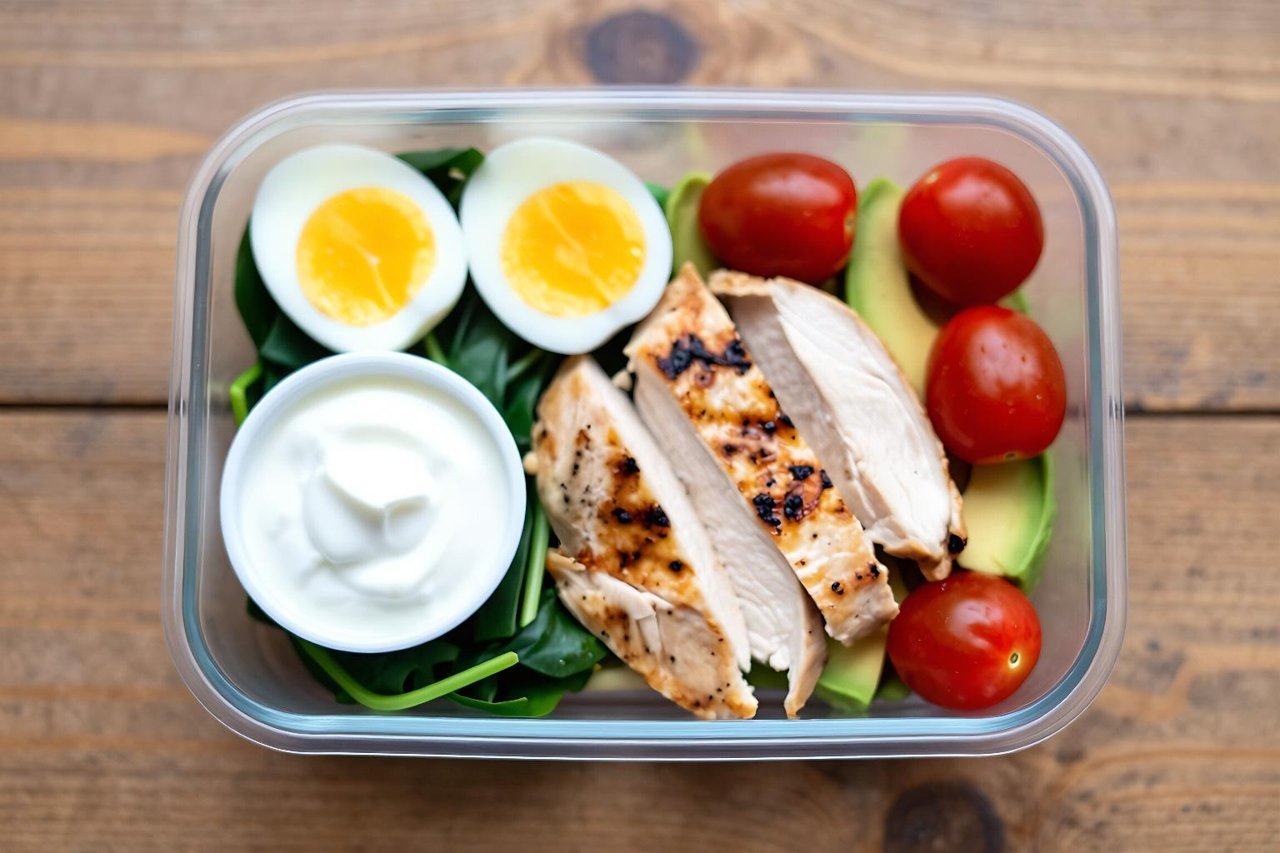
Roast or grill a batch of chicken thighs or breasts at the start of the week. For lunch, put 150 grams of cooked chicken on a bed of quinoa or brown rice, add cherry tomatoes, cucumber, and a drizzle of olive oil. The chicken alone gives you about 45 grams of protein. Add a boiled egg on the side if you want to push it higher.
Dinner: Tuna and cottage cheese salad
Mix one can of drained tuna (25 g) with half a cup of cottage cheese (12 g) and a squeeze of lemon. Serve over a large green salad with an extra handful of almonds. Dinner lands around 40 to 45 grams of protein without much effort.
If you’re also keeping an eye on carbohydrate intake, the low carb foods list can help you choose lower-carb sides that still keep your protein the star of the meal.
Step 4: Use quick combinations for busy days
Even with a plan, some days just get away from you. That’s why it helps to have a few no-cook combinations you can assemble in under five minutes. They look like this:
- Canned salmon + cottage cheese + spinach
- Hard-boiled eggs + baby carrots + hummus
- Rotisserie chicken + microwave rice + steamed broccoli
- Peanut butter + Greek yogurt + apple slices
- Frozen shrimp + pre-washed salad + olive oil
Notice how each combo uses at least one protein-rich food you don’t have to cook. That’s the secret to consistency. When you’re tired, you’ll default to whatever is easiest. Make the easy choice a high-protein one.
Step 5: Make simple swaps that add protein without extra effort
You don’t need to create a brand-new menu to hit your target. Small substitutions can add 15 to 30 grams of protein to your day. Try these concrete swaps:
Swap regular milk for milk plus a scoop of powder
That turns a glass of milk from 8 grams of protein to 28 grams. You barely taste it in coffee or cereal.
Swap your morning toast for a couple of fried eggs
Two eggs give you 12 grams, more than double what a slice of bread provides. Serve them over sliced avocado and you’ve also got healthy fats.
Swap pasta noodles for chickpea or lentil pasta
This swaps out about 7 grams of protein per serving for 13 or 14 grams. The texture is close enough that most people won’t notice the difference in a warm dish.
If your goal is to lose weight while keeping protein high, the best protein foods for weight loss guide covers a few more examples of high-satiety foods that make this easier.
Step 6: Track for two or three days, not forever
Do you need to count every gram for the rest of your life? No. But tracking for the first few days helps you calibrate. Use a simple app or just write down what you eat. After three days, you’ll see roughly how much protein you usually get. Then you can adjust one or two meals instead of guessing.
For instance, if your typical breakfast only gives you 15 grams, you know you need to add one hard-boiled egg or swap your cereal for Greek yogurt. It’s that specific.
As you practice this, you’ll develop an instinct for what a 30-gram meal looks like. That instinct is worth more than any perfect diet plan. When you can look at any meal and quickly estimate its protein content, you’ll be able to hit your target in restaurants, at parties, or while traveling.
The real trick is to stop treating protein-rich foods as a special category and start seeing them as the default base of every meal. Plan your target, choose a few anchors, build each plate around them, and keep a few quick combos ready for the chaotic moments. That’s the whole process. Whether you’re building muscle, losing weight, or just trying to feel full and steady during the day, the steps stay the same.


