
Table of Contents
Six-year-old Maya spends her Saturday morning learning how to fall. Not trip-and-cry falling, but the controlled, chin-tucked, slap-the-mat breakfall that judo coaches teach before anyone is allowed to throw anybody. Her coach counts to ten. She does it eleven times. By the end she is grinning, and her mother is quietly stunned that forty minutes of “learning to fall” produced more focus than a week of homework.
That is the odd appeal of martial arts for kids. They look like fighting from the outside. From the inside, most of the class is about posture, breathing, and paying close attention to another human being.
Why martial arts fit children better than most team sports
Start with the maths. A typical under-8s soccer game gives each child two or three minutes of actual ball contact. A 45-minute karate class gives a kid 45 minutes of reps. That density of practice is hard to replicate anywhere else, and it is one reason kids who play several sports and spend time outdoors develop stronger motor skills than children funnelled into a single activity too early.
There is also the grading structure. Belts are earned one child at a time. A shy kid who would never be picked first for a team can be the one who has trained longest and knows the kata cold. That kind of confidence is built rather than awarded, and kids can tell the difference.

The best martial arts for kids, style by style
Karate: the reliable all-rounder
Most traditional karate schools (Shotokan, Goju-Ryu, Wado-Ryu) run classes of 45 to 60 minutes from about age five. Expect striking drills into pads and air, kata, partner work, and light sparring once a child reaches a decent grade, usually around eight or nine with headgear on. Kids who like clear goals and visible progress tend to thrive. The belt chart on the wall does a lot of motivational heavy lifting.
Taekwondo: speed, kicks, and a lot of energy burned
Roughly 70 per cent of taekwondo is kicking, which suits children who need to move. Flexibility work starts early and honestly pays off for a decade. The catch is that taekwondo has a large franchise presence, and quality swings wildly between a genuine dojang and a belt factory that charges $60 for a grading every eight weeks. Watch a class before you judge.
Judo: probably the best value in martial arts
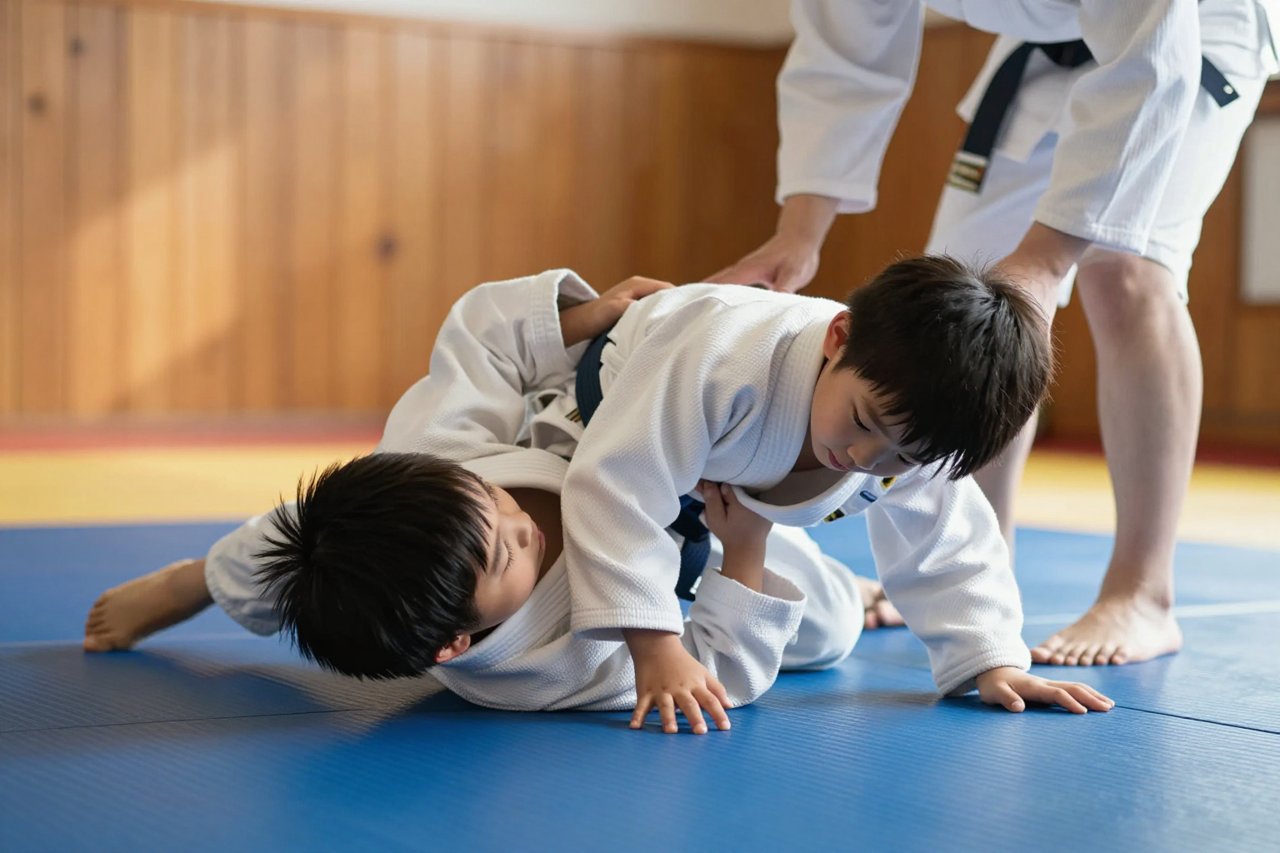
Judo is an Olympic sport built on throws, pins and grips, and it teaches something almost no other art does: how to hit the ground safely. Kids learn to be thrown and to throw, with control, from the first term. Community club sessions often cost a fraction of commercial dojos, sometimes under $10 a session. Minimum age is usually six or seven because the breakfalls require a bit of coordination.
Brazilian Jiu-Jitsu: chess with limbs
BJJ is ground grappling, and the good kids’ programmes lean hard into problem solving. There is less shouting and more figuring out. It rewards smaller, thoughtful children who might lose a striking exchange but can win with leverage and patience. It is also the most expensive option on this list, with city gyms charging $120 to $200 a month for two classes a week.
Muay Thai and boxing: honest striking
Kids’ programmes in both arts are growing fast. Ask directly about head contact before signing: good gyms limit children to light technical sparring with full gear, and plenty do no head contact at all under ten. These are excellent for fitness and for kids carrying extra weight, and there is little ceremony, which some children love and others miss.
Wrestling: cheapest and toughest
School and club wrestling is often free or close to it, and the training is relentlessly physical. Seasons are short, ten to twelve weeks, which makes it easy to try. Fantastic for athletic kids who enjoy a grind, and a natural feeder into BJJ later.
Kung fu and aikido: watch before you commit
Both vary enormously by school. A strong aikido dojo is calm, precise and technical. A weak one is babysitting with costumes. Same story with kung fu. The style tells you very little. The instructor tells you everything.
What age should a child start?
Four- and five-year-olds need 30-minute sessions built around games, not technique. Between six and eight, real skill work begins and children can follow multi-step instructions. Nine to twelve is the sweet spot: coordination has caught up, and kids can handle sparring, complex technique and a bit of critique without falling apart. Teenagers can walk into any style, and by then adding basic strength work is worth it, with kettlebell training being one of the more efficient ways to build that at home.
How to pick a school, not just a style
A well-taught average style beats a poorly taught fashionable one every time. The same logic that applies to picking any sport your child will stick with applies here: the coach and the group matter more than the label on the door.
- Watch a full class, not a demonstration. Sit at the back and count how many minutes each child gets attention.
- Check ratios. More than fifteen kids to one instructor for beginners means your child is largely teaching themselves.
- Ask about sparring policy: at what grade, what protective gear, is head contact involved?
- Find out who actually teaches the beginners. It is often a teenage assistant rather than the head coach on the website.
- Look at the older students. If nobody there has trained for three years, families are leaving for a reason.
- Get the contract in writing. Month-to-month cancellable memberships exist; long lock-ins with grading fees attached do too.
The unglamorous realities
There is laundry. A gi or rash guard needs washing after every session and will be forgotten at least once a week. Minor injuries happen: jammed fingers, sprained ankles, the occasional broken toe from a misplaced kick. Nothing you would not see in netball or rugby, but it is worth knowing before your child comes home limping.
Costs add up quietly. A $150 monthly fee over eight years is roughly $14,400, before gradings, gear and competition entries, which is the sort of figure that forces a proper family budget conversation and connects to the wider financial trade-offs of raising children. Most schools offer two or three free trial classes. Use all of them.
The first class tells you more than any brochure
Book a trial and then do nothing except watch. Does your child get a name, a partner and a job within the first ten minutes? Does the instructor correct quietly or shout? Are the other kids welcoming, or is there an obvious pecking order that new arrivals get absorbed into? Does your child want to go back next week, unprompted?
That last question is the honest one. Children rarely articulate why a dojo feels right, but they vote with their feet, and a martial art they keep turning up to for five years will teach them far more than the more famous style they quit in February. If you find yourself tempted to join in rather than just watch, the entry points for adult beginners look quite different, and there is no rule saying only one person in the family gets a belt.


