
Table of Contents
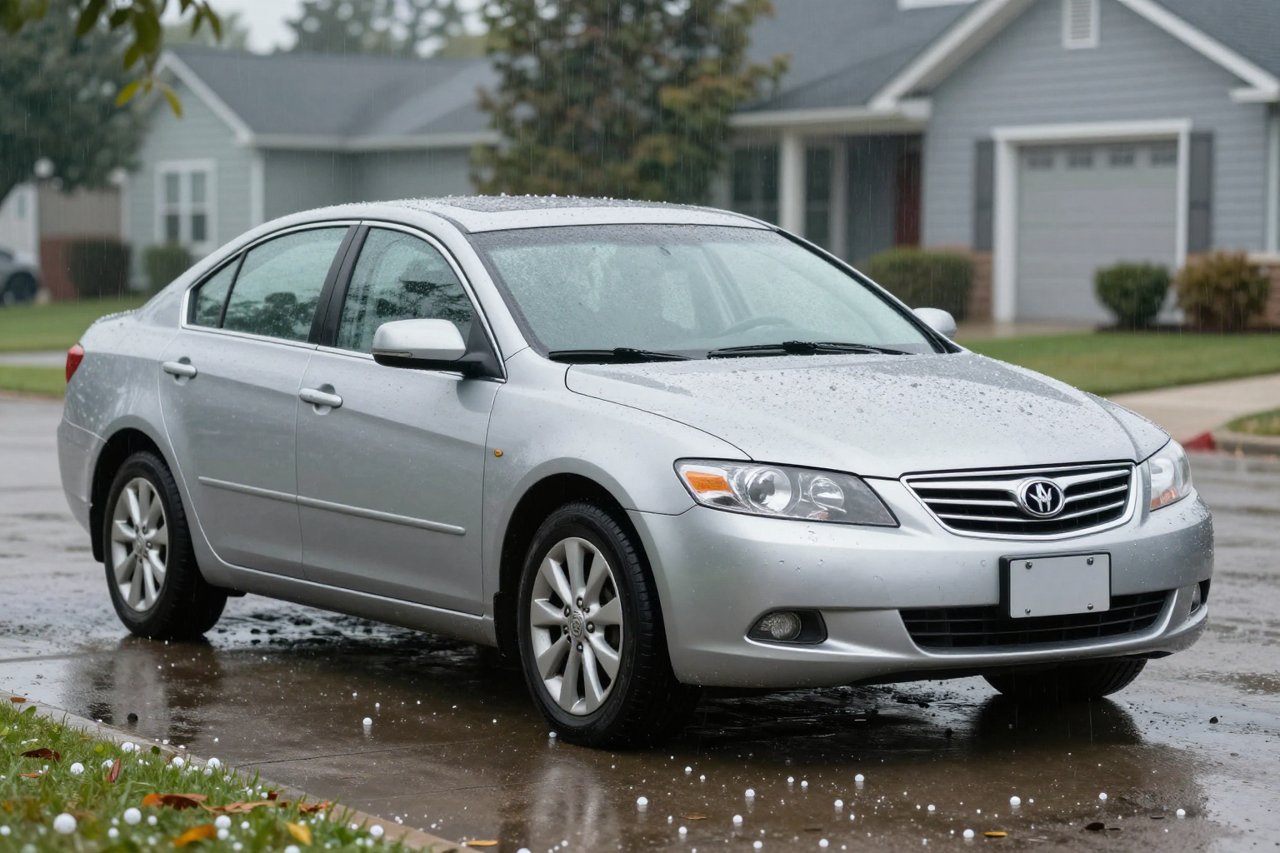
A hailstorm can turn a parking lot into a demolition derby for sheet metal. A deer can appear out of a ditch at dusk. A thief can cut a catalytic converter out of a Prius in under two minutes. None of those events involve another vehicle, which is why a standard liability policy won’t help and a collision claim may not either. Comprehensive auto insurance is the part of your policy that handles the non-crash damage.
What Comprehensive Auto Insurance Actually Covers
Comprehensive coverage pays to repair or replace your car after a list of named events: theft, fire, vandalism, hail, flood, wind, falling trees, riots, and animal strikes. Many policies also cover broken glass, and some waive the glass deductible entirely. If a deer jumps into your driver’s door, that’s usually a comprehensive claim, not collision. If you swerve and hit a guardrail, that’s collision.
The name is misleading. Comprehensive auto insurance is not a catch-all. It is the part of your policy that handles damage to your vehicle that does not involve a crash with another vehicle or object. Insurance filings often call it ‘other than collision’ coverage, which is a clearer label.
The deer test, hail, and theft
Three claims show where the line falls. A $4,200 repair after a deer strike goes under comprehensive. A $7,000 hail claim that dimples the hood, roof, and trunk goes under comprehensive. A stolen car recovered with $2,500 in window and ignition damage also goes under comprehensive. None of those claims involve another driver, and none are paid by liability coverage.

The difference between comprehensive and collision coverage matters because the two coverages carry separate deductibles and separate prices. A policy might have a $500 comprehensive deductible and a $1,000 collision deductible. Read the declarations page carefully before you assume one deductible applies to everything.
How Comprehensive Fits With Liability, Collision, and Full Coverage
An auto policy is a stack of coverages, not a single product. Liability pays other people when you cause injury or property damage. Collision pays your car after a crash with another vehicle or object. Comprehensive pays your car after theft, weather, fire, vandalism, or an animal. Uninsured motorist coverage and medical payments sit on top of that stack.
- Liability: pays the other driver’s repairs and medical bills, up to your limits. State minimums are often low; minimum liability car insurance explains what your state requires and what it won’t pay for.
- Collision: pays your car after a crash, whether you hit a car, a pole, or a tree.
- Comprehensive: pays your car after theft, hail, fire, vandalism, flood, or an animal strike.
- Add-ons: rental reimbursement, roadside assistance, gap insurance, and original equipment coverage.
Full coverage is a sales term, not a policy type. It usually means liability plus collision plus comprehensive, and sometimes uninsured motorist coverage. This explanation of full coverage car insurance breaks down what’s included and what’s not. A ‘full coverage’ policy with a $2,000 deductible can still leave you writing a large check after a claim.
What Comprehensive Auto Insurance Won’t Pay For
Comprehensive is not a maintenance plan. It won’t pay for a worn clutch, a failing alternator, or an oil change. Mechanical breakdown is excluded. It won’t pay for injuries you cause to someone else, and it won’t pay for damage to another person’s car. A crash with a tree while you are driving is collision, not comprehensive. Custom wheels, lift kits, and stereo gear often need to be listed separately or covered under an endorsement.
Personal items are another gap. If your car is stolen with a laptop on the seat, the auto policy may cover the car but not the laptop. Homeowners or renters insurance usually handles personal property, subject to its own deductible. Check both policies before you assume you’re covered.
Deductibles and the Math of a Small Claim
Every comprehensive claim starts with your deductible. A $500 deductible means the first $500 of the repair is yours. Raising it to $1,000 might cut your premium by $60 to $100 a year. Run the numbers: if you save $80 annually, it takes more than six years to recoup the extra $500 you would pay on a claim. If you file a $1,200 hail claim, the higher deductible costs you $500 more at the repair shop, but you also paid less premium for years.
Glass claims are different. Many insurers repair chips for free or waive the deductible because a $75 chip repair is cheaper than a $600 windshield replacement. Ask whether your policy has a separate glass deductible. Some states require insurers to offer glass coverage with no deductible, and some policies include it automatically.
A comprehensive claim usually does not count as at-fault, but a pattern of claims can still affect your renewal. Filing three small claims in two years may cost more in premium than paying for the repairs yourself. Save the insurance for the $3,000 problem, not the $300 one.
When Comprehensive Coverage Is Worth It
Lenders and leasing companies usually require comprehensive and collision until the loan is paid off. Beyond that, the decision comes down to the car’s value and your risk. A new car in a hail-prone city is an easy yes. A 12-year-old sedan with a $1,000 deductible is a closer call.
- Keep it: the car is leased or financed, worth more than $5,000, parked in a high-theft area, or driven where deer and hail are common.
- Consider dropping it: the car is worth less than $3,000, the deductible is $1,000, and the annual premium is $250 or more. The most you can collect is the car’s value minus the deductible, and you are paying for that protection every year.
- Raise the deductible: if you can absorb a $1,000 loss, a higher deductible can lower the premium without dropping coverage entirely.
A 2012 Corolla worth $4,000 with a $1,000 deductible and a $220 annual premium gives you $3,000 of maximum benefit. If a $3,000 loss would wreck your month, keep the coverage. If you have an emergency fund and the car is a spare, dropping comprehensive may make sense. These tactics for cheap car insurance can help you lower the bill without gutting your coverage.
The 10% rule and other shortcuts
A common rule of thumb says drop comprehensive and collision when the annual premium for both exceeds 10% of the car’s value. It is crude but useful. A $2,500 car with a $400 combined premium hits that threshold. A $20,000 car with a $700 premium does not. Use the rule as a prompt to review your policy, not as a hard law.
How to Shop for Comprehensive Coverage Without Overpaying
Quotes are only comparable if the coverages match. Ask for the comprehensive line item, the deductible, and the glass terms. A cheap quote with a $2,000 deductible and no rental reimbursement is not cheap if you have a $1,500 claim. The best car insurance companies separate themselves on claims handling, not just price. You want an insurer that answers the phone and pays the body shop without a fight.
If you are looking at a State Farm auto insurance quote, put the comprehensive deductible side by side with the collision deductible. Ask about discounts for bundling, low mileage, safety features, and paying in full. Then compare the same limits at two or three other companies.
- What is the comprehensive deductible?
- Is glass covered separately, and is there a waiver?
- Does the policy pay for aftermarket parts or only original equipment?
- Is rental reimbursement included, and what is the daily limit?
- Are custom parts, audio gear, or a lift kit covered?
- Does the policy cover theft of personal items, or is that excluded?
Read Your Declarations Page This Weekend
Your declarations page lists every coverage and deductible. Look for ‘Comprehensive’ or ‘Other Than Collision.’ Check the deductible. Check whether glass is separate. Then decide if the number still makes sense for a car that may be worth less than it was last year. A five-minute review can save you $100 or prevent a nasty surprise after a hailstorm. If the deductible is higher than the car’s value, you are paying for coverage that will never pay out. If the premium is low and the car is worth protecting, keep it and move on.


