
Table of Contents
Walk into any supplement shop and you’re faced with a wall of tubs. Vanilla, chocolate, strawberry, peanut butter cookie, and some flavours you can’t pronounce. Protein powder is everywhere, and it’s easy to feel like you need a degree in chemistry just to pick one. Here’s the good news: you don’t. Once you understand a few basics, choosing and using protein powder becomes simple. And no, it doesn’t have to taste like cardboard.
What Protein Powder Actually Is (and Isn’t)
Protein powder is exactly what it sounds like: a concentrated source of protein, usually extracted from milk, peas, soy, or rice. The milk-derived ones, whey and casein, are the most popular. Whey absorbs quickly, which makes it a favourite for around workouts. Casein digests slowly, so it often appears in “nighttime” formulas. Plant-based blends, like pea and brown rice, offer a dairy-free option that can rival whey when combined properly.
But it’s worth stating plainly: protein powder is not magic. It won’t transform your body on its own, and it can’t replace a reasonable diet. It’s there to help you hit a daily protein target when eating enough whole food is impractical. For a realistic look at how much you can get from normal meals, check out this guide to foods high in protein. It might change how you think about your plate.
How Much Protein Do You Actually Need?
The internet loves to throw out crazy numbers, but the research is fairly consistent. For active adults, a daily intake of 1.6 to 2.2 grams per kilogram of body weight is enough to support muscle growth and recovery. Let’s put that into context. If you weigh 80 kilograms, you’re looking at 128 to 176 grams of protein per day. A 65-kilogram woman who lifts weights would need around 104 to 143 grams. That’s a lot of chicken, eggs, and yoghurt, especially when life gets busy.

This is where protein powder starts to make sense. One scoop usually contains 20 to 25 grams, which is the equivalent of eating about 100 grams of chicken breast. It’s not a substitute, but it’s a convenient way to close the gap when you’re short on time and appetite.
Are You Actually Getting Enough?
Most people who think they eat “a lot of protein” are surprised when they track it for a few days. A typical breakfast of cereal and toast has maybe 10 grams. Lunch could be a sandwich with 15 grams. Dinner might be 30. That’s only 55 grams, far below what an active person needs. Adding a shake after your workout and a high-protein snack in the afternoon can easily add 50 grams. Suddenly, the target becomes reachable.
Whey vs. Plant-Based: Which One Wins?
For most people, whey is the default choice. It’s a complete protein, meaning it contains all nine essential amino acids in meaningful amounts. It’s also fast to digest, which is handy after training. Quality matters, though. Whey from grass-fed cows tends to be produced with more ethically sourced milk and often tastes cleaner. Many people who switch to a grass fed whey protein powder report fewer stomach issues, even if the difference isn’t huge on a nutrition label.
If you’re vegan or lactose intolerant, a plant-based blend is the way to go. Look for a mix of pea and rice protein, because they complement each other to form a complete amino acid profile. Be careful with added sugars and artificial sweeteners. They show up just as often in “healthy” plant-based powders as in cheap whey concentrates.
Why Some People Prefer Isolate
Whey protein isolate is whey concentrate that’s been filtered to remove most of the fat and lactose. The result is a powder with a higher protein percentage and fewer extras. If you’re lactose sensitive, strict with calories, or just want a really clean product, grass fed whey protein isolate is worth the extra cost. It’s not necessary for everyone, but it’s a nice upgrade if your stomach reacts to regular whey.
How to Use Protein Powder Without Overthinking It
You don’t need a shaker, a blender, and a fancy routine. You just need a few reliable ways to add it to foods you already enjoy. Here are some simple ideas that work:
- Post-workout shake: Mix one scoop with water or milk and a handful of ice. Shake well and drink within the hour, though your total daily intake matters more than perfect timing.
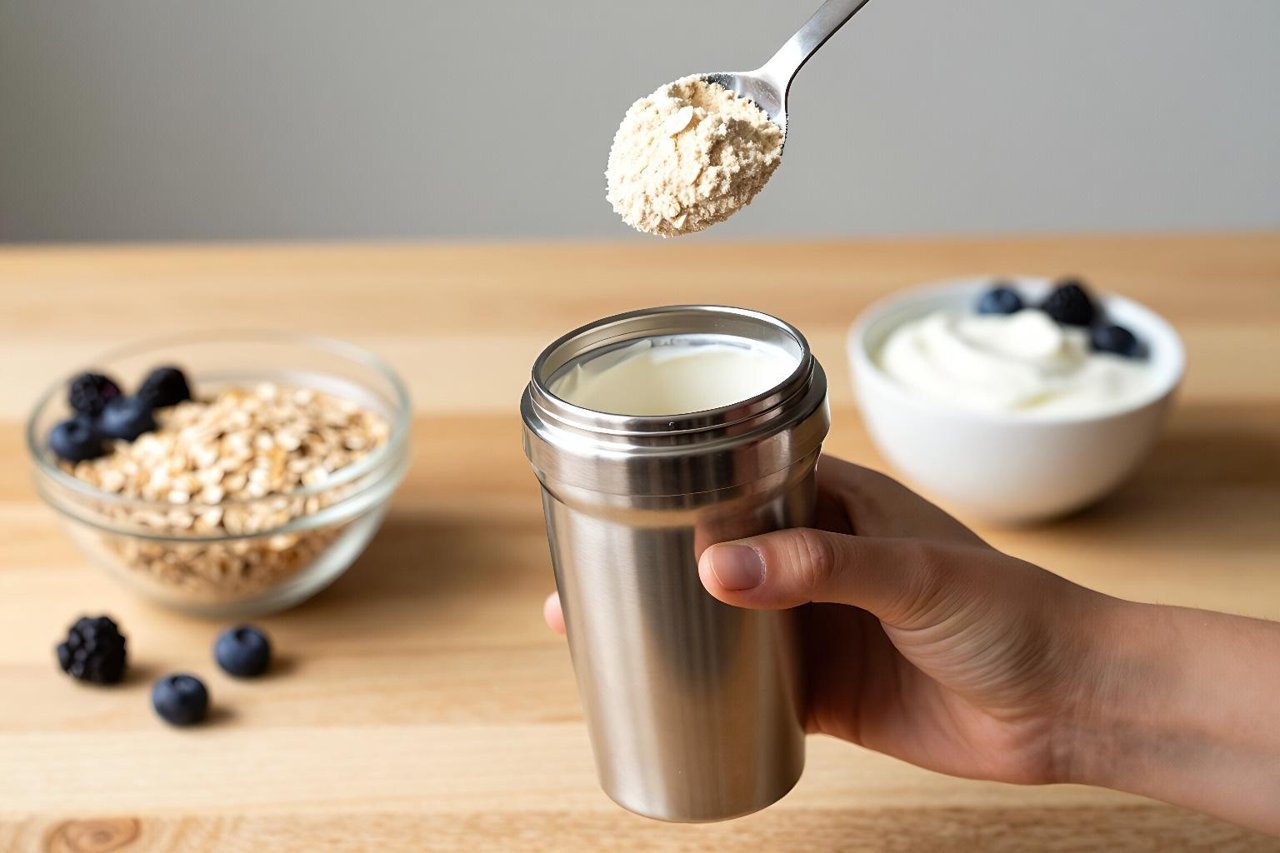
- Overnight oats: Stir 30 grams of powder into rolled oats, chia seeds, and almond milk. Leave it in the fridge overnight and you’ll have a creamy, high-protein breakfast ready when you wake up.
- Greek yogurt bowl: Whisk protein powder into plain Greek yogurt and top with berries. This combo can hit 40 grams of protein and tastes like dessert.
- Protein pancakes: Add a scoop to your usual pancake batter. You get a fluffier, more filling stack that doesn’t taste like dry powder.
Treat protein powder as an ingredient, not a meal replacement. Blend it into things you like. That way it fits your life instead of demanding you build your day around it.
What Actually Helps With Muscle Gain
The supplement industry wants you to believe that timing is everything, but the science says otherwise. Your total protein intake over the course of a day is the main driver of muscle growth, not the exact minute you drink your shake. Consistency beats precision. If you’re trying to build mass, choose a product that’s high in protein and low in filler. The best muscle gain protein powder is one that you’ll actually use regularly, not just one with the flashiest label.
That said, having a quick protein source after a workout is practical. You’re often tired, hungry, and not in a position to cook a full meal. A shake fills that gap efficiently. Just don’t treat it as a replacement for a well-rounded diet.
The Role of Real Food
Powder can’t give you the vitamins and minerals that whole foods do. Iron, zinc, and B vitamins are abundant in meat, fish, and eggs. Even the best high protein foods for muscle gain are things you’ve heard of for decades: chicken breast, lean beef, Greek yogurt, and eggs. Use powders to fill the occasional gap, not to replace these staples. Your body will thank you.
How to Spot a Good Quality Protein Powder
The supplement aisle is full of options that look identical. Here’s a quick checklist to help you avoid wasting money on a tub of sweetened filler.
- Check the protein percentage. A decent concentrate should be at least 70-80% protein. An isolate should be higher. If the first ingredient is maltodextrin, put it back.
- Read the ingredient list. The shorter, the better. Watch for artificial colours, thickeners, and proprietary blends that hide the exact amounts of each ingredient.
- Look for third-party testing. Brands that use independent labs give you more confidence that what’s on the label is actually in the tub.
- Buy a small size first. Taste is personal. If you buy a huge tub and hate it, you’ll never finish it. Start with a sample sachet or the smallest container available.
A high-quality protein powder doesn’t need to be expensive. It just needs to be transparent about what’s inside and taste good enough to want to use every day.
Your Plate Comes First
Protein powder is a convenience. It’s there to support a good diet, not replace one. If you’re consistent with your training and eat mostly whole foods, a supplement bottle is just a helpful sidekick. For a broader look at which whole foods deliver the most protein per bite, check out the best high protein foods to fuel your body. You might find that your next meal is more powerful than any shake.


