
Table of Contents
Suppose your dog slips out through the back gate while you’re pouring coffee. You pull out your phone, open an app, and watch a little dot cross a map. That is the promise of dog trackers with GPS, and it’s why so many first-time owners start researching them. But many product pages are full of acronyms like LTE, GNSS, and IPX7, plus vague phrases like ‘unlimited range’. If you’re coming to this cold, it can feel overwhelming. This guide starts from the very beginning, no jargon assumed.
What a dog tracker with GPS actually is
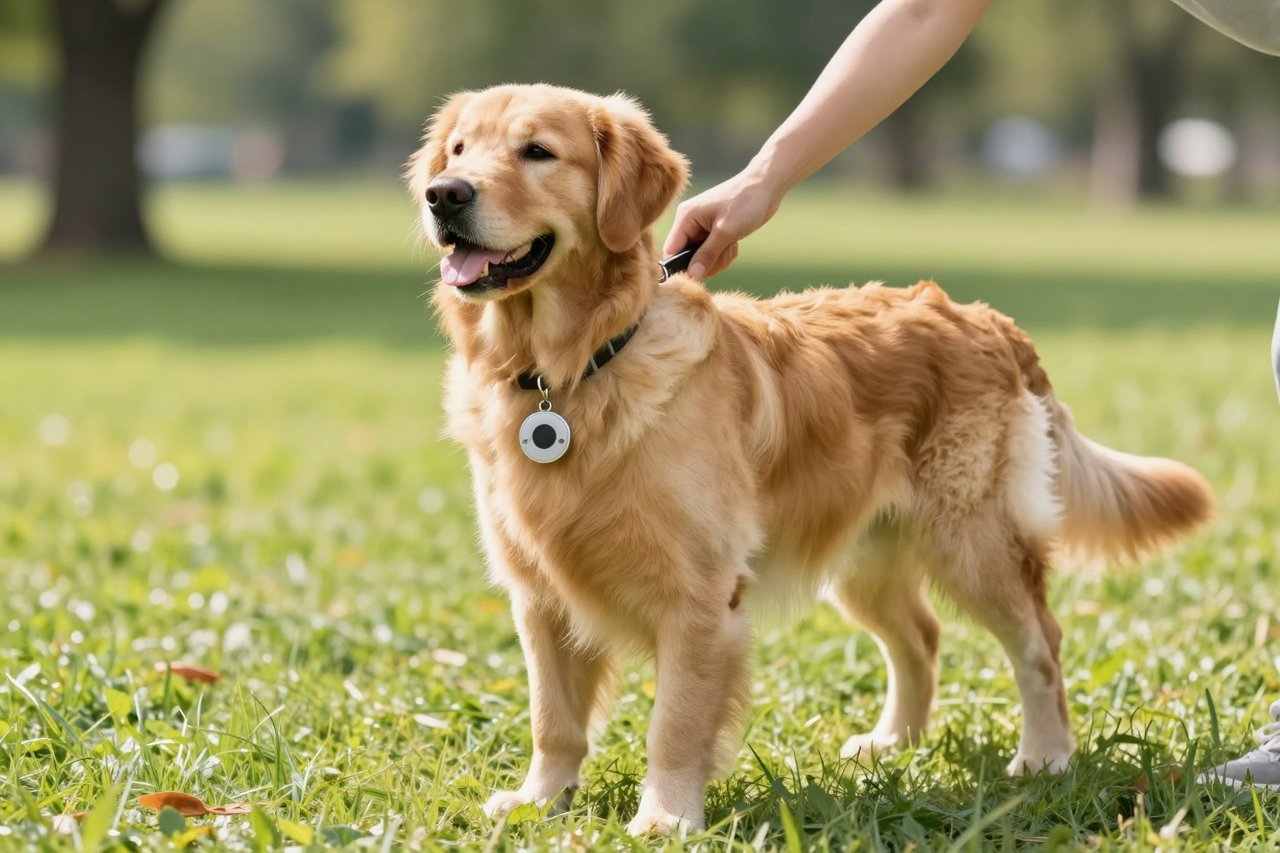
A dog GPS tracker is a small box that attaches to a collar. Inside it sits a GPS receiver, a cellular modem and a battery. The GPS receiver listens to satellites and works out the tracker’s location. The modem then sends that position over a mobile data network, just like your phone uses the internet. Finally, the app on your phone receives that position and paints it on a map. The app is not directly talking to your dog; it’s talking to a server operated by the tracker company.
How GPS and cellular work together
GPS satellites broadcast time signals down to Earth. They don’t receive any data from your dog. The tracker works out where it is by comparing signals from a few satellites at once. This is a one-way process, which is why you never need to pay for satellite access.
The second part is cellular transmission. Your tracker contains a tiny SIM card that uses a mobile network to send its position to a central server. If the tracker cannot connect to a mobile network, it might still know where it is, but it cannot tell you. That is why real-world mobile coverage matters much more than the range figure on the box.

Five things that surprise most first-time buyers
1. Range is about cellular coverage, not GPS signal
‘Unlimited range’ is just a marketing phrase. A tracker can, in theory, determine its position anywhere on Earth. But without nearby mobile coverage, it cannot send that position to your phone. So if you walk your dog in a remote valley, be prepared for slow or missing updates. In cities and towns, any mainstream tracker will work reliably the vast majority of the time.
2. Battery life is the biggest practical limit
Real dog trackers with GPS use far more power than a Bluetooth tag. Most have a battery that lasts between two and seven days in an energy-saving mode. If you switch to live tracking to watch a dog run across a field, the battery can drain within hours. In other words, ignore the massive battery claims in ads and look for realistic reviews from people using the device daily. It is also worth getting into the habit of charging the tracker whenever you charge your own phone, so it never sits flat when you need it.
3. Subscriptions are a hidden but essential cost
Because a tracker needs its own mobile data connection, almost every brand charges a subscription. You are not paying for GPS satellites; you’re paying for the cellular network that carries your dog’s position back to you. Prices vary from a few pounds or dollars a month to around fifteen. Before you buy, calculate the total cost over two or three years, including the hardware. If you’d like the full details, our article on the real trade-offs between battery, subscription, and range explains that side of the decision more thoroughly.
4. The app becomes your daily interface
A clunky app will make even the best hardware feel useless. So check what the mobile app is actually like before you commit. Does it let you set a safe zone and alert you the instant your dog leaves it? Does the live map update quickly when you’re out and about? Read real user reviews that talk about app speed and reliability, not just features. If you want help identifying which software extras genuinely earn their place, our honest guide to dog GPS tracker features is a useful next read.
5. A tracker won’t protect your dog while they’re still off-lead
It is easy to assume that once a GPS tracker is clipped to the collar, your dog is safe from every danger. That is a dangerous assumption. The tracker is a location tool, not a forcefield. It won’t stop a dog from running after a deer or getting into a fight. What it gives you is a way to find your dog after something has gone wrong. That is incredibly valuable, but it is not a substitute for training or basic recall. For a closer look at the misconceptions that can get dogs into trouble, read the 10 assumptions that are costing your dog’s safety.
What a dog GPS tracker cannot tell you
A dot on a map is not full information. It cannot tell you if your dog is running, swimming, lying down, or in distress. It cannot call for help on your dog’s behalf. And the location is not always perfectly accurate. In dense woodland, narrow valleys, or heavy rain, a tracker might be off by several metres. That’s still close enough to start a proper search, but it’s not centimetre-level. Remember that when you’re trying to pinpoint where in a thicket your dog has ended up.
- A tracker with a flat battery cannot help, so charging it is part of the job.
- Some trackers are too large for very small dogs. Check the weight, not just the size.
- A tracker won’t stop your dog from chasing livestock or ignoring your recall.
- In thick woodland or inside a concrete building, position can be inaccurate.
How to set up and trust your first tracker
When your tracker arrives, don’t wait for an emergency to learn how it works. Charge it fully, attach it to the collar, and follow the app’s setup instructions. Create a safe zone around your home so that you’ll get an alert if your dog leaves it. Then go for a short walk and keep the live view open on your phone. Watch the dot move as your dog walks. If it doesn’t update, move the tracker on the collar and try again. Some devices are slow to get their first satellite fix after being indoors, so be patient.
It helps to have a structured first week. Set a daily alarm to charge the tracker at the same time, and test the geofence alert by moving the collar a few metres beyond the boundary. The more you trust the technology before you actually need it, the calmer you’ll be in a real emergency. If you’d like a step-by-step routine, our article on setting up, testing, and trusting your dog’s GPS tracker in 7 steps can guide you through the process.
Beginner’s purchase checklist
- Is the tracker light enough for your dog’s size and breed?
- Does the battery life actually match the way you walk?
- Can the app set geofences, show live location, and share access with family?
- Is the tracker waterproof enough for rain, puddles, or swimming?
- What is the true total cost over two years, including subscription and hardware?
- Does the cellular network have coverage in the places you will be walking?
Those are the real fundamentals. If you pick a tracker that fits your dog’s size, has an app you enjoy using, and you build a sensible charging routine, it will blend quietly into your daily life. And that’s all a dog tracker with GPS should be: a reliable way to find your dog when the worst does happen.


