
266
Table of Contents
[ad_1]
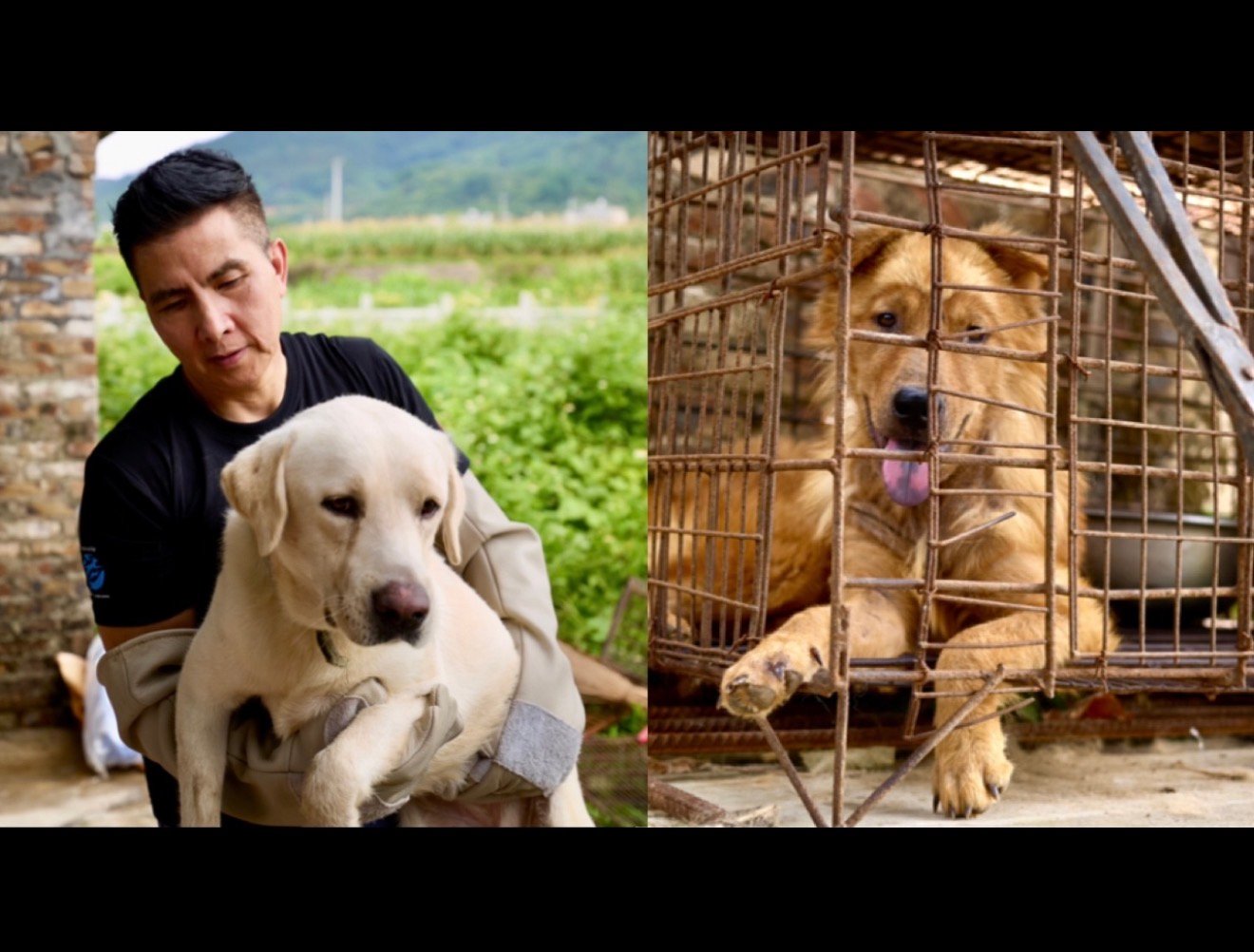
Photo credit: Humane World for Animals
In a landmark victory for animal protection in China, a dog slaughterhouse that supplied animals for the Yulin dog meat festival has permanently shut down, marking the city’s first-ever livelihood conversion program.
The closure, led by Vshine Animal Protection Association with funding and technical guidance from Humane World for Animals, ended the operation of a facility that reportedly killed more than 15,000 dogs since 2007 and supplied dog carcasses to restaurants and markets associated with the annual Yulin dog meat festival.
Nine dogs were rescued from the property and spared from slaughter, including three dogs still wearing collars—a Labrador named An An, a beagle named Moli, and a poodle named Lian—who are believed to be stolen family pets.
The nine rescued dogs are currently receiving veterinary care before being transferred to a Vshine shelter. They will be quarantined, vaccinated, sterilized, and eventually made available for adoption into loving homes.
Located approximately 30 kilometers south of Yulin’s city center, the slaughterhouse reportedly killed an average of 15 dogs per week. According to the organizations involved, dogs were bludgeoned over the head before their throats were cut and their bodies butchered. June was the facility’s busiest month, accounting for roughly 70% of its annual income due to demand associated with the Yulin dog meat festival.
As part of the agreement, the owner has permanently exited the dog meat trade and is now exploring a new livelihood. He is considering launching a breakfast catering business serving rice porridge, fried dough, and steamed buns.
Reflecting on his decision to leave the dog meat trade behind, Mr. Huang said:
“I’m looking forward to a peaceful life. I have been killing dogs for almost 20 years. It’s a dirty business and I don’t feel good about it. Also, as fewer people are eating dog meat these days it’s hard for me to provide for my family. I am relieved to be leaving it behind me and having a more stable living. Without the support from this program, I would not have been able to make this life change but I think a lot more dog meat businesses in Yulin would choose to close if they had this kind of support.”
As Yulin’s first-ever livelihood transition project, the slaughterhouse closure serves as a tangible example of efforts to end the dog meat trade through practical solutions that benefit both animals and people. Through its Models for Change program, Humane World for Animals has spent more than a decade helping individuals involved in the dog meat trade transition to alternative livelihoods in countries including South Korea, Viet Nam, India, and Indonesia.
Earlier this year, Vshine submitted a legislative proposal to China’s National People’s Congress calling for stronger protections for companion animals, including a nationwide ban on the dog and cat meat trade.
Chen Xiaolei of Vshine described the emotional impact of entering the facility where thousands of dogs had lost their lives over the years:
“It was very disturbing to step foot into this dog slaughterhouse where so many dogs have lost their lives so brutally over the years. This cruel and dirty trade has no place in modern China and the Yulin dog meat festival is a stain on China’s international reputation. By supporting policies that enable traders to transition to alternative livelihoods, the Yulin authorities could help close this cruel trade for good and lead the way in China to end the dog and cat meat trade.”
According to Humane World for Animals, China remains the world’s largest dog and cat meat market, with an estimated 10 million dogs and 4 million cats slaughtered annually. Animal welfare organizations note that many of the animals killed for meat are believed to be stolen pets, former guard dogs, or strays captured from the streets.
Advocates also emphasize that Yulin’s so-called Lychee and Dog Meat Festival is not a long-standing cultural tradition. The event was launched in 2010 by dog meat traders in an effort to increase sales and promote dog meat consumption.
Animal advocates hope the successful closure will serve as a model for future efforts to help businesses transition away from the dog and cat meat trade while creating safer, more sustainable livelihoods for local communities.
[ad_2]
Source link


